





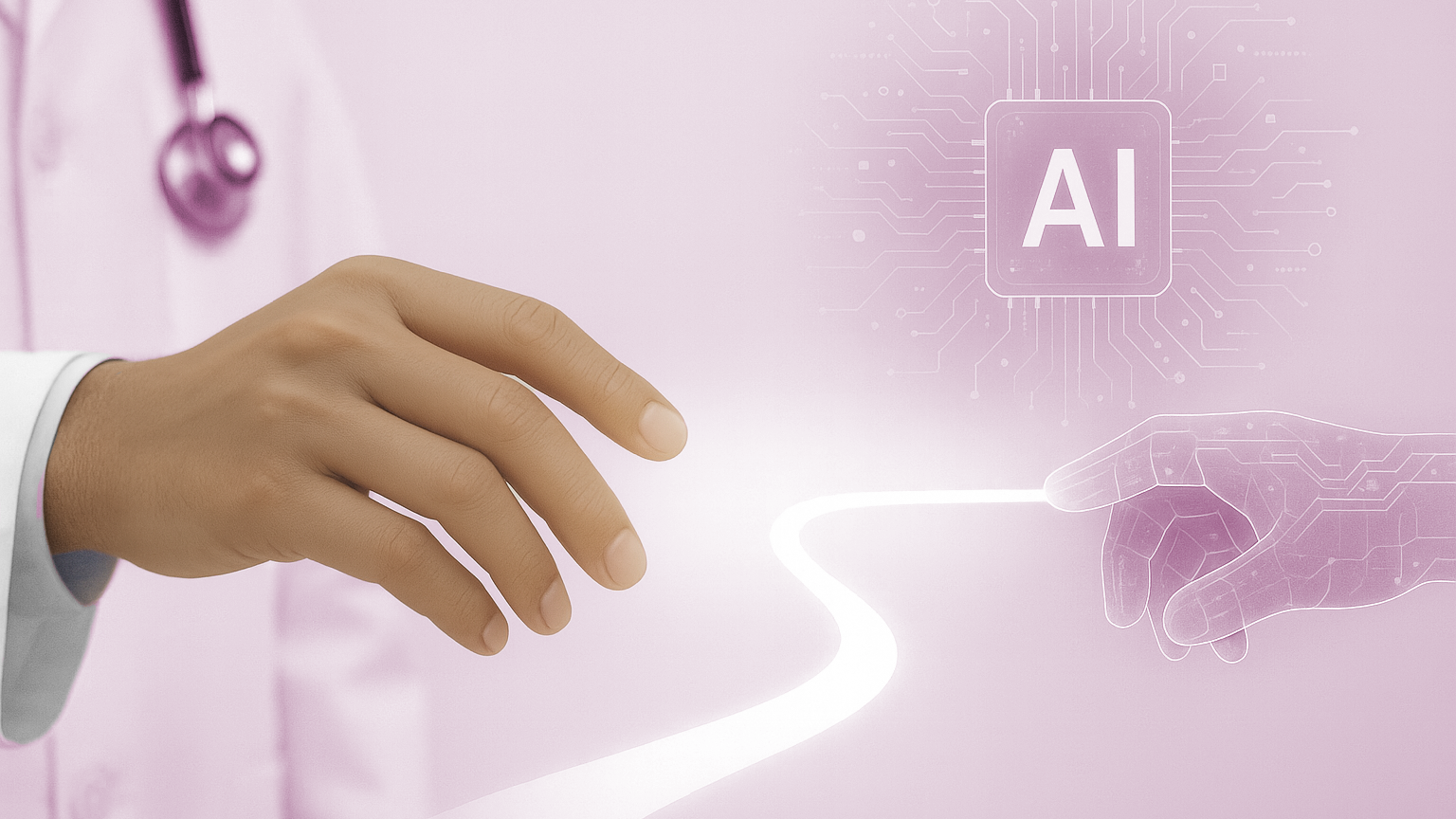
Artificial Intelligence (AI) is no longer knocking at the door of healthcare – it is already in the room.
From faster diagnoses to personalised treatment and streamlined administration, the potential of AI to revolutionise care is undeniable. However, as a doctor working at the intersection of product development, clinical risk and strategy, I believe the real conversation isn’t whether AI has value. Instead, it’s whether we understand how to use it responsibly. Balancing AI with human expertise is key to this understanding.
If we get that wrong, we don’t just risk inefficiency or a poor experience. More importantly, we risk losing trust.
Human judgement will always matter
Clinical judgement is not just data-driven; it’s sensory, relational and deeply human. When you sit in front of a doctor, you’re not just listing symptoms. You’re being seen. Your energy, body language, tone of voice and the look in your eyes all serve as clinical inputs, too. These are subtleties AI cannot yet grasp. Maybe it shouldn’t. Part of what makes human healthcare so powerful is its ability to catch what can’t be coded.
AI, when used well, should complement human judgement rather than replace it. However, this depends on something critical: trust. Trust arises from responsible use, validated evidence and implementation that holds AI to the same standards we apply to medicine itself. Balancing AI with human expertise ensures that trust remains intact.
When should AI lead, and when should it support?
This isn’t a binary question. Like so much in medicine, the answer depends on context. If an AI tool has been rigorously tested and proven to outperform traditional diagnostics in a particular area, then it should lead. However, if its accuracy remains unclear, under development, or unproven as superior, traditional investigations and management must take precedence.
We can’t treat AI like a mystical black box. It is just another tool in our clinical toolkit. Like any test, its usefulness depends on how well it performs and whether the system around it is ready to implement it responsibly.
Personalisation can’t exist without patient participation
AI can personalise care faster than ever. Yet personalisation without patient involvement isn’t truly personal; it becomes transactional.
As clinicians, we still need to interpret AI’s suggestions and communicate them clearly. Especially in communities where AI can feel foreign or even threatening, transparency is essential. Patients deserve the right to understand how their care is shaped.
If patients don’t feel comfortable, that’s their right, too. AI must exist within a framework of informed consent, cultural sensitivity and choice.
Efficiency must make space for empathy
AI already reduces administrative burdens. It helps automate documentation, appointment management and triage. But what we do with the time saved matters greatly.
If AI frees up time, we must reinvest it into human moments that matter most – conversations, listening and trust-building. Efficiency only adds value if it enhances the parts of medicine that machines cannot replicate. Balancing AI with human expertise allows us to do exactly that.
Ethics can’t play catch-up
We’re moving faster than regulations. South Africa lacks a comprehensive AI healthcare regulatory framework. Globally, most countries are still catching up. This gap places even greater responsibility on us to self-regulate, grounded in professional ethics.
The use of AI must never strip away our obligation to engage with empathy or respect patient dignity. If anything, AI raises the stakes. We must question not just what AI can do but what it should do. Ethical complexity must be part of the rollout, not an afterthought.
What’s holding us back?
Often, technology is not the barrier; the infrastructure around it is. In some cases, medical aids don’t cover AI-enhanced diagnostics, which makes adoption difficult even when tools outperform traditional ones. Moreover, if patients don’t understand how the technology works or feel alienated by it, uptake slows.
We have seen AI work well in image-based diagnostics like CT scans and X-rays. But for conditions such as mental health or chronic lifestyle-related diseases, a long road remains. The technology may be ready, but the system around it often is not.
The road ahead
I believe AI in healthcare is not just inevitable; it is essential. We need AI to address  growing pressures on our systems, improve access, and elevate standards of care. But this progress will take time, collaboration, and a commitment to keeping patients and professionals at the centre of the system, not just the software.
As a doctor, product leader and student of this evolving field, I’m excited about the future but also cautious. The journey will be very interesting. This isn’t just about adopting new tools. It’s about reimagining care—and doing so responsibly, by balancing AI with human expertise.
Dr Jessica Hamuy Blanco | Head | Product and Clinical Risk | Dis-Chem | mail me |