





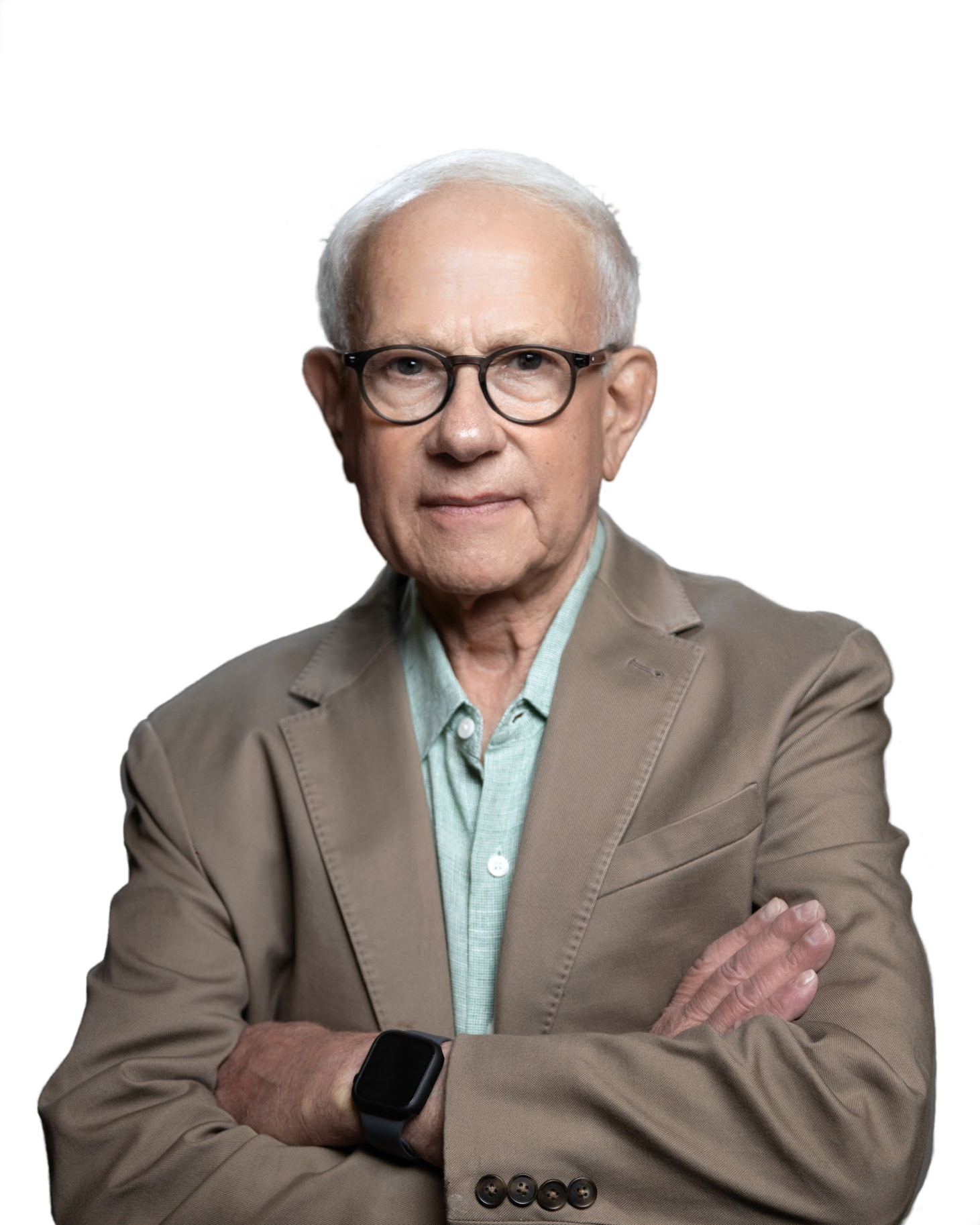
Michael Judin | Partner | Judin Combrinck Inc | mail me |
From Ancient Egypt and the Stoics to Rome and Artificial Intelligence, humanity has never stopped asking what lies behind the extraordinary fact that we know we exist
Science has answered some questions magnificently and continues to answer others steadily. Yet some questions become more profound the closer we approach them.
Consciousness belongs in that final category. We can study the brain, observe neural activity and alter consciousness through anaesthesia, disease, injury or electrical stimulation.
We can also establish an extraordinarily intimate relationship between brain function and conscious experience. Yet the deeper question remains.
Why should physical processes give rise to subjective experience at all?
I was prompted to reflect on this by an excellent post by Keith King, who discusses neuroscientist Christof Koch and the continuing debate over whether we should simply assume that the brain creates consciousness, rather than considering whether it may organise, mediate or shape something whose ultimate nature remains unresolved.
Importantly, King does not present speculation as established fact. Instead, he argues that competing theories can produce better experiments and clearer definitions.
They can also produce testable questions. Moreover, he expressly identifies AI as a field that progress in understanding consciousness could transform. The source was shared with me under the heading “Consciousness”.
The Stoics’ question
The Stoics did not possess neuroscience, brain imaging or computational models, and we should never pretend that ancient philosophy anticipated modern science.
What they did possess, however, was an extraordinary curiosity about the relationship between matter, reason, perception and the organising principles of life, and their concept of pneuma – literally “breath” – formed part of an elaborate attempt to explain how matter acquires organisation and how living beings acquire perception and rationality.
For the Stoics, particularly as their philosophy developed through the Greek and Roman worlds, the human being was not simply an isolated object but part of a rationally ordered cosmos in which logos, reason, had a fundamental role.
Their answers belong to ancient philosophy rather than modern neuroscience, but their willingness to ask how matter, perception, reason and identity fit together reminds us that the mystery we call consciousness did not suddenly appear when we invented the MRI scanner or the computer.
Ancient Egypt – being beyond the body
Ancient Egypt approached human identity through a very different cultural and religious framework, but once again we find a civilisation refusing to reduce the person to the visible physical body alone.
Egyptian conceptions of personhood included different aspects of the individual, among them the Ba, represented in Egyptian imagery as one component of the human person that retained an existence beyond bodily death.
We should not turn Egyptian religion into twenty-first-century neuroscience, because that would do injustice to both. What is fascinating, however, is the continuity of the question itself – civilisation after civilisation has sensed that understanding a human being requires us to ask not merely what the body does, but what it means to experience, remember, perceive, choose, dream and know that one exists.
Rome turned the question inward
When Stoicism reached Rome, philosophers such as Seneca and the emperor Marcus Aurelius made the examination of the inner life intensely practical.
Marcus did not write Meditations as a scientific treatise on consciousness – he repeatedly examined his own perceptions, judgments, reactions, obligations and relationship with the world around him, making consciousness itself – the inner arena in which impressions become judgments and judgments become actions – central to the exercise of a good life.
That remains extraordinarily relevant because consciousness is not simply an abstract puzzle belonging to philosophers. Every act of leadership, compassion, courage, love, creativity, responsibility and moral judgment occurs through that remarkable subjective world which each of us experiences directly and which nobody else can enter in precisely the same way.
And now humanity has created AI
Here the story becomes, to me, enormously exciting. For thousands of years human beings could investigate consciousness principally through philosophy, introspection, medicine and observation, but we now possess another extraordinary intellectual instrument – Artificial Intelligence (AI).
AI can analyse volumes of data beyond unaided human capacity, identify patterns across complex information, assist researchers in constructing and testing models, compare competing explanations, simulate systems and help scientists formulate questions with increasing precision. King rightly observes that the consciousness debate reaches directly into AI and the future of human-machine interaction, while also stressing that speculative theories must ultimately answer to rigorous evidence rather than belief.
This is why I resist the instinctive narrative that AI somehow diminishes humanity. AI may do precisely the opposite – it may force us to examine humanity more deeply than we ever have before.
AI – a mirror to see ourselves more clearly
The arrival of increasingly capable AI creates fascinating questions because machines can now communicate, reason across information, recognise patterns, generate language and perform intellectual tasks previously regarded as unmistakably human. None of those abilities, by themselves, establish that an AI system possesses subjective consciousness, and we should be extremely careful not to confuse sophisticated behaviour with proof of inner experience.
Yet that uncertainty is intellectually productive rather than frightening. If we want to know whether a machine could ever be conscious, we first have to become much clearer about what we mean when we say that we are conscious, which means defining concepts, designing better tests and distinguishing intelligence, awareness, self-reference, memory, agency and subjective experience rather than treating them as though they were the same thing.
Perhaps this will become one of AI’s unexpected gifts to humanity. In attempting to build systems that imitate parts of human intelligence, we are being forced to confront how little we fully understand about intelligence itself.
Can AI transform our understanding of consciousness?
This distinction is particularly important. The value of AI to consciousness research does not depend upon proving that AI itself is conscious, because a telescope does not need to be a star to transform astronomy and a microscope does not need to be alive to transform biology.
AI can similarly become an instrument through which humans examine the mind. It may help neuroscientists analyse increasingly complex relationships between neural activity and reported experience, assist clinicians studying disorders of consciousness, help philosophers clarify competing theories, allow researchers to model cognitive architectures and expose assumptions that have survived partly because human beings lacked the tools to interrogate them at sufficient scale.
That is an inspiring possibility rather than a threatening one. We may have created a technology which, among its many other achievements, helps humanity investigate one of humanity’s oldest mysteries.
The Stoics’ question may become AI’s
The Stoics asked how reason fits into nature, the Egyptians developed extraordinarily rich ideas about human identity, and Roman thinkers turned sustained attention toward the inner life.
Today neuroscience approaches those ancient questions with evidence and experimentation, while AI introduces an entirely new way of modelling, comparing and challenging our assumptions.
The intellectual humility required is also profoundly Stoic. We should distinguish what we know from what we merely believe, remain open to evidence that challenges our preferred theories and resist turning either materialism, spirituality or enthusiasm for technology into conclusions before the evidence warrants them.
Could AI reveal what makes us special?
For years we have been told that AI will force humanity to confront the possibility that we are less exceptional than we imagined. I believe there is another, considerably more optimistic possibility – AI may help us appreciate just how extraordinary consciousness really is.
The more capable machines become, the more interesting the distinction between processing information and experiencing something may become. The better AI becomes at language, reasoning and creativity, the more urgently scientists and philosophers may investigate what subjective awareness actually is, where it comes from and whether it is an emergent property of particular physical systems or something about reality that our existing theories have not yet adequately explained.
There is no need to choose prematurely between those possibilities, because intellectual openness and scientific rigour can coexist. Indeed, Keith King’s strongest point may be precisely that challenging foundational assumptions is useful when doing so produces better questions rather than replacing evidence with belief.
Our next discovery – ourselves?
Ancient Egypt looked at human existence and saw mystery, the Stoics looked inward and found reason, Rome turned reflection into a discipline, and modern neuroscience has revealed an astonishing relationship between brain and mind.
Now AI enters that centuries-long conversation, not necessarily as humanity’s competitor but potentially as one of the most powerful investigative partners humanity has ever created.
Perhaps the greatest irony of the AI revolution will therefore be that, in teaching machines to do things once thought uniquely human, we finally begin to understand what being human actually means. If AI helps us move even a little closer to understanding consciousness, then one of the most advanced technologies ever created will have helped us answer one of the oldest questions humanity has ever asked.
Credit and acknowledgement: This article was inspired by and builds upon the thought-provoking LinkedIn post by Keith King, “Consciousness may remain science’s deepest unanswered question,” discussing the ideas of neuroscientist Christof Koch and the importance of approaching competing theories of consciousness with both intellectual openness and scientific rigour. The philosophical connections to Ancient Egypt, Stoicism, Rome and the positive implications for AI are my own extension of that discussion.