





Tag: Judin Combrinck Inc

Understanding quiet people – can AI help us see ourselves?
From the Stoics and Ancient Egypt to Rome and Artificial Intelligence (AI), perhaps the greatest wisdom lies in learning to distinguish appearance from reality
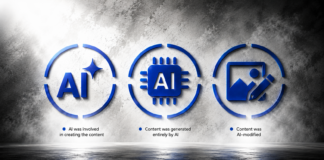
AI content disclosure – follow Europe’s lead?
Artificial Intelligence (AI) should be embraced, but deception should not be, and South African businesses should understand that Europe’s AI rules may apply even if they have no office in Europe.

Consciousness and AI – what does it mean to be aware?
From Ancient Egypt and the Stoics to Rome and Artificial Intelligence, humanity has never stopped asking what lies behind the extraordinary fact that we know we exist
NDA residuals clauses – can memory undermine confidentiality?
A Non-Disclosure Agreement (NDA) creates a protected space in which parties can exchange commercially sensitive information. Yet a few apparently innocuous words dealing with information retained in “unaided memory” may materially reduce that protection. In extreme cases, they may undermine the commercial purpose of the NDA itself.

The second circle of trust
Trust is the foundation of every relationship, whether in business, sport, friendship, or marriage. Once broken, can it ever truly be restored? Or must we create something entirely new?
Companies are artificial entities – is AI so different?
In the seventeenth and eighteenth centuries, one of the most revolutionary ideas in human history emerged - the corporation. Today, the concept seems entirely ordinary. Companies own assets, enter into contracts, raise capital, employ people, and continue operating long after their founders have passed away.

Is it still a secret? – governance when AI reconstructs undisclosed...
For decades, businesses assumed that information in the public domain was harmless. Artificial Intelligence (AI) has ended that assumption.
By aggregating thousands of public data points, AI can reconstruct strategy, pricing and expansion plans. Under the King V Report on Corporate Governance for South Africa, protecting confidential value in this environment has become a board-level governance responsibility.
Shareholder rights – power without responsibilities, obligations or duties!
In South African corporate law, shareholders enjoy extensive rights - but face remarkably few obligations when exercising them. Directors, in contrast, are tightly bound by fiduciary and statutory duties, accountable for every decision they make on behalf of the company. This imbalance raises a critical question: Should shareholders also bear some responsibility - especially when their actions directly shape the strategic direction of a company?

FEATURE | Governance & Accountability
Poor governance practices, poor oversight and a lack of accountability lie at the heart of state capture and the large-scale corporate fraud that has dominated newspaper headlines in South Africa over the last three years. It is precisely due to the weaknesses in the governance structures and systems that dishonest and unethical leaders have been able to plunder state resources and commit fraud.

Why should organisations publish a meaningful integrated report?
Most modern, well-governed organisations are acutely aware of the need for their businesses to be run in an ethical and socially-conscious manner and for this ethos to be communicated to their stakeholders.