





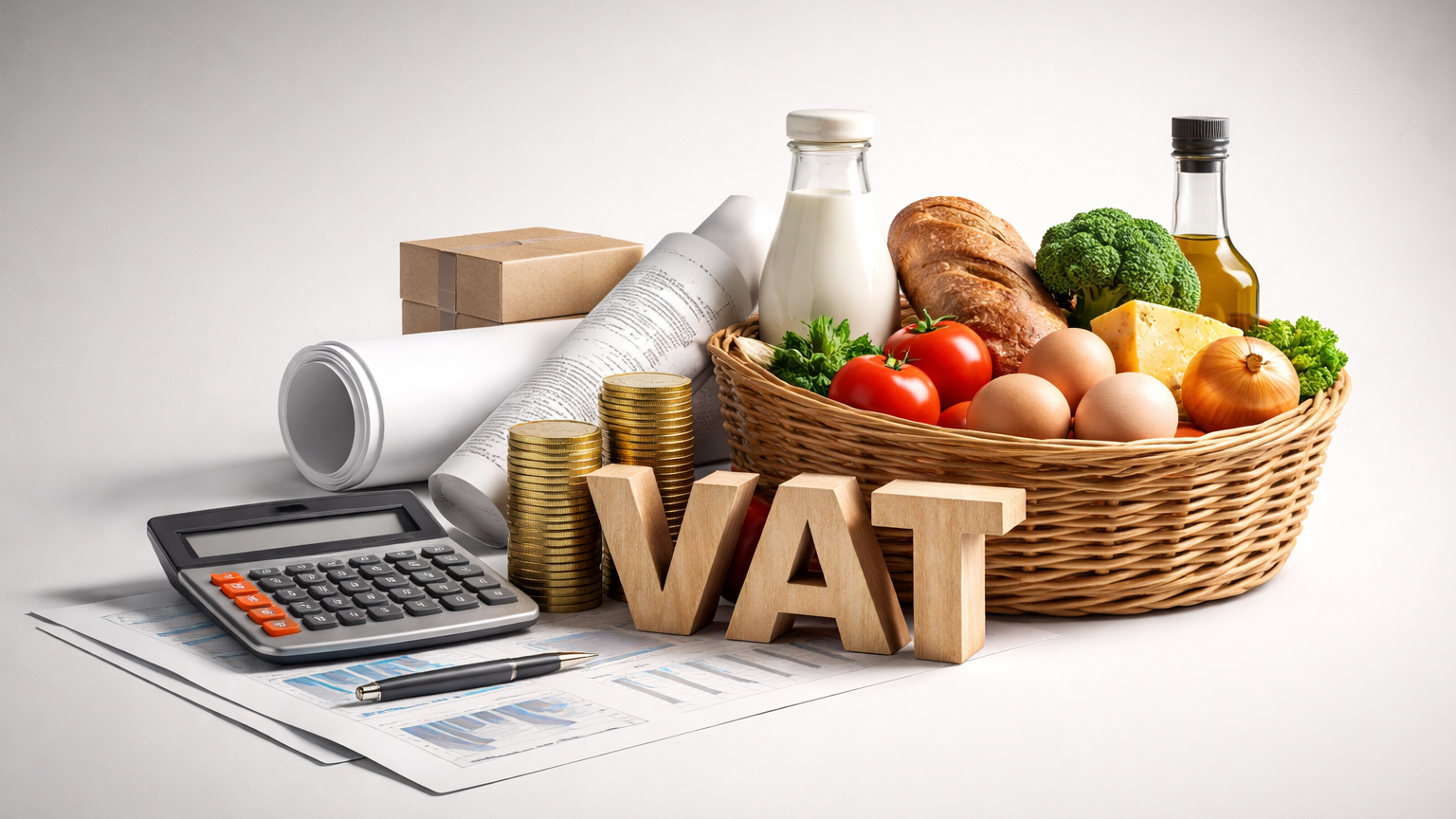
For enterprises in South Africa that operate within the dynamic food and beverage industry, understanding and effectively utilising indirect tax incentives is a powerful way to enhance profitability and gain a competitive edge.
With the correct implementation of various provisions in the Value-Added Tax Act, 1991 (VAT Act), together with a good understanding of compliance and record-keeping, a VAT vendor can significantly reduce their overall tax burden. In other words, vendors can leverage the VAT advantage to improve their bottom line.
VAT compliance, when done correctly, is not merely a tick-box exercise. Rather, it serves as a strategic tool for financial optimisation. Vendors in the food and beverage industry encounter unique challenges, such as small profit margins on individual supplies. When these challenges combine with an inefficient VAT function, cash-flow problems can emerge.
We explore the key indirect tax incentives available to food and beverage vendors. We also provide guidance on how to leverage them while remaining compliant with the VAT Act.
The zero-rating of basic foodstuffs
One of the most significant incentives is the zero-rating of certain basic foodstuffs for VAT purposes. Under section 11(1)(j) of the VAT Act, read with Part B of Schedule 2, several essential items are zero-rated. This means output tax is levied at 0%. For vendors, this creates a crucial advantage.
While charging VAT at 0% on these goods, you are still entitled to claim input tax credits on the expenses incurred to produce or acquire them. This generates a direct financial benefit. The VAT paid on inputs, such as ingredients, packaging, and utilities, is recoverable from the South African Revenue Service (SARS).
In practice, input tax is not reduced when offset against the output tax payable. This is another example of the VAT advantage in action.
Classification of zero-rated basic foodstuffs
The list of zero-rated items is extensive. It includes core staples like brown bread, maize meal, milk, rice, and fresh fruit and vegetables. Initially, the 2025 Budget Speech proposed expanding the list of zero-rated food items.
Items such as tinned or canned vegetables, certain cuts of meat (offal, heads, feet) and dairy liquid blends were included. This expansion aimed to help low-income households cope with a proposed increase in the VAT rate. However, after public and political backlash, the planned VAT rate increase was reversed. Subsequently, the National Treasury indicated that the proposed expansion of the zero-rated food list would also be withdrawn, as it was tied to the VAT rate increase. When applying the zero-rate of VAT to foodstuffs, vendors must exercise caution.
Classification of zero-rated basic foodstuffs can be complex. For instance, brown and whole-wheat bread is zero-rated, but most confectionery products, cakes and sweetened products are not. Similarly, unprocessed items like whole potatoes can be zero-rated, while precut chips cannot.
For a business producing a variety of products, meticulous attention to detail is required to correctly apply the zero-rating. This prevents costly errors that could trigger a SARS audit.
Special tax incentives for exports
To promote investment in South African products, goods and services exported from South Africa can be zero-rated by vendors. This applies provided the vendor has obtained and retained the required documentation. The zero-rating of exports aligns with VAT principles, as VAT is a consumption-based tax, and exports are not consumed domestically.
Similar to zero-rating basic foodstuffs, VAT on goods sold to foreign customers is charged at 0%. Vendors can still claim an input tax deduction because most costs relate to production and export. This reduces the overall tax burden and makes South African goods more competitive internationally.
Maintaining correct documentation is critical. Vendors must obtain and retain all documentation in terms of the VAT Act and SARS Interpretation Notes 30 and 31. Failure to do so can lead to zero-rating being disallowed. In such cases, the goods are deemed standard-rated by SARS. Strategic application of these rules represents yet another way to harness the VAT advantage.
Claiming input tax
Beyond zero-rated goods, vendors can claim input tax credits on a wide array of business-related expenses, in terms of section 16, read with section 17 of the VAT Act.
To leverage the VAT advantage, the general rule is simple: if an expense is incurred in making taxable supplies, you can claim back the VAT. Claiming input tax credits mitigates cash-flow risks. It also aligns with the principle that the end customer bears the VAT burden, while the vendor acts as SARS’ agent.
Vendors may deduct VAT on purchases such as machinery, equipment, rent for business premises, professional fees, and advertising. Certain expenses, like entertainment, are prohibited. Vendors should seek assistance from a professional tax practitioner to ensure input tax is claimed on allowable deductions only.
A vendor’s entitlement to claim input tax credits relies on obtaining and retaining a valid tax invoice from the supplier. Vendors can claim input tax on expenses for up to five years from the tax period in which the entitlement arose. This extended period is particularly useful in the food and beverage industry.
Supplier agreements with large chain distributors can leave small and medium-sized enterprises out of pocket for months before receiving payment. In these cases, vendors can claim input tax on previous expenses to reduce VAT liability and ease cash-flow constraints.
 |
 |
| Chetan Vanmali | Partner | mail me | | Zakiyah Dockrat | Associate | mail me | |
| | Webber Wentzel | | |