




Termites are small but can cause big damage to homes. A sign of termite trouble is the presence of winged termites, or alates. These flying pests leave their colonies to start new ones, often surprising homeowners.
Knowing about winged termites can help you spot and fix termite problems early. This way, you can avoid bigger issues later on.
Key takeaways
- Termites can have wings, but only during their reproductive stage as alates or swarmers.
- Winged termites have two pairs of equal-sized wings, straight antennae, and a straight-sided body shape.
- Termite colonies typically take 3-6 years to mature before producing winged termites.
- Warm, humid weather and heavy rainfall can trigger termite swarms.
- Spotting winged termites inside the home indicates a mature colony nearby.
Winged Termites – The Swarmers
Termite swarmers, or termite alates, are the reproductive part of a termite colony. They fly out during the termite flight season, usually in spring and fall. This is to mate and start new colonies. It’s important to know how to spot winged termites because they can mean trouble.
What Are Winged Termites?
Winged termites, or reproductive termites, are about 1/4 to 3/8 of an inch long. They can be light, dark brown, or black. They have two pairs of wings and straight antennae, making them different from winged ants.
Identifying Winged Termites
It’s easy to confuse winged termites with winged ants. But, there are clear differences. Termite wings have simpler veins than ant wings. Termites also have a straight body without a waist, unlike ants. Looking closely at these details can help tell if you have termite swarmers or winged ants.
Seeing termite swarmers is a sign of a possible termite infestation. Homeowners should watch out for these winged pests. This is to stop them from causing big damage to their homes.
Termite Wings – Structure and Characteristics

Termite wings are quite interesting. They are different from other flying insects. Knowing about their size, color, and fragility can help us understand them better.
Termite wings are about 0.5 to 1 inch long. The front wings are a bit longer and thinner than the back ones. They have a hard edge called the costa for support. The main part of the wing is thin and clear, with veins visible.
The color of termite wings can change. They can be light or dark, depending on the species and where they live. These wings are also very fragile. They can break easily, especially after termites have swarmed and mated.
| Characteristic | Description |
|---|---|
| Termite Wing Size | 0.5 to 1 inch in length, with front wings slightly longer and narrower than hind wings |
| Termite Wing Anatomy | Hardened, ribbed front edge (costa) and thin, translucent main membrane with parallel veins |
| Termite Wing Color | Varies from pale and transparent to darker shades of brown or black |
| Termite Wing Fragility | Relatively fragile and can easily break off, especially after swarming and mating |
Knowing about termite wings helps us spot these pests. It also helps us understand their biology and behavior. This knowledge is key to managing termite problems effectively.
“Termites are active throughout the entire year, with the peak season termed as ‘termite season’ falling between spring and late fall.”
Do Termites Have Wings?
Not all termites have wings. In fact, only a small part of the colony has wings. The rest are non-winged workers and soldiers, crucial for the colony’s survival.
Winged termites, or alates, leave the colony to mate and start new ones. They have two pairs of wings, slightly longer than their bodies. After mating, they lose their wings, leaving behind wing bases.
Winged termites are about ¼ to ¾ inches long. They can be yellowish to brown. Subterranean termites have two veins, while Drywood termites have three. Formosan termites have hairy wings.
| Termite Type | Wing Characteristics |
|---|---|
| Subterranean Termites | Two primary veins on wings |
| Drywood Termites | Three heavy veins on wings |
| Formosan Termites | Hairy wings |
Termites have wings at a certain stage but most don’t. Knowing about winged termites helps in spotting and dealing with infestations.
Termite Swarming and Reproduction
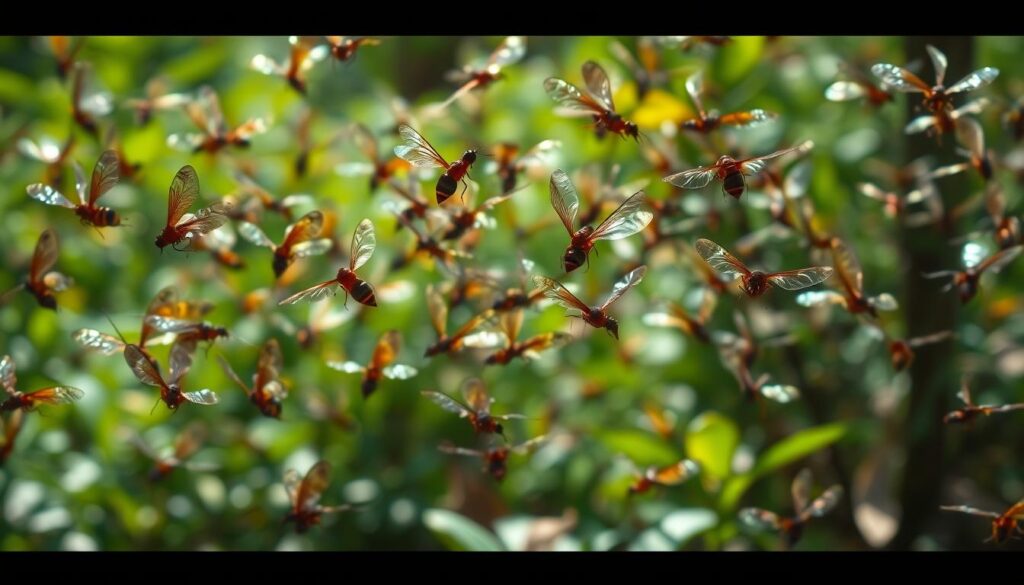
Termite swarms near your home mean a mature colony is nearby. Various factors like rain, warm weather, and humidity prompt winged termites to fly out. They seek mates in the air.
Male and female termites, called alates, fly out in spring or fall. After mating, they lose their wings and start a new colony. This is key for termites to spread and infest new areas.
Termite Swarm Behavior
Termite swarms are impressive, with hundreds or thousands of termites flying. Subterranean termites swarm in the day, while drywood termites wait until late summer or early fall. Dampwood termites swarm in summer.
The number of termites produced varies by colony size and type. Subterranean colonies can swarm a lot, while drywood swarms are smaller, with up to 100 termites.
Seeing termite swarmers near your home is a warning. It’s best to call a pest control expert. They can tell you what termites you have and how to protect your home.
| Termite Subgroup | Swarming Timing | Swarm Size |
|---|---|---|
| Subterranean | Spring (Daytime) | Hundreds to Thousands |
| Drywood | Late Summer/Early Fall | Less than 100 |
| Dampwood | Summer | Varies |
Distinguishing Termites from Ants
Termites and flying ants can look similar, but they have key differences. Knowing how to tell them apart is important for keeping your home safe. You can learn about the termite vs ant appearance, wings, and damage patterns to help control pests.
Termites have a long, straight body without a waist. Ants have a waist that is narrower. Termite antennae are straight, while ant antennae bend or elbow. Termite wings are the same size and simple, while ant wings are different sizes and have more veins.
| Characteristic | Termites | Ants |
|---|---|---|
| Body Shape | Straight, tube-like | Distinct narrowed waist |
| Antennae | Straight | Bent or elbowed |
| Wing Structure | All wings equal size and shape, simple veins | Varying wing sizes, complex veining |
Termites and ants damage wood in different ways. Termites eat wood from the inside, leaving mud tubes. Carpenter ants dig tunnels in wood, making nests.
It’s important to know which pest you have. Termites can harm your home a lot, needing expert help. Ants might be annoying, but they don’t usually hurt your house as much.
“Swiftly addressing a termite problem is essential to prevent significant damage to residential properties in Maryland.”
Conclusion
Termites can have wings, but only during a certain stage. This is when they are reproductive swarmers or alates. They fly out to mate and start new nests, which is a warning sign for homeowners.
Knowing how to spot winged termites can help you catch an infestation early. This way, you can stop it from causing a lot of damage to your home.
If you think you have termites, it’s smart to contact a pest control expert. They can do a detailed check and suggest the right treatment. Regular termite inspections and termite control can catch problems early and save your home from damage.
Being careful and proactive can keep your home safe from termites. Remember, dealing with termites quickly is key to protecting your home’s value and safety.
FAQ: Do termites have wings?
Do termites have wings?
Yes, termites have wings during their reproductive stage. This stage is called the “swarming” stage. The winged termites, or alates, leave their colonies to mate and start new ones.
What are the physical characteristics of winged termites?
Winged termites, or alates, have two pairs of wings that are the same size. They have a straight antenna and are about 1/4 to 3/8 of an inch long. Their color can vary from light to dark brown or black.
How can you tell the difference between winged termites and winged ants?
Winged termites have straight antennae and equal-sized wings. Their bodies are straight-sided without a waist. Termite wings also have simpler veins compared to ants.
What are the physical characteristics of termite wings?
Termite wings are 0.5 to 1 inch long. The front wings are longer and narrower than the hind wings. They have a ribbed costa and thin, translucent membranes with parallel veins.
Do all termites have wings?
No, not all termites have wings. Only the winged reproductive alates have wings. Colonies also include non-winged soldiers and workers.
What triggers termite swarming and reproduction?
Heavy rainfall, warm temperatures, and high humidity trigger termite swarms. This signals the winged alates to leave and find mates. After mating, they shed their wings and start new colonies.
Source Links
- https://www.orkin.com/pests/termites/life-cycle/flying-termites
- https://www.michepestcontrol.com/blog/2021/november/do-termites-have-wings-/
- https://safeguardpestcontrol.com.au/blog/termite-swarmers-what-to-do-if-you-see-termite-wings-on-your-floor/
- https://www.bigbluebug.com/blog/2018/february/when-do-termite-swarmers-lose-their-wings/
- https://www.orkin.com/pests/termites/characteristics-of-a-termite
- https://www.masseyservices.com/what-do-flying-termites-look-like/
- https://www.moxieservices.com/blog/what-bugs-look-like-flying-termites/
- https://www.planetnatural.com/termites-with-wings/
- https://www.smithereen.com/blog/flying-termites-at-home/
- https://content.ces.ncsu.edu/termite-swarmers-what-do-they-mean-for-you
- https://www.orkin.com/pests/termites/life-cycle/termite-swarm
- https://www.modernpest.com/blog/3-key-differences-between-winged-termites-and-flying-ants/
- https://www.naturalgreenlawnandpest.com/blog/flying-ants-vs-termites-how-to-tell-the-difference-what-to-do
- https://safepropest.com/how-to-get-rid-of-flying-termites/
- https://www.ondemandpestcontrol.com/?p=64476