





Termites are among the most successful insects on Earth. They have colonized most landmasses except Antarctica. With over 3,100 known species, they can damage furniture, crops, and plantations. A termite infestation can be faster and more damaging than an ant’s.
In the U.S., $2 billion is spent each year to control termites. The size of a termite varies from 4 to 15 millimeters up to 10 centimeters. The type of termite and their caste system also affect their size.
Key takeaways
- There are over 3,100 known species of termites, with the majority capable of causing damage to homes and crops.
- Termite infestations can be more damaging than ant infestations, and the U.S. spends an estimated $2 billion annually to control them.
- Termite size can range from 4 to 15 millimeters up to 10 centimeters in length, depending on the species and caste system.
- Termite colonies can range in size from a few hundred to several million individuals.
- Termite mounds in tropical areas can reach heights of up to 30 feet.
Termite Anatomy and Caste System
Termites live in complex colonies with a distinct caste system. Each member has a specific role. This social structure is key for their survival and community growth.
Workers
Workers make up 90% to 98% of a termite colony. They do many tasks, like caring for young termites and building tunnels. They are wingless, eyeless, and white, with a soft body.
Soldiers
Soldiers are 2% to 4% of the colony. They defend the colony from predators. They have strong bodies, large mandibles, and dark heads, scaring off intruders.
| Caste | Percentage of Colony | Primary Role |
|---|---|---|
| Workers | 90% to 98% | Care for young, build tunnels, forage for food |
| Soldiers | 2% to 4% | Defend the colony from predators |
The termite caste system is efficient and organized. It helps these insects thrive and protect their colony. Knowing about workers and soldiers shows us the social dynamics of these creatures.
Subterranean Termite Size
Subterranean termites live underground, fitting their name perfectly. They are small, ranging from 1/8 to 3/8 of an inch. Soldier termites are a bit bigger than workers.
These termites can sneak into homes through tiny cracks. They also use mud tubes to reach wood inside homes from their underground nests.
Despite their small size, subterranean termites are very destructive. A single colony can have 60,000 to two million workers. The queen can lay up to 10,000 eggs a year.
It takes several years for a colony to grow to its full size. In some places, colonies can have 2-3 million foragers.
Even a small colony of 60,000 workers can cause a lot of damage. They can eat up to 2.3 feet of wood in a year. Subterranean termites cause billions of dollars in damage each year in the U.S.
“Termites lead to more than $5 billion in property damage each year in the United States, which rises to around $6.8 billion when adjusted for inflation in today’s economy.”
Subterranean termites can grow and spread quickly. Homeowners need to watch for signs of these pests. Taking action fast is key to avoiding expensive damage.
How Big Is a Termite? Drywood and Dampwood Termites

When we talk about termite size, it’s key to know the difference between types. Drywood termites and dampwood termites are two kinds that look and grow differently.
Drywood Termites

Drywood termites live without touching the ground. They can travel up to a mile to find wood for their homes. Workers are about 3/8 of an inch long. The king and queen are a bit bigger, up to 1/2 inch and 1 inch.
Dampwood Termites

Dampwood termites are bigger than subterranean ones. They have strong pincers to fight off predators. They can be from 1/2 inch to 1 inch long, with soldiers and reproductives in this range too.
Termite size changes based on the species and their role in the colony. The environment and food also play a part. Knowing the typical sizes of drywood and dampwood termites helps us spot and deal with infestations.
| Termite Type | Worker Length | Soldier Length | Reproductive Length | Colony Size |
|---|---|---|---|---|
| Drywood Termites | 3/8 inch | Up to 12 mm | Up to 11 mm | Up to 10,000 members |
| Dampwood Termites | Up to 19 mm | Up to 20 mm | Up to 25 mm | Up to 2,700 members |
The size of termites matters a lot for the damage they can do. Drywood termites, being smaller, are more destructive. They can harm sound wood, even in old homes. Dampwood termites are less destructive but still a threat to wood.
Formosan Termite Size
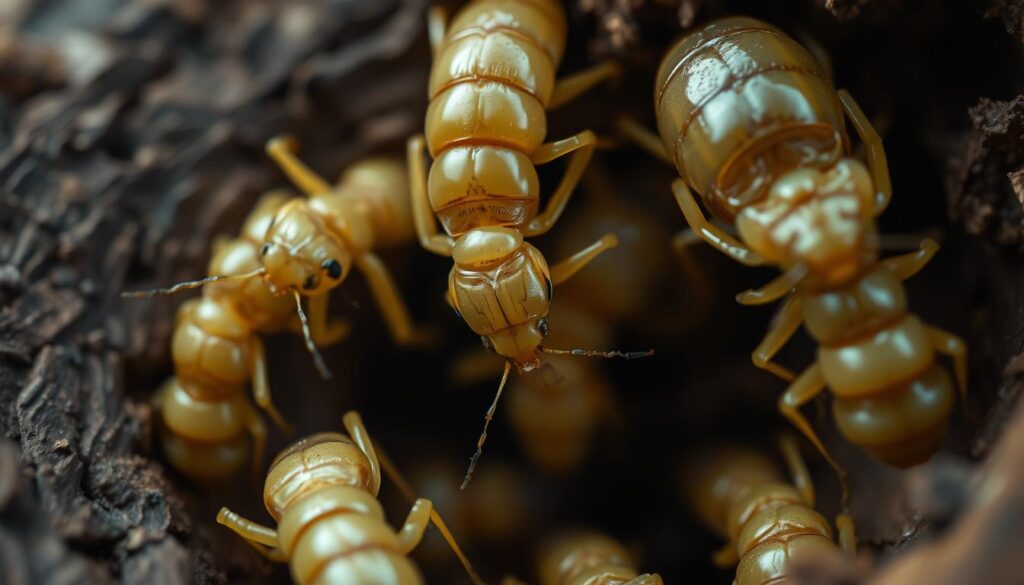
Formosan termites come from China and are the most aggressive and destructive termites in the world. They are 10-20% bigger than common termites, experts say.
The Coptotermes genus has 28 termite species, out of over 3,100 worldwide. Formosan termites can have colonies with millions of termites. Native termites have colonies with a few hundred thousand.
These termites are found in many U.S. states, including Alabama, Florida, and Texas. In Florida, they are common in coastal areas.
| Termite Measurements | Formosan Subterranean Termites | Native Subterranean Termites |
|---|---|---|
| Colony Size | Several million termites | Hundreds of thousands of termites |
| Soldier Termites | 10-15% of the colony | 1-2% of the colony |
| Alate Length | 12-15 mm | Not Specified |
Even though one Formosan termite doesn’t eat more wood than a native termite, their large colonies cause more damage. In New Orleans, the damage costs are about $300 million each year.
Formosan termites can damage over 47 plant species and various wood products. Their soldiers are 5-10 percent of the colony. The winged swarmers are 12-15 mm long. They were first found in Texas in 1956 and now live in 31 counties.
Conclusion
Termites vary greatly in size, from tiny 4 millimeters to large 10 centimeters. Knowing the type of termite is key to choosing the right treatment. It’s important to watch for signs and get help from experts to stop termite damage early.
The Innovative Pest Control company offers free checks and skilled technicians like Cory, Terry, and Dawson. They use safe, odorless chemicals and have happy customers for years. They’re a great choice for keeping termites away.
Understanding the size and habits of termites like subterranean, drywood, or Formosan is vital. Stay alert, get help when you need it, and act fast to protect your home. This way, you can avoid the serious damage termites can cause.
FAQ: Termite Size
How big can termites get?
Termites can vary in size. They can be as small as 4 millimeters or as big as 10 centimeters. This depends on the species and their role in the colony.
What are the different termite castes and their sizes?
Termites have a caste system with different roles. Workers, making up 90% to 98% of the colony, are 1/8 to 3/8 of an inch long. Soldiers, 2% to 4% of the colony, have strong bodies and large mandibles.
Reproductives, like the king and queen, are about half an inch long.
How big are subterranean termites?
Subterranean termites are usually 1/8 to 3/8 of an inch long. Soldier termites in this group are often larger.
What about drywood and dampwood termite sizes?
Drywood worker termites are 3/8 of an inch long. The king is about half an inch long. The queen is not as large as in other termite species.
Dampwood termites are larger than subterranean termites. Soldiers and reproductives can be 1/2 to 1 inch long.
How do Formosan termites compare in size?
Formosan termites are 10-20% larger than domestic subterranean termites.
Why is it important to know the size and type of termites?
Knowing the size and type of termites is key. It helps determine the right treatment. Different termites need different approaches.
Being alert and getting professional help is crucial. This way, you can stop termites from damaging your home.
Source Links
- https://budgetbrotherstermite.com/how-big-are-termites-understanding-their-size/
- https://poorboytermite.com/how-big-is-a-termite/
- https://www.orkin.com/pests/termites
- http://extension.msstate.edu/content/termite-biology-eastern-subterranean-termites-and-formosan-termites
- https://aantex.com/blog-post/anatomy-of-a-subterranean-termite/
- https://en.wikipedia.org/wiki/Termite
- https://www.pestworld.org/pest-guide/termites/subterranean-termites/
- https://www.orkin.com/pests/termites/subterranean-termites
- https://www.termite.com/termites/eastern-subterranean-termite.html
- https://pinnaclepest.com/dampwood-termites-vs-drywood-termites/
- https://www.blueskypest.com/blog/three-types-of-arizona-termites/
- https://edis.ifas.ufl.edu/publication/IG098
- https://entnemdept.ufl.edu/creatures/urban/termites/formosan_termite.htm
- https://urbanentomology.tamu.edu/urban-pests/termites/formosan/
- https://pccil.com/pest-library/termites/
- https://www.innovativepest.com/what-do-termites-look-like/