Tag: RenewableEnergy
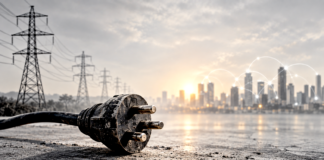
Infrastructure before innovation – you can’t digitise a blackout
Across East Africa, momentum is building around grid digitisation. Smart meters, automation and AI-enabled energy management are increasingly positioned as viable ways to establish efficient, sustainable and resilient energy provision. But there is a fundamental reality that cannot be overlooked - digitisation cannot compensate for gaps in basic infrastructure.

Cement energy security – powering Africa’s industrial expansion
Africa’s cement industry is expanding quickly, driven by urbanisation, infrastructure investment and rising demand for housing. However, behind this growth lies a persistent operational challenge: reliable and affordable access to electricity. Cement production requires large amounts of energy and remains highly sensitive to power interruptions.

Energy transition scorecard – from policy to delivery
While South Africa committed to significantly decarbonise its energy mix by 2030 in 2021, progress started slowly. However, momentum increased at the start of this year. Both President Ramaphosa’s State of the Nation Address and the recent National Budget placed strong emphasis on energy reform. At the same time, the Department of Electricity and Energy has announced a timeline for wholesale market phasing.

Diesel dependency – SA’s last shield for energy security now at...
South Africa faces two main energy security risks: electricity reliability and diesel dependency. The Strait of Hormuz crisis has shown a critical shift. Diesel is no longer a guaranteed “last line of defence”. If an external shock, such as the Strait of Hormuz closure, occurred during load-shedding, pressure would rise sharply. Diesel availability would tighten. This would affect on-site generators for critical loads such as hospitals and data centres.

Climate change assessments reshape environmental authorisations
South African environmental law is undergoing a decisive shift. This shift affects how climate change considerations are integrated into environmental authorisation (EA) decision-making. Courts increasingly recognise climate change as a material factor within the “need and desirability” assessment under the National Environmental Management Act 107 of 1998 (NEMA).

Transforming 8,000 tonnes of organic waste into ‘fuel and fizz’
South Africa is running out of landfill space fast. Major hubs like Cape Town and Johannesburg have less than five years of remaining landfill capacity. Therefore, the linear disposal method of landfilling is not serving the country’s waste management challenges. In addition to the landfill airspace challenge, organic waste carries an estimated R8.7 billion annual cost on our economy. This cost results from landfill practices.

Project preparation – from concepts to bankability
As the global infrastructure and energy transition agenda intensifies, many prospective projects stall in their earliest stages - long before they become “bankable”. To address this roadblock, our upcoming Business Forum will bring together development finance institutions (DFIs), governments, developers and transaction advisors.

Digital innovation and SaaS can reshape Nigeria’s energy sector
Today, just over 60% of Nigerians have access to grid-connected electricity. Even those who do often endure erratic service. The country’s National Bureau of Statistics reports that the average daily supply stands at less than seven hours. Yet, as Albert Einstein famously said: “In the middle of difficulty lies opportunity”. In Nigeria’s case, the convergence of renewable energy, digital innovation and Software as a Service (SaaS) can establish an energy landscape built on reliability and long-term sustainability.

Africa’s energy future may well lie in the sun
Across the African continent, one topic increasingly dominates conversations in boardrooms, parliaments and everyday households - energy. When the grid fails, and the lights go out, the consequences cascade through industry, education, health services and family life. Energy has therefore moved beyond being a purely economic matter.

The role of businesses in accelerating the net-zero journey
The shift towards net-zero is no longer a distant aspiration. Instead, it has become an urgent reality. Rising global temperatures now intensify extreme weather events. As a result, accelerating the net-zero journey has become critical. For South Africa, the world’s 11th highest emitter of greenhouse gases, the transition is complex.