



Tag: IntellectualProperty

Product get-up – when imitation becomes infringement
Standing out in a competitive market and attracting consumers’ attention is not easy. To achieve this, a product’s overall appearance, known as its “get-up”, should be distinctive. A product’s get-up encompasses far more than its name or logo. It includes colours, packaging, shape, layout, graphics, labels and other distinctive visual features that consumers associate with a specific product.

China’s trade mark reforms – raising the stakes for SA brands
Brand owners doing business in China are being put on notice. From 1 January 2027, the State Council can cancel trade marks registered in bad faith. It can also cancel marks that have become generic or have not been used for three consecutive years without legitimate reason.

Counterfeit goods protection – Zambia strengthens border control
Zambia has taken a significant step towards stopping counterfeit goods at the border. It has introduced a new Trade Marks Act. However, the new trade mark enforcement system will only become operational once the Regulations are promulgated.

AI and IP – the boardroom’s next governance challenge
Artificial Intelligence (AI) is no longer something financial institutions are preparing for. It is already embedded in how decisions are made, how products are designed and how risk is managed. Whether through fraud detection, algorithmic trading, customer engagement or compliance monitoring, AI is steadily reshaping the financial services sector.

Patent filing rights judgment – who gets to file?
In March 2026, the South African Supreme Court of Appeal (SCA) handed down a significant decision in The Regents of the University of California & Others vs Eurolab (Pty) Ltd & Others. The case turned on a deceptively simple question: who is legally entitled to apply for a patent under South African law?

NDA residuals clauses – can memory undermine confidentiality?
A Non-Disclosure Agreement (NDA) creates a protected space in which parties can exchange commercially sensitive information. Yet a few apparently innocuous words dealing with information retained in “unaided memory” may materially reduce that protection. In extreme cases, they may undermine the commercial purpose of the NDA itself.
Trademark dispute – Katy Perry vs Katie Perry
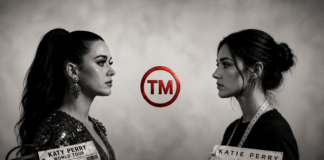
Katy is a hugely successful American pop star. Her fame carried her to extraterrestrial heights and even extended briefly into outer space for an unforgettable 10 minutes and 21 seconds. Beyond her music career, she has established a suite of companies to safeguard her various commercial ventures. Killer Queen, LLC serves as the vehicle through which she protects and manages her intellectual property rights.

The replica dispute – when a house becomes a lawsuit
When a private home becomes the centrepiece of a Bad Bunny production, the legal foundations may be just as important as the concrete ones. Eighty-four-year-old Puerto Rican homeowner Román Carrasco Delgado ("Carrasco"), who says he designed and built his distinctive salmon-coloured home with his brother, filed a lawsuit in Puerto Rico's Superior Court in September 2025 against several defendants, including Bad Bunny.

Digital interface branding – the new brand battleground
Digital business is the new frontier of modern entrepreneurship, and applications (apps) have become the gateway to almost every service imaginable. In a global economy driven by interconnectivity and advancing technology, start-up companies in all digital industries, particularly in FinTech, are quickly becoming the Oil and Rail industry equivalent of the 21st century.

Patenting genetic innovation – lessons from REGENXBIO v Sarepta
As gene therapy technologies continue to reshape modern medicine, patent law increasingly faces a difficult task. Courts must distinguish products of nature from genuine biological engineering. They frequently decide whether inventions involving genetic material represent technological innovation or merely identify naturally occurring biological features.