





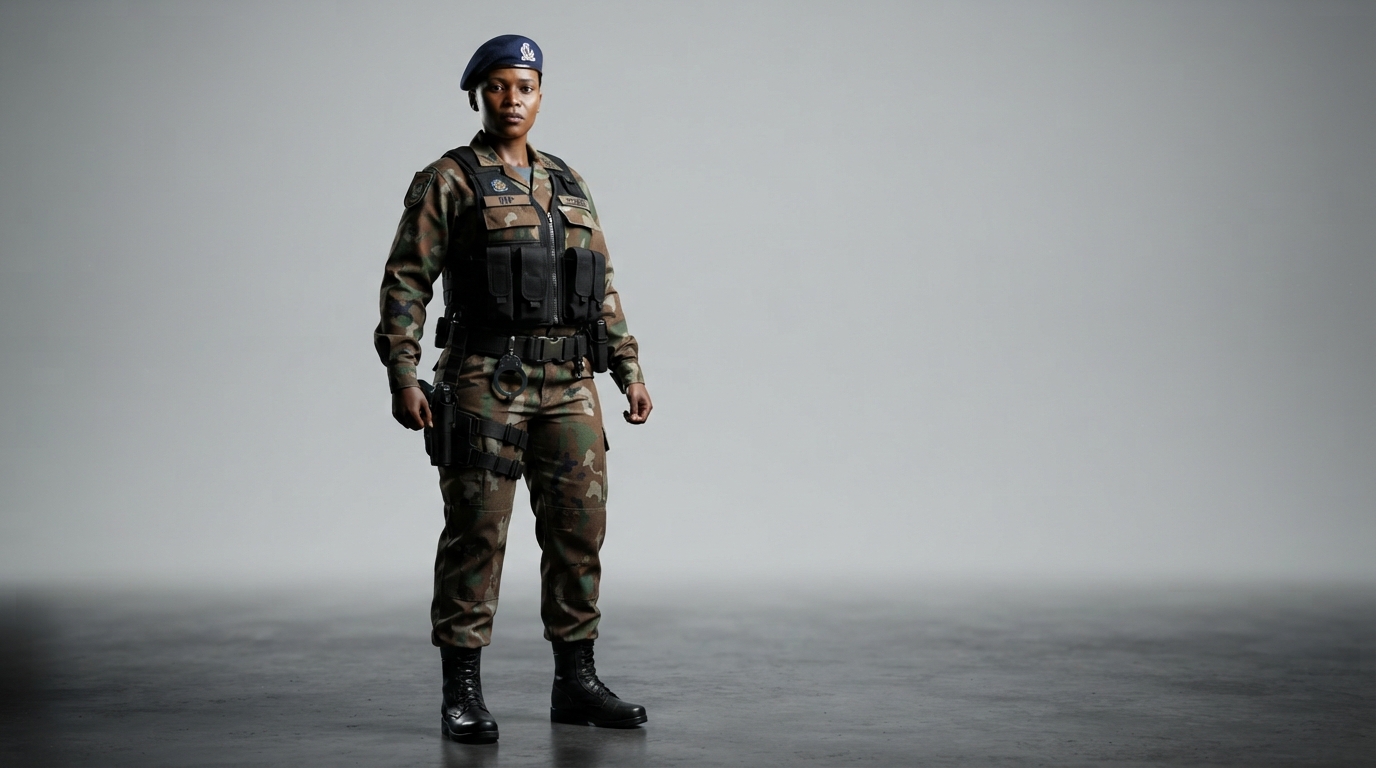
Military police salaries in South Africa depend mainly on SANDF rank, years of service, appointment type and allowances rather than on one fixed “military police salary”. Current 2026 market estimates place Military Police recruits at roughly R8,500 to R11,200 a month, qualified Privates at about R12,500 to R16,800, Corporals around R18,500 to R24,000, and senior officers considerably higher. These figures are estimates rather than an official SANDF Military Police salary table, so applicants should treat them as indicative.
South Africa’s Military Police form part of the South African National Defence Force (SANDF) rather than the South African Police Service. They perform law-enforcement functions within the defence environment, including crime prevention, investigations, traffic control, discipline and security at military facilities.
Military Police members remain military personnel, which means remuneration generally follows SANDF rank and service structures rather than a separate civilian policing salary scale.
Key takeaways
- Military Police pay is primarily rank-based, not based on a single occupational salary.
- A current 2026 third-party estimate places an MSDS Military Police recruit at around R8,500 to R11,200 a month.
- A qualified Military Police Private is estimated at around R12,500 to R16,800 a month.
- Estimated Corporal pay is around R18,500 to R24,000 a month, while a Sergeant may earn approximately R23,500 to R31,000.
- Higher ranks such as Warrant Officer, Captain, Major and Colonel can earn substantially more.
- SANDF remuneration operates under its own defence-force salary dispensation, and Parliament was still scrutinising aspects of that system in 2026.
- Military members may also receive benefits and certain allowances depending on service conditions and deployment.
What is the average military police salary?
There is no reliable single official average published specifically for South African Military Police members.
The key reason is that a Military Police member is paid according to rank, service category and applicable SANDF remuneration rules rather than simply carrying a salary attached to the job title “Military Police”.
A recent 2026 salary guide estimates the following monthly ranges:
| Military Police rank | Estimated monthly salary |
|---|---|
| MSDS recruit | R8,500 to R11,200 |
| Private | R12,500 to R16,800 |
| Lance Corporal | R15,500 to R19,500 |
| Corporal | R18,500 to R24,000 |
| Sergeant | R23,500 to R31,000 |
| Staff Sergeant | R29,500 to R37,000 |
| Warrant Officer Class 2 | R34,000 to R44,000 |
| Warrant Officer Class 1 | R42,000 to R54,000 |
| Lieutenant | R22,000 to R29,500 |
| Captain | R31,000 to R42,000 |
| Major | R43,000 to R58,000 |
| Lieutenant Colonel / Colonel | R59,000 to R82,000 |
These are third-party estimates, not an official 2026 Department of Defence salary schedule.
They are useful as broad career guidance, but actual SANDF remuneration should always be confirmed against the applicable appointment letter or official defence-force salary determination.
Military police salary ranges in South Africa
Military Police recruit salary
Many young entrants begin their SANDF careers through the Military Skills Development System, or MSDS.
The MSDS is a two-year voluntary service programme that provides military and functional training before members may be considered for further SANDF service.
Current third-party military police estimates place an MSDS recruit at around:
R8,500 to R11,200 per month
or approximately:
R102,000 to R134,400 per year.
MSDS remuneration should not be confused with the salary of a permanently appointed Regular Force member.
Military Police Private salary
After training and appointment into an operational role, a Military Police Private is currently estimated to earn around:
R12,500 to R16,800 per month
or:
R150,000 to R201,600 per year.
At this level, duties may include access control, military traffic duties, security patrols and crime-prevention support.
Military Police Corporal salary
A Corporal carries more supervisory and operational responsibility.
Current third-party estimates place Military Police Corporal pay at approximately:
R18,500 to R24,000 per month
or:
R222,000 to R288,000 per year.
A Corporal may supervise junior personnel and take a greater role in investigations or station operations.
Military Police Sergeant salary
Sergeant-level estimates currently sit at around:
R23,500 to R31,000 per month
or:
R282,000 to R372,000 per year.
Staff Sergeants are estimated somewhat higher, at roughly R29,500 to R37,000 a month.
Military Police Warrant Officer salary
Experienced Military Police personnel can progress into Warrant Officer ranks.
Current estimates suggest:
- Warrant Officer Class 2: R34,000 to R44,000 a month
- Warrant Officer Class 1: R42,000 to R54,000 a month
That represents approximately R408,000 to R648,000 a year, depending on rank and level.
Military Police officer salary
Commissioned officers normally carry command and management responsibilities.
Current indicative figures are:
- Lieutenant: R22,000 to R29,500 a month
- Captain: R31,000 to R42,000
- Major: R43,000 to R58,000
- Lieutenant Colonel / Colonel: R59,000 to R82,000
These estimated annual packages range from approximately R264,000 to R984,000.
How does SANDF military pay work?
SANDF remuneration does not operate exactly like a typical private-sector salary.
The Department of Defence has a distinctive personnel structure, and its own annual report notes that SANDF remuneration cannot always be presented using the standard Public Service salary-band format because of the military’s unique dispensation.
Parliamentary records from 2026 also refer to the SANDF salary dispensation introduced in 2010/11 and a 2% annual pay progression that has historically applied to members, although questions were raised in Parliament about the legal and policy instruments underpinning aspects of that system.
This makes it particularly important to rely on an individual SANDF appointment and current official payroll rules for exact remuneration.
What affects military police salary?
Rank
Rank is the most important factor.
A Private and Colonel may both serve within Military Police, but their pay differs substantially because their command responsibility and seniority are different.
Years of service
Experience and progression within the SANDF can influence both rank and remuneration.
Longer-serving members may progress through military ranks and pay structures where they meet promotion requirements.
Permanent versus MSDS appointment
MSDS members are participating in a two-year development programme rather than holding the same employment status as established Regular Force members.
This means entry-level MSDS remuneration should not be treated as the permanent Military Police salary.
Deployment
Military personnel get deployed on domestic or external operations.
In 2026, for example, the President authorised the deployment of 2,200 SANDF members alongside SAPS under Operation Prosper to combat illegal mining and gangsterism.
Deployment can affect working conditions and may result in applicable operational allowances, depending on the mission and current SANDF rules.
Specialist responsibilities
Military Police members may develop expertise in areas such as:
- criminal investigation;
- military law;
- close protection;
- traffic policing;
- crime-scene work;
- military security;
- operational policing; and
- command and supervision.
Specialisation can support progression into more senior appointments.
What does a Military Police officer do?
Military Police serve a different purpose from civilian SAPS officers.
Their work centres on the military community and can include:
- investigating offences involving military personnel;
- enforcing military law and discipline;
- policing military installations;
- military traffic enforcement;
- access control;
- crime prevention;
- protecting defence assets;
- supporting military operations; and
- working with civilian law-enforcement agencies when required.
A 2026 SANDF publication, for example, refers to Military Police personnel working as investigators and serving at Military Police Area Offices.
How do you join the Military Police in South Africa?
A common entry route into the SANDF is the Military Skills Development System.
The current 2026/2027 MSDS recruitment information says applicants generally need to:
- be South African citizens;
- be between 18 and 22 with Grade 12, or up to 26 with an appropriate three-year tertiary qualification;
- meet SANDF medical and physical requirements;
- have no criminal record;
- be willing to relocate and deploy; and
- be recommended by a selection board.
Members complete military training and functional training during the programme before being deployed to perform their speciality.
Continuation into the Regular Force is not automatic. It depends on performance, available posts and SANDF requirements.
Is Military Police the same as SAPS?
No.
The South African Police Service is the country’s civilian police service.
Military Police operate within the South African National Defence Force and focus primarily on enforcing military law, discipline and security within the defence environment.
SANDF members can, however, support SAPS when constitutionally authorised.
In March 2026, for example, the President authorised SANDF personnel to serve in cooperation with SAPS to address illegal mining and gangsterism in several provinces.
That does not make SANDF members SAPS officers.
How to increase your earning potential
Progress through the ranks
Promotion remains the clearest path to higher military remuneration.
Progression from Private through NCO, Warrant Officer and commissioned officer ranks can materially increase earnings.
Complete specialist Military Police training
Investigation, military law, leadership and operational policing skills can support career progression.
Obtain tertiary qualifications
Qualifications in fields such as policing, criminology, law and security management may support access to more advanced roles.
A previous official Military Police Division graduate internship, for example, specifically sought qualifications in Criminology and Policing.
Move into command roles
Senior Military Police officers have broader responsibility for personnel, investigations, operations and policy, which is reflected in higher estimated salary bands.
What employees should know
Treat Military Police salary information online cautiously.
Unlike many civilian professions, there is not a straightforward public webpage stating that every South African Military Police officer earns one set amount.
Always check:
- your military rank;
- appointment type;
- service category;
- basic salary;
- allowances;
- pension contributions;
- medical benefits; and
- deployment status.
These can all affect total remuneration.
What jobseekers should know
Do not pay anyone who claims they can secure you a SANDF or Military Police position.
Current MSDS recruitment guidance states that SANDF applications are free.
Official vacancies and recruitment programmes should be verified through government or SANDF channels.
FAQ: military police salary
How much does Military Police earn in South Africa?
There is no single salary because Military Police members are paid according to SANDF rank and service conditions. Current third-party estimates range from about R12,500 to R16,800 a month for a Private to R59,000 to R82,000 for senior Lieutenant Colonel or Colonel-level roles.
What is the starting military police salary?
An MSDS recruit is currently estimated at about R8,500 to R11,200 a month, while a qualified Military Police Private is estimated at around R12,500 to R16,800. These are indicative figures rather than an official SANDF pay quotation.
How much does a Military Police Corporal earn?
Current estimates place a Corporal at around R18,500 to R24,000 a month, equivalent to roughly R222,000 to R288,000 a year.
How much does a Military Police Sergeant earn?
A Sergeant earns approximately R23,500 to R31,000 a month, while Staff Sergeants may earn around R29,500 to R37,000.
How much does a Military Police officer earn?
Commissioned officer estimates vary from approximately R22,000 to R29,500 a month for junior officers to around R59,000 to R82,000 for senior Lieutenant Colonel or Colonel-level appointments.
Is Military Police part of SAPS?
No. Military Police are part of the SANDF. SAPS is the civilian national police service.
Can Military Police work with SAPS?
Yes. SANDF members may support SAPS when lawfully deployed. In 2026, 2,200 SANDF members cooperated with SAPS under Operation Prosper.
Do Military Police receive benefits?
SANDF remuneration can include benefits and allowances in addition to basic salary, depending on appointment and service conditions. Be sure to confirm exact benefits against current Department of Defence rules and the member’s appointment conditions.
How do I join Military Police in South Africa?
A common route is through the SANDF Military Skills Development System. Applicants must meet citizenship, age, education, criminal-record, medical and physical requirements and successfully pass the selection process.
Sources
- South African Parliament: SANDF salary dispensation and annual pay progression parliamentary question https://www.parliament.gov.za/storage/app/media/Docs/quest_inte/01pv5mf2bxofokqzbl2nalf2ifbchhcjwf.pdf
- Department of Defence Annual Report 2024/2025 https://www.gov.za/sites/default/files/gcis_document/202511/department-defence-annual-report-2024-2025.pdf
- South African Government: 2026 SANDF deployment in cooperation with SAPS https://www.gov.za/news/media-statements/president-cyril-ramaphosa-authorises-sandf-deployment-fight-against-crime-13
- Careers Portal: SANDF MSDS 2026/2027 recruitment information https://www.careersportal.co.za/company/sandf/internships-2026/sandf-msds-2026-application-forms-available-for-pdf-download
- Careers Portal: How the Military Skills Development Programme works https://www.careersportal.co.za/careers/military-careers/how-to-get-into-the-military-skills-development-programme-msds-2026-2027
- Jobrato South African Army Military Police salary scale and rank estimates https://jobrato.co.za/south-african-army-military-police-salary-scale-and-rank-structure/
- South African Government Military Police Division internship and qualification context https://www.gov.za/sites/default/files/gcis_documents/PUBLIC%20SERVICE%20VACANCY%20CIRCULAR%2018%20OF%202019.pdf
- Parliament of South Africa: SANDF personnel expenditure and salary bill context https://www.parliament.gov.za/press-releases/media-statement-sandf-salary-bill-pressures-cannot-be-fixed-without-comprehensive-policy-rethink