






Michael Anav | CEO | ReachPlayers | mail me |
Reaching young audiences in South Africa is becoming increasingly complex. Social media platforms dominate discovery. However, attention is fragmented, competition is intense, and many brands still operate on outdated assumptions about how younger generations think, spend and engage.
To better understand this generation on its own terms, we focused on immersive in-game branded content, and we surveyed 10,000 young South Africans aged 13 to 25. We gathered responses directly inside gaming environments where this audience is active and engaged.
The findings point to a generation that is ambitious, practical and highly selective. The findings also highlight a growing gap between where brands invest and where attention is actually held. These insights offer an important glimpse into the future of youth marketing.
A generation that doesn’t think the way brands expect
The data challenge common perceptions of youth behaviour. A total of 45.5% of respondents say making money is their top priority. Career success follows at 37.6%, while 18.7% focus on supporting their family. Starting a business came in at 14.2%. Fame ranked near the bottom.
Spending habits reinforce this shift. Saving money or helping family is the largest spending category at 44.7%. Clothes and fashion follow at 37.3%, while food and going out account for 26.6%. Gaming, games and skins sit at 9.7%. That figure ranks ahead of music, events and entertainment at 6%. This is not a generation defined by impulsive consumption. Instead, they are thoughtful, practical and oriented toward the people around them.
Influence also comes from unexpected places. Family is the strongest purchase influence. Self-decision making and friends follow behind. Meanwhile, influencers and creators account for just 9.5%. Ads trail at 4.9%. This signals a generation that is more grounded, independent and practical than many brands assume.
When it comes to trust, quality leads at 58.8%. Fair price follows at 36.0%, while personal recommendation accounts for 16.3%. Seeing a brand frequently online sits at just 10.4%. Repetition no longer builds relationships in the way many brands expect. In addition, 45% of Gen Z use ad blockers to avoid this repetition. These behaviours are reshaping the future of youth marketing and forcing brands to rethink engagement strategies.
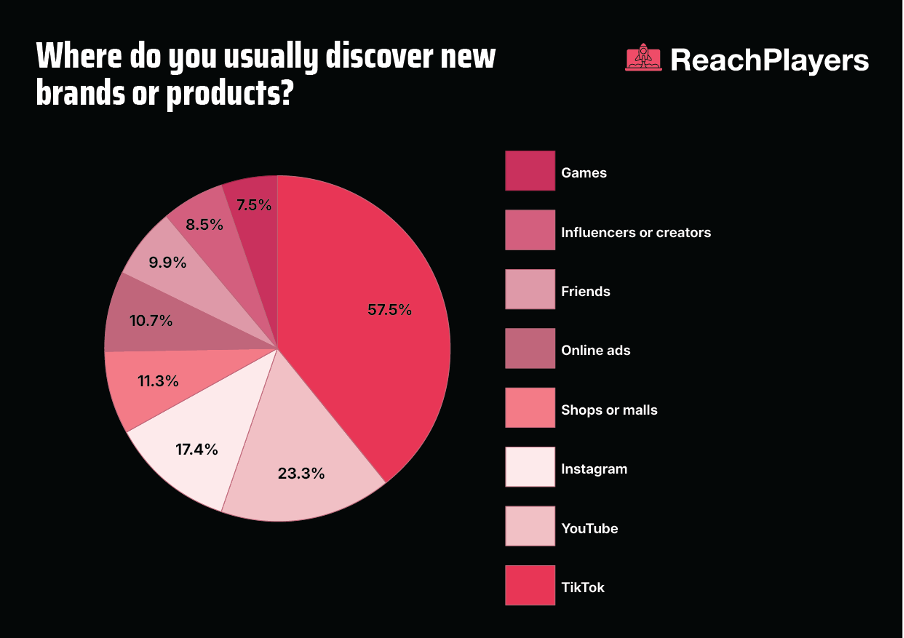
Social wins discovery but not attention
The research confirms that social media platforms remain the primary gateway for brand discovery. A total of 57.5% of respondents say they first encounter brands on TikTok. However, this finding also reflects where brands focus their investment. Far fewer brands activate inside gaming environments. As a result, a clear imbalance exists in how brands use different channels.
More than 30 million Gen Z and Gen Alpha South Africans represent over half of the country’s population. Therefore, the scale of this audience is not in question. Instead, brands must ask whether they are engaging young people in ways that genuinely resonate. At the same time, 15% of respondents say they do not like advertising at all.

From passive scrolling to active attention
By contrast, gaming environments show a fundamentally different type of engagement. A total of 39.5% of respondents say they are much more focused in gaming environments. A further 16.5% say they are a little more focused. Combined, 56% of respondents report higher attention levels meaningfully inside gaming environments than on social media. This highlights a clear difference in attention quality.
Social drives reach, but it does not consistently hold attention. Many brand managers do not realise that social media and gaming reach nearly the same share of the South African population. Social media reaches 41.5%, while gaming reaches 44%. The difference lies in what happens after brands capture attention.
Social media engagement averages less than nine seconds per post. Our research shows that in-game branded content engagement averages between two and eight minutes, depending on the activation. The gap between these figures is not marginal. Instead, it represents a fundamentally different category of engagement.
This finding reflects real behaviour, not just perception. Spending on gaming, including games, skins and in-game items, ranks higher than spending on music, events and entertainment. Therefore, gaming is not only where attention exists. It is also where real economic activity already occurs. This trend will play a significant role in shaping the future of youth marketing.
Unlike passive scrolling, gaming is active and participatory. Players make decisions, interact, compete and engage in real time. Consequently, brands gain a fundamentally different opportunity. That opportunity is based on participation rather than interruption. Brands earn attention through interaction rather than capturing it through placement.
What this study gave us was a much more complete picture of how young South Africans actually think. They are ambitious, they are selective, and they respond to brands that understand them. That should change how marketers plan, not just where they place ads.
What this means for marketers
Taken together, the findings point to a generation that is harder to reach through conventional means. However, they remain highly responsive when brands show up with genuine relevance. Family influence, self-directed decision making and quality over familiarity are the real drivers of purchase behaviour.
Discovery may happen on social media, but trust develops elsewhere. It grows through people, experience and environments where this generation is genuinely present and engaged. For those aged 18 and under, gaming has become the social backyard of their generation. The skin their avatar wears often matters more than the brand on their back in real life.
We work with global brands including Samsung, L’Oréal and Adidas. We reach millions of young players across gaming environments worldwide. This study reflects our broader commitment to understanding the next generation. It views them not only as a gaming audience but also as consumers, decision makers and culture shapers. Understanding these shifts will be critical to the future of youth marketing as this generation continues to influence spending, culture and brand engagement.