





Employee safety falls under the Occupational Health and Safety (OHS) Act. This legislation holds employers responsible for maintaining a safe working environment.
Under the Act, businesses have a legal obligation to implement effective protocols. These protocols must ensure a swift and organised response in the event of an emergency.
Furthermore, the latest data from the Federated Employers Mutual Assurance Company (FEM) reported 6,157 accidents in South Africa’s construction industry alone in 2022. Out of these incidents, 48 were fatal and 581 led to permanent disabilities.
Medical emergencies can occur at any time
While these figures highlight the risks of workplace accidents, many businesses underestimate the danger of medical emergencies. These emergencies often arise from non-occupational incidents, such as sudden cardiac arrests or strokes. These can be equally life-threatening.
Medical emergencies can occur at any time. So, workplace medical emergency preparedness means businesses are urged to take the necessary precautions. The OHS Act requires businesses to conduct regular training and drills. They must also review and update their emergency response plans at least twice a year. This ensures employees are equipped to handle emergencies.
In this context, there are seven most common workplace medical emergencies and that businesses can prepare for them:
-
Slips, trips and falls
To keep employees safe, businesses must identify high-risk areas and situations. This helps reduce the risk of incidents. For example, staircases should have anti-slip strips. Wet floor signs must be used consistently. Water leakages require immediate attention. Additionally, wires and cables should be neatly arranged to help prevent accidents.
-
Burns
Burns are often industry-specific injuries. Therefore, employees working with machinery or chemicals should receive specialised training. This training must focus on the safe use of the equipment in question. In addition, workplaces must stock burn kits. These kits provide immediate treatment should an injury occur.
-
Lacerations and abrasions
The availability of appropriate first aid kits depends on the industry. However, businesses must ensure these kits are readily accessible. Employees should also receive training in wound management. This reduces the risk of infection.
-
Fires and explosions
Businesses should conduct regular fire safety inspections. They must install fire suppression and sprinkler systems. Furthermore, employees need training in fire safety protocols to enhance workplace readiness.
-
Chemical spills
Workplaces handling hazardous substances must implement strict chemical spill protocols. They should also provide personal protective equipment (PPE) to employees. In addition, businesses must conduct proper disposal training and ensure correct execution of these procedures.
-
Structural failures
Regular inspections of buildings, stairwells and ceilings are crucial. These inspections help prevent collapses and other safety hazards that can jeopardise employee safety.
-
Medical emergencies (heart attacks, strokes, seizures, etc.)
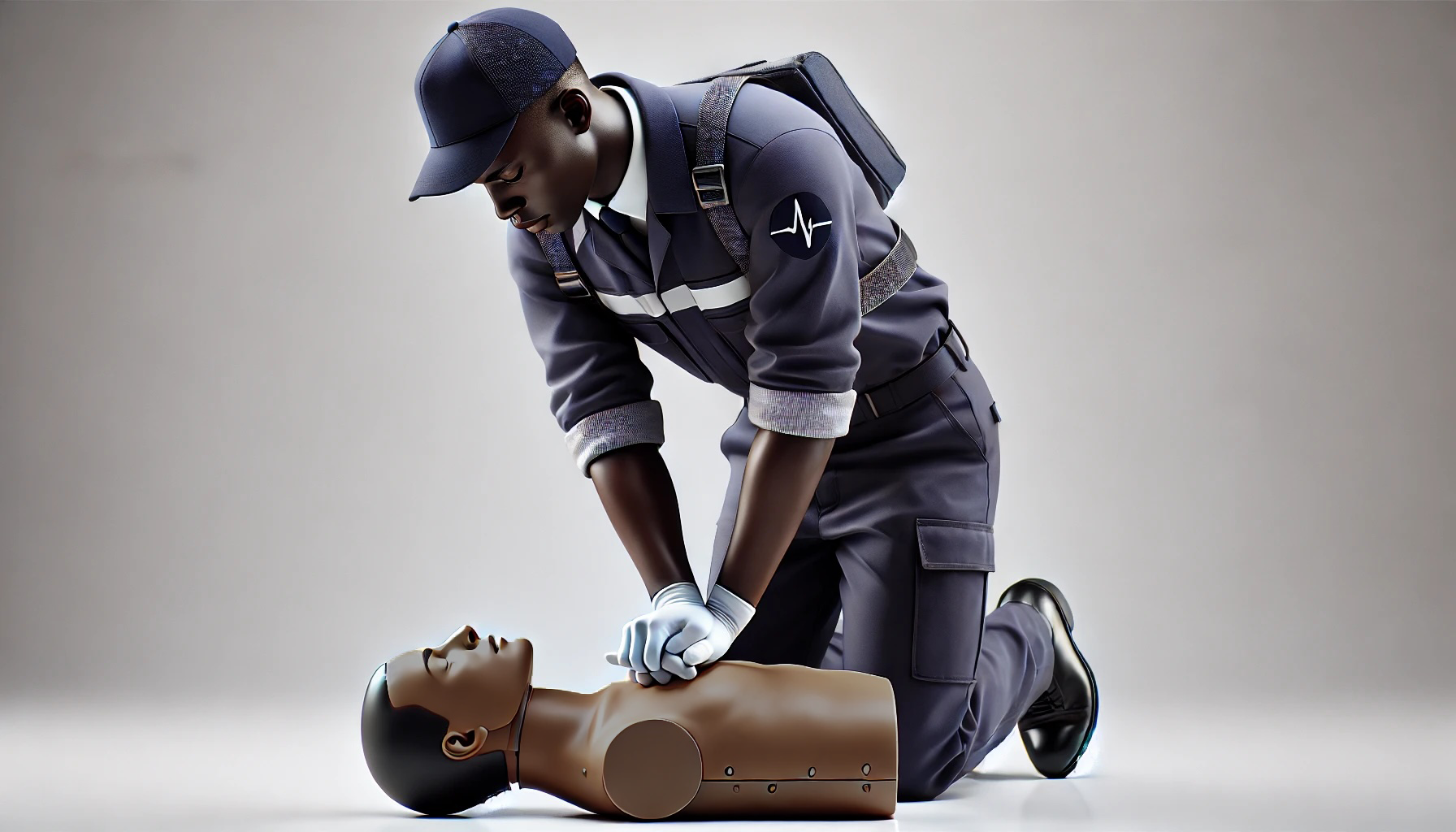
First aid teams need training in Cardio Pulmonary Resuscitation (CPR) and basic life support techniques. Moreover, businesses should make automated external defibrillators (AEDs) available in high-risk environments. These measures increase the chances of survival during medical emergencies.
First response
First aid training goes beyond meeting compliance requirements. It can be the difference between life and death. A well-trained first aid team is the first defence in any workplace emergency.
With a structured response process in place, we can integrate into each phase. This support ensures businesses achieve the best possible outcomes.
The first aid team at a business plays a critical role. They are responsible for attending to the person who needs medical attention. Once they assess the patient, the first aider activates emergency medical services. While waiting for an ambulance to arrive, we provide life-saving pre-arrival instructions to the first aiders. This step is crucial, as it could mean the difference between life and death.
Common medical emergency responses
Once we are activated, the call is triaged to assess the severity of the situation. Based on this assessment, we dispatch the appropriate response team. Upon arrival, our medics work to stabilise the patient. They then ensure rapid transport to the most appropriate medical facility.
Post-incident support
The effects of a medical emergency often extend beyond the immediate crisis. We assist  businesses with post-traumatic debriefing. They also provide trauma counselling for any other incident that may require support.
Workplace medical emergency preparedness is not just about ticking a compliance box. Businesses that prioritise a structured emergency response – from first aid teams to post-incident trauma support – create a safer, more resilient workplace. This commitment is why our dedicated team of consultants works closely with organisations. They help develop emergency plans and customised solutions suited to each business’s industry-specific needs.
Coleen Daniel | Corporate Sales Manager | Workplace Solutions | ER24 | mail me |