





Termites use their sense of smell and pheromones to talk to each other and their surroundings. They have small, weak eyes and often can’t see at all. But, they can smell things and find moisture with their sensitive antennae.
The smell of termites might remind you of mold or damp wood. This smell isn’t from the termites themselves. It’s because of the damp, rotting wood they live in.
Key takeaways
- Termites rely on their sense of smell and pheromones to gather information and communicate.
- The smell of a termite infestation can be described as musky, musty, or similar to damp leaves or moist, dark places.
- Termites are secretive and live in hidden places, making it difficult to locate them by smell alone.
- Termite droppings have a mild odor, but it is not strong enough to induce nausea.
- Essential oils like clove bud, cinnamon, and garlic can help repel termites and deter infestations.
What Makes Termites Smell?
Understanding the Termite Odor
Termites have a unique smell that’s often described as musky or musty. It’s similar to the smell of damp, dark places. This smell isn’t from the termites themselves but from what they eat and where they live.
When termites eat wood, they create a moldy smell. They also like damp places, which makes the smell worse. This smell is a sign of a termite problem.
Termites don’t have noses but use scent trails to talk to each other. They use their antennae to follow these trails. These smells help them work together and organize their colonies.
| Termite Odor Characteristics | Factors Contributing to Termite Smell |
|---|---|
| Musky, musty, mildew-like | Byproducts of termite feeding and nesting activities |
| Resembles damp, dark environments | Termites’ preference for moist conditions |
| Not directly emitted by termites | Pheromone communication through scent trails |
“Termites rely heavily on scent and pheromones carried on the breeze for various purposes.”
The smell of termites might be noticeable sometimes. But it usually can’t get through walls, floors, or ceilings. If you smell something bad and can’t find the source, get a pro to check for termites. They can find the problem and fix it.
The Moldy Smell of a Termite Infestation

One of the first signs of a termite infestation is a moldy or musty smell. This smell comes from the damp, decaying wood termites eat. As they burrow and nest, they release this musty scent.
This smell might be the only clue to a termite problem. Termites often hide until they’ve caused a lot of damage. In Central Florida, most homes will face termites at some point. These pests can cause millions in damage each year in the US.
The moldy smell from termites means they’re eating your home’s wood. As they nest, they make the area damp and decaying. This leads to the musty smell. It’s a sign you need to act fast.
| Termite Fact | Statistic |
|---|---|
| Termite queens lay eggs | up to 25 per minute |
| Termite queens can live | more than 20 years |
| Termite damage costs | millions of dollars per year in the US |
The musty smell from termites means you need to take action. Recognizing this sign and getting help can save your home. It prevents expensive repairs later on.
Do Termites Have a Smell?
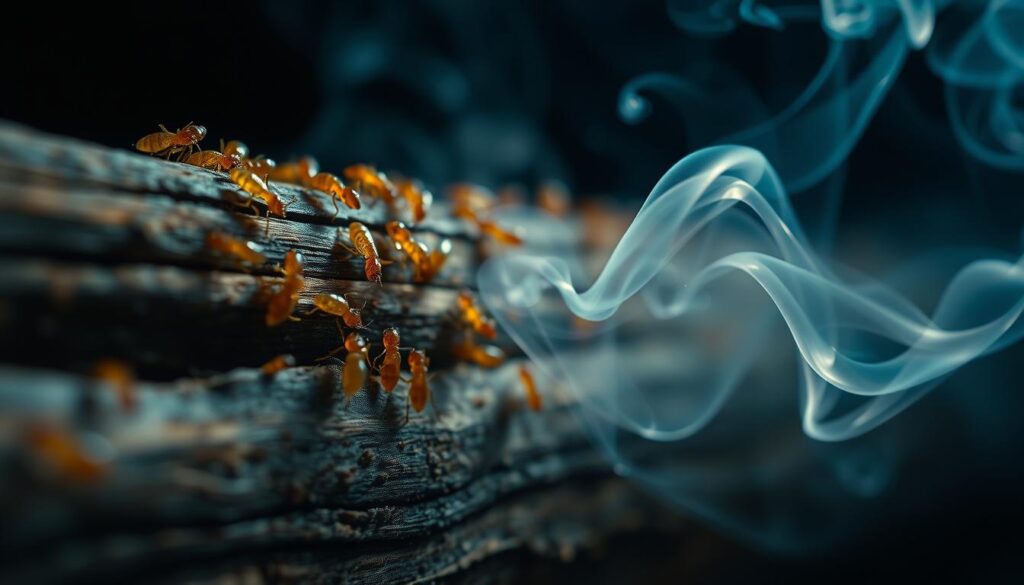
Termites themselves don’t have a strong smell. But, their activities can make a place smell musty or moldy. This happens because termites live in damp, dark places and eat wood. As wood decays, it smells bad.
The smell gets worse because termites dig and nest. This digging and nesting make the smell more noticeable. It’s one of the first signs you might have termites.
Termites also release pheromones. These are special smells they use to talk to each other. They help with finding food, building, and finding friends. When there are lots of termites, this smell gets stronger.
How well you can smell termites depends on your nose. Some people can smell them better than others. Even dogs can sniff out termites, but not everyone can.
The smell of termites is often mixed with the environment they live in. It’s not just the termites themselves. The smell comes from the wood they eat and the damp places they like. They also grow fungi to help them eat, which adds to the smell.
| Termite Smell Characteristics | Description |
|---|---|
| Musty or Moldy Odor | Caused by the decay of wood as termites feed and the damp conditions they prefer. |
| Pheromone Scent | Termites release pheromones, like “zingerone,” to coordinate their social activities, contributing to the overall odor. |
| Fungal Aroma | Termites cultivate specific fungi in their workings, and the scent of this fungus can be noticeable, especially when the termite tunnels are exposed. |
| Sensitivity to Smell | Some people may be more sensitive to the termite odor than others, and trained detection dogs can identify the scent more easily. |
In summary, termites themselves don’t have a strong smell. But, their actions can make a place smell musty or moldy. This smell is a sign of termites. Knowing about this smell helps us find and fix termite problems.
Where Does the Termite Smell Come From?
The smell of termites doesn’t come from them directly. It comes from the damp, moldy environment they create. This is because they eat and burrow through wood. As they do this, they make a damp, decaying area that smells musty. This smell is known as the source of termite smell or origin of termite odor.
Identifying the Source of the Odor
The smell of termites can tell you how bad the problem is. The smell is stronger where termites are eating or nesting. It’s key to find where the smell is coming from to understand the problem.
By looking closely at the affected areas, you can see how big the problem is. This helps you know what to do next.
Termites don’t smell like lemon or citronella. But, their presence can make small particles in the air. These particles can cause allergies and asthma.
When termites die, their bodies don’t smell bad. This is because they dry out and don’t smell.
The smell of termites comes from the damp, moldy places they make. Finding where this smell is coming from helps homeowners fix the problem. It also stops more damage to their homes.
Signs of a Termite Infestation
Termites can quietly damage your home, causing harm that may go unseen for years. The musty smell is a sign, but there are other signs of termite infestation to watch for.
Look for tiny holes or tunnels in wood. Termites make these paths as they eat wood. Also, if floor tiles are loose or flooring is warped, it could be termites.
- Drywall discoloration
- Mud tubes on the foundation or exterior walls
- Soft, hollow-sounding spots on wooden structures
These signs of termite damage mean your home might be infested. Call a pest control expert quickly to stop more damage.
Termites are a big problem, costing over $5 billion in damage each year. Catching them early and treating them right is key to protecting your home.
What to Do If You Smell Termites
If you smell something musty or moldy, it might mean termites are around. Check the area for mud tunnels, wood damage, or droppings that look like coffee grounds. These signs could mean termites are there.
If you’re not sure what’s causing the smell, call a pest control expert. They can do a detailed check and figure out if you have termites. Termites can damage your home a lot if you don’t get help.
Seeking Professional Assistance
Don’t try to handle termites yourself. Pest control experts have the tools and knowledge to find and fix termite problems. They can find hidden termites and suggest the best way to get rid of them.
- They use special tools like moisture meters and thermal cameras to find termites.
- They choose the best treatment, like bait systems or liquid treatments, based on the problem.
- Acting fast is key because termites can harm your home a lot if not stopped.
If you think you have termites, call a pest control service right away. Fixing the problem early can save you a lot of money and keep your home safe.
“Termite infestations can be hard to spot, but a pro can find and fix the problem before it gets worse.”
Conclusion
Termites don’t have a strong smell, but their presence can be noticed through a musty or moldy smell. This smell comes from the damp, decaying wood they eat and burrow through. The termite smell is a sign of a termite infestation, but look for other signs too.
These include discarded wings, mud tubes, and wood that sounds hollow. If you think you have a termite problem, call a professional pest control expert. They can do a detailed check and start the right termite control treatment.
Being alert to termite signs, like the termite odor, helps protect your property. It stops these pests from causing big damage.
FAQ: Do Termites Have A Smell
Do termites have a smell?
Termites themselves don’t have a strong smell. But, their activities can make wood smell musty or moldy.
What causes the musty smell associated with a termite infestation?
The smell isn’t from the termites. It comes from the damp, decaying wood they eat and the environment they make.
How can the termite odor help detect an infestation?
The musty smell is a key sign of termites. It shows the pests are there and causing damage.
What other signs of a termite infestation should be looked for?
Look for tiny holes in wood, loose floor tiles, and drywall that looks different. Also, check for mud tubes and soft spots in wood.
Where does the termite odor come from?
The smell isn’t from the termites themselves. It comes from the damp, decaying wood they eat and burrow through.
How can the source of the termite smell be identified?
Inspect the affected areas carefully. Follow the smell to find where it’s coming from. This helps figure out how bad the infestation is.
What should you do if you suspect a termite infestation based on the smell?
If you smell something musty or moldy, it might mean termites. Call a pest control expert for a check and treatment.
Source Links
- https://www.termitespecialist.sg/do-termites-give-off-an-odor/
- https://www.pesticon.com/termites/what-smells-do-termites-hate/
- https://www.varsitytermiteandpestcontrol.com/blog/get-rid-of-termites-three-smells-they-hate
- https://holderpest.com/blog/termites-5-facts-you-need-to-know/
- https://www.barefootmosquito.com/termites-vs-wood-root/
- https://www.dependablepestcontrol.com.au/13-signs-of-termite-infestation/
- https://www.chemfreeexterminating.com/do-termites-give-off-a-smell/
- https://www.conquertermites.com.au/articles/2023-05-03-can-you-smell-termites/
- https://www.orkin.com/pests/termites/damage/termite-damage-signs
- https://thekillers.net/blog/how-to-identify-termite-infestations-in-your-home/
- https://www.bobvila.com/articles/termite-infestation/
- https://staysafe.org/pest-control/what-are-the-early-warning-signs-for-termites/
- https://www.pestcontrolsg.com/articles/what-smells-do-termites-hate.html