





Termite droppings, or frass, are a clear sign of termites in your home. It’s important to deal with them quickly to avoid more damage. This article will show you how to get rid of termite droppings and stop them from coming back.
Key takeaways
- Termite droppings, or frass, are a clear indication of a termite problem in your home.
- Prompt removal of termite droppings is crucial to prevent further damage and maintain a healthy living environment.
- Various techniques, from DIY methods to professional pest control services, can be employed to effectively get rid of termite droppings.
- Understanding the different types of termite droppings and their characteristics can help in identifying the specific termite species affecting your home.
- Implementing preventive measures, such as sealing cracks and maintaining your home’s exterior, can significantly reduce the risk of future termite infestations.
Understanding Termite Droppings
Knowing the difference between drywood and subterranean termite droppings is key. These small signs help figure out the type of termite problem. They also guide you to the best solution.
Drywood Termite Droppings
Drywood termites eat dry wood in homes and buildings. They push out their droppings, called “frass,” to keep it from building up inside. Drywood termite droppings are about 1 millimeter long and can be light to dark brown.
The frass looks like small piles of salt, pepper, and sawdust. It can irritate your skin because of the enzymes and microbes. So, wear gloves, a mask, and goggles when cleaning it up.
Subterranean Termite Droppings
Subterranean termites make a mud-like substance with their fecal matter. This mud is used to build their underground tunnels and galleries. It can also be found on the surface, showing an active infestation.
Unlike drywood termites, subterranean termites mix their droppings with soil. They create “mud tubes” to travel from their underground nests to food sources above ground, like wood in your home.
“Identifying termite droppings early is crucial for preventing expensive repairs.”
Recognizing Signs of Termites
Termites can be a homeowner’s worst nightmare. They can cause a lot of damage to wooden structures if not stopped early. Luckily, there are signs that can help you spot a termite infestation early. This allows you to act fast and prevent more damage.
One clear sign of termites is termite droppings, also known as frass. These small, pellet-shaped droppings are about 0.04 inches long. They have six concave sides with rounded ends. Their color can vary from light beige to black, depending on the wood they eat.
Another sign is termite mud tubes. These are small, tunnel-like structures built by subterranean termites. They use these tubes to travel from their nest to the wood they eat. You can find these tubes along a home’s foundation or walls.
Lastly, watch for termite wings. Termites shed their wings after swarming. This leaves behind the discarded wings as a sign of their presence. If you see piles of these small, translucent wings, it means you have a termite problem.
If you think you have termites, act fast. It’s best to call a professional pest control expert. They can identify the termites and create a plan to get rid of them. Trying to handle it yourself can be dangerous and may cause more damage.
Potential Health Risks

Termite droppings are not usually toxic. But, being around these pests can still be risky. It’s important to know the dangers of termite infestations to keep your family safe.
Allergic Reactions
People with allergies might react badly to termite droppings, or frass. The allergens in frass can cause itching, swelling, and breathing trouble. Those with asthma or other breathing problems are especially at risk.
Respiratory Problems
Breathing in termite droppings or wood dust can harm your lungs. Symptoms like coughing, wheezing, and shortness of breath can occur. These problems can get worse if you’re already sick with something like bronchitis or COPD.
It’s key to deal with termite problems fast to avoid health risks. Getting help from experts is vital. They can identify and remove termites, keeping your home and family safe.
“Termites may not spread diseases directly, but their presence can indirectly impact human health in various ways. Addressing termite infestations swiftly is crucial for maintaining a healthy living environment.”
The Damage Termites Cause
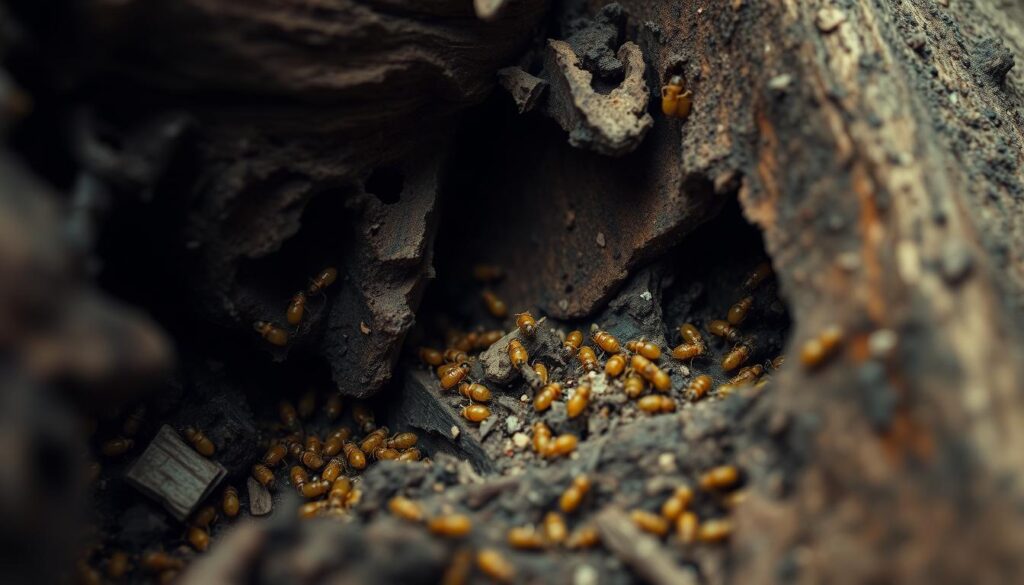
Termites are known for the serious harm they can do to wooden structures. They can weaken a house’s foundation, making it unsafe. Termites eat through wood, leaving grooves, tunnels, and holes that weaken the structure.
The damage caused by termites is serious. If not treated, termites can destroy a home. Subterranean termites can eat through wooden beams, while drywood termites damage ceilings, walls, and floors.
The termite damage to wood is often hidden. Homeowners might only notice it when floors sag, doors stick, or drywall crumbles. By then, the damage may be severe, requiring expensive repairs.
“Termites can weaken the structural integrity of a home, making it unsafe for occupants if left untreated. Addressing a termite infestation as soon as possible is crucial to prevent costly and potentially devastating damage.”
It’s important to watch for early signs of termites. Regular checks by pest control experts can catch problems early. This can save homeowners from costly termite damage to wood.
How to Get Rid of Termite Droppings
Dealing with termite droppings, or frass, requires the right steps. These droppings, also known as pellets, can vary in size. Drywood termites produce tiny, oval-shaped pellets with six concave sides. Subterranean termites usually don’t leave droppings as they use them to build tunnels and mud tubes.
Best Way to Clean Up Termite Droppings
The best method to clean termite droppings is using a vacuum cleaner with a HEPA filter. Use a crevice tool to get into tight spaces. This way, you can remove the debris safely and effectively.
Easy Way to Wipe Up Termite Droppings
If you don’t have a vacuum, use a damp cloth or paper towel to wipe up the droppings. Wear gloves to protect yourself from contaminants in the frass. The damp cloth or towel will help capture and contain the droppings.
Easiest Way to Prevent Termite Droppings
To prevent termite droppings, stop them before they start. Regularly check your home for termites and deal with any issues quickly. Keep your home dry, remove firewood, and seal foundation cracks to deter termites.
“Termite droppings may not pose a significant health risk, but it’s still important to take precautions when handling them due to potential allergens and bacteria.”
Professional Help and Treatment Options
If you think termites might be in your home, getting help from a pro is key. A pest control expert can check how bad the problem is. They’ll tell you the best steps, like a detailed termite check and extermination.
Exterminators have many ways to get rid of termites. They might use baits, sprays, or fumigation. They might also use liquids like Fipronil and Imidicloprid. These liquids create a barrier that lasts for years, keeping termites away.
Getting help from a pro is important to fix a termite issue right. It also helps keep your home safe. The cost for this service is usually between $150 and $450. It’s a good investment to protect your home and family.
FAQ: Getting Rid Of Termite Droppings
What are the signs of a termite infestation?
Look out for termite droppings, small holes, mud tubes, and discarded wings. These are signs of termites in your home.
How do I clean up termite droppings?
Use a vacuum with a HEPA filter and a crevice tool. You can also wipe with a damp cloth or paper towel. Always wear gloves.
What are the potential health risks of termite droppings?
Termite droppings can cause allergic reactions like itching and swelling. They can also lead to respiratory issues, especially for those with allergies or breathing problems.
How can I prevent future termite infestations?
Prevent termites by regularly checking your home for signs. Address any infestations quickly to stop them from spreading.
When should I seek professional help for a termite problem?
If you think you have termites, get professional help right away. A pest control expert can find the problem and fix it with the right treatment.
Source Links
- https://heyshethrives.com/moms-guide-how-to-clean-up-termite-droppings/
- https://www.forbes.com/home-improvement/pest-control/get-rid-of-drywood-termites/
- https://reconpestservices.com/blog/termite-droppings-from-ceiling/
- https://pinnaclepest.com/drywood-termite-droppings/
- https://www.actiontermitecontrol.com/do-termites-leave-droppings/
- https://reconpestservices.com/blog/finding-drywood-termite-droppings/
- https://www.orkin.com/pests/termites/termite-droppings
- https://www.bobvila.com/articles/termite-droppings/
- https://www.chemfreeexterminating.com/how-to-identify-termite-droppings/
- https://www.chemfreeexterminating.com/can-termites-in-your-house-make-you-sick/
- https://www.arizonatermitespecialists.com/blog/2022/june/health-dangers-termites-present-to-humans/
- https://bugoffrgv.com/beware-of-termites-and-3-health-hazards/
- https://www.moxieservices.com/blog/can-you-get-termite-droppings-from-the-ceiling/
- https://takecaretermite.com/blog/termite-droppings-termites-in-ceiling/
- https://florida-environmental.com/identify-termite-droppings-on-drywood/
- https://www.bobvila.com/articles/termite-droppings-but-no-termites/
- https://diypestcontrol.com/termite.htm?srsltid=AfmBOoo6SZx5zA_xRAZtLwOPvfAs4MRP10Z5yDL3b_RtDKTBfuMgRalD
- https://www.thisoldhouse.com/pest-control/reviews/how-to-get-rid-of-termites
- https://www.architecturaldigest.com/reviews/pest-control/how-to-get-rid-of-termites