




Are termites dangerous? Well, termites are a common pest that can damage homes and buildings. They are wood-destroying insects that threaten your property’s structure. Subterranean termites alone cost U.S. property owners over $5 billion each year in repairs and prevention.
Understanding termites and how to spot and deal with them is key to protecting your home or business.
Termites live underground and eat wood, harming homes and buildings. There are over 2,500 termite species, divided by their habitats. These include dry wood, damp wood, and subterranean termites.
Termite colonies are complex. They have several central “headquarters” near food sources. These are connected by a vast network of underground tunnels.
Key takeaways
- Termite infestations can lead to significant structural damage and costly repairs.
- Subterranean termites are a major concern, costing U.S. property owners over $5 billion annually.
- Termites can indirectly impact human health by causing mold growth and respiratory issues.
- Identifying signs of termite activity is crucial for preventing and addressing infestations.
- Seeking professional pest control services is often necessary to effectively manage termite problems.
Introduction to Termites
Termites are small insects that eat wood. They help break down dead wood in nature. But, they can also harm homes and buildings. With over 2,500 termite species worldwide, knowing about them is key for homeowners.
What are Termites?
Termites live in colonies, often underground or in wood. They have different roles in their colonies, like workers and soldiers. They eat dead plant matter, breaking down cellulose in wood.
Types of Termites
- Subterranean Termites – These termites live in the soil and build mud tunnels to reach wood. They are the most common and cause a lot of damage in the U.S., about $5 billion a year.
- Drywood Termites – These termites infest wood above ground, like in attics and walls. They don’t need soil to survive.
- Damp Wood Termites – These termites like damp wood, like rotting logs. They are less common in buildings than subterranean and drywood termites.
Knowing about these termite types helps us protect our homes. It’s important for effective prevention and control.
Are Termites Dangerous to Humans?
Most people worry about termites damaging homes. But, these pests can also harm human health. Termites don’t eat human blood or flesh. Yet, their activities can cause health problems.
Termite Bites and Allergic Reactions
Termites, especially the soldier type, bite when scared. Their bites are usually not serious. But, people with sensitive skin might get itchiness, swelling, redness, and a burning sensation.
This happens because of the termites’ saliva or other substances in their bodies.
Respiratory Issues and Asthma
Termites can also cause breathing problems. The dust and debris they make, called frass, can irritate the lungs. This is especially true for people with asthma.
Termite infestations also create a warm, humid place. This is perfect for fungal growth. The spores from this growth can make breathing harder.
Research links termites to asthma. The droppings and wood dust from termites can set off asthma attacks. Breathing in these particles can cause coughing, wheezing, shortness of breath, and chest tightness.
To avoid health risks from termites, it’s key to take steps. Wear protective clothes when dealing with infested materials. Wash your hands afterward. Also, get help from professionals for termite inspections and removal.
Keep your indoor air clean and fix any moisture problems. This can help lessen the dangers termites pose.
Indirect Dangers of Termite Infestations
Termites don’t directly harm humans, but they can cause hidden dangers. These include termite-related fungal infections and mold growth. They also lead to structural damage and termite-related accidents. These risks can have big effects on homeowners.
Fungal Infections and Mold Growth
Termites live with fungi in their nests for food. This can spread fungal spores, causing respiratory infections in people with weak immune systems. Termite infestations also help mold grow in homes by disturbing mold colonies.
Structural Damage and Accidents
A bad termite infestation can weaken a building’s structure. This makes it more likely for accidents to happen. Termites can also damage electrical cables, which is a electrical hazard and can cause electrocution.
About 600,000 homes in the U.S. are damaged by termites each year. This costs homeowners around $5 billion in repairs. Termites are found all over the U.S., even in places like Massachusetts and Oregon.
“Termites can inflict painful bites akin to a bee sting, causing itching, swelling, and burning. Their feces, known as ‘frass,’ can lead to sneezing, coughing, flu-like symptoms, hives, and skin rashes if inhaled or in contact with the skin.”
Termites don’t directly carry diseases, but they still pose risks. This is especially true for people with allergies, asthma, or weak immune systems. It’s important to get termite control and treatment quickly to keep homes safe.
Identifying Termite Infestations

Finding signs of termite infestation can be tricky. The wood often looks normal from the outside. Termites don’t move around like ants do. Instead, they tunnel into wood from the soil or through “mud tubes” made of soil, wood, and other stuff.
These termite mud tubes can show up in places like foundation walls, floor and attic joists, and cracks between boards. They can also be found in crawl spaces and sheetrock.
Another important sign of termite activity is seeing winged termites. They look a lot like winged ants. But termites have wings that are the same size, while ants have longer front wings.
Subterranean termites are the most common type and live underground. Formosan termites are more aggressive and can cause a lot of damage. It’s important to regularly check for termites and treat them to prevent damage.
| Sign of Termite Infestation | Description |
|---|---|
| Mud Tubes | Termites build these tunnels to get to food and move between their colony and the wood they eat. |
| Winged Termites | Swarming termites with equal-sized wings, often mistaken for winged ants. |
| Damaged Wood | Termites can cause warping, swelling, or tight-fitting doors and windows due to their wood-eating habits. |
| Piles of Wings | Drywood termites may leave behind piles of wings after a swarming event. |
Spotting termites early and treating them is crucial to avoid big termite damage and expensive repairs. Regular checks by professionals and taking steps like using termite-resistant materials can help keep your home safe from these pests.
Are Termites Dangerous?
Termites might not directly harm humans, but they can cause big problems. Termites are termite health risks that mainly attack buildings by eating wood and other cellulose materials.
As time goes on, the termite damage can make floors, walls, and ceilings weak. This can lead to accidents and injuries. Also, termites can help mold grow, which can make breathing hard, especially for people with asthma.
It’s also important to control termites well. Termite colonies can eat all wooden parts of a house, including furniture, in just 3 to 5 years. Using termite pesticides without knowing how can be dangerous, so it’s best to get help from professionals.
Even though termites don’t directly are termites dangerous to people, their effects can be big. It’s key to deal with termite problems fast and right to avoid more damage and safety risks.
| Potential Termite-Related Risks | Impact |
|---|---|
| Structural Damage | Weakened floors, walls, and ceilings leading to accidents and injuries |
| Mold Growth | Triggering respiratory issues, especially for those with asthma |
| Improper Pesticide Use | Health risks from amateur application of termite control products |
Preventing Termite Infestations
Homeowners can take steps to keep termites away and avoid expensive damage. Modern builders use termite-resistant materials and physical barriers to make homes less attractive to termites. These methods help lower the chance of a termite problem.
Construction Practices to Deter Termites
Building a termite-proof foundation is key. This means using a concrete foundation with a ventilation space to keep wood dry. It’s also important to remove wood debris and ensure proper drainage to keep water away.
Starting with a poured, reinforced, and crack-free foundation helps too. This makes it hard for termites to start a colony.
Using treated wood for high-risk areas and avoiding wood-to-soil contact are smart moves. Installing a termite barrier before building can also block termites.
By using these termite prevention methods, homeowners can greatly reduce termite risks. This means less need for expensive treatments later on.
“Preventing termite infestations through proactive construction practices is essential for protecting the structural integrity of a home.”
Termite Control and Treatment
Getting rid of termites needs a pro, as DIY methods don’t work well. Homeowners should call on pest control experts to get rid of termites and stop them from coming back. These pros have the right tools and know-how to safely and fully get rid of termites.
Experts use a few main ways to fight termites. Soil treatments use special insecticides around a home’s base to keep termites out. Termite baiting systems, meanwhile, use slow toxins in food to kill the whole colony.
| Termite Control Method | Description | Safety Considerations |
|---|---|---|
| Wood Treatments | Special termiticides are injected into wood to kill termites inside. | The treated area is safe once the treatment is done. |
| Baiting Systems | Slow-acting insecticides in cellulose bait are eaten by termites, killing the colony. | This is the safest method as the insecticide only affects termites. |
| Chemical Barriers | Insecticide is put in a trench around the home to keep out subterranean termites. | The treatment is safe once installed and won’t harm plants. |
| Fumigation | A gaseous insecticide is used to kill termites, requiring people to leave for a few days. | This is the most toxic method, but safe when done by pros. |
Choosing a good pest control company is key, no matter the termite control or termite treatment method. These pros have the right training, tools, and experience to safely get rid of termites. Working with a qualified company helps protect your home and saves you from the damage and repair costs termites can cause.
“Termite control treatments are among the most complicated in household pest management. Professionals may need to use multiple treatment methods based on termite species, colony location, and infestation extent.”
Choosing a Pest Control Company
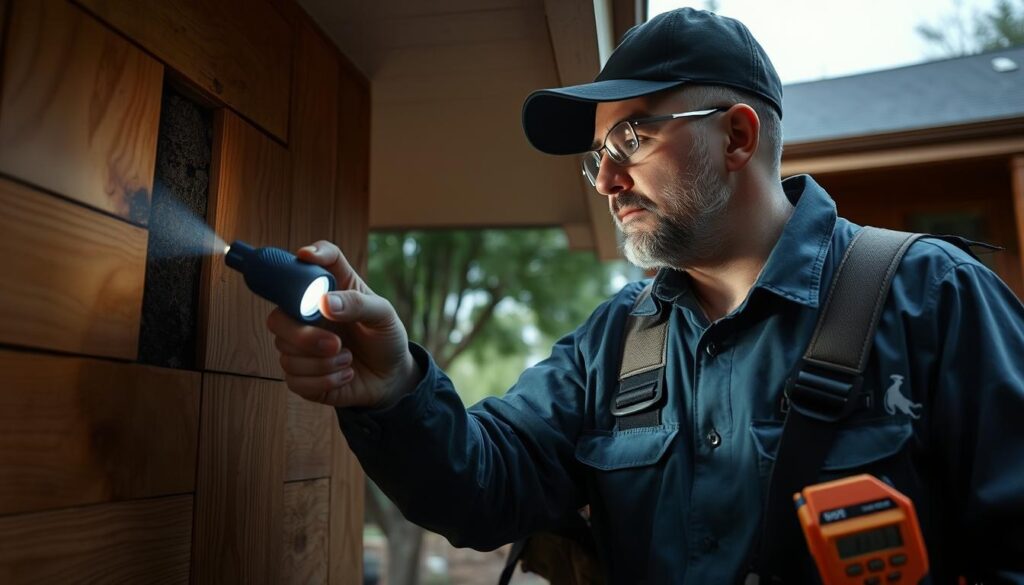
When facing a termite problem, picking a good termite control company is key. Homeowners should look at the company’s history, pest control credentials, and what past customers say. Getting at least two or three quotes is wise, but don’t just pick the cheapest one.
Tips for Selecting a Reputable Provider
The right pest control provider should give a detailed report on termite activity and a treatment plan. This plan should include the chemicals used, cost, and a termite treatment warranty. Be cautious of companies that promise too much or keep their methods secret. A clear and honest provider is essential for solving termite issues.
- Check the company’s pest control credentials and licenses to make sure they can handle termite control.
- Ask for references and look up online reviews to see how the company is rated.
- Find out about their termite inspection methods and the skills of their technicians.
- Make sure you understand the termite treatment warranty and any extra services or guarantees.
By carefully choosing a pest control company, homeowners can tackle their termite problem and protect their property from more damage.
Conclusion
Termites might not bite or spread diseases, but they can harm your home. They can weaken buildings, leading to accidents and health problems like breathing issues and mold. It’s key for homeowners to spot termite signs and work with trusted pest control to prevent and control termites.
Regular catch termite activity early, saving on repairs. Good landscaping, ventilation, and moisture control help protect your home. If needed, pest experts can treat and manage termite problems.
Termites are important in nature, breaking down organic matter. But, dealing with them can cost a lot for homeowners. Knowing the risks and taking steps to prevent them can keep your home safe and your family healthy.
FAQ: Are termites dangerous?
What are termites and how can they be dangerous?
Termites are small insects that eat wood. They live in colonies underground or in wood structures. They can damage homes and buildings by eating the wood. This can weaken the structure and cause accidents and health problems like breathing issues.
What are the different types of termites?
There are three main types of termites. Subterranean termites live in the soil and build tunnels to get to wood. Drywood and damp wood termites infest wood that is above ground.
Can termites pose a health risk to humans?
Termites don’t spread diseases directly. But, their bites can cause allergic reactions in some. Their presence can also lead to mold and wood dust in the air, which can make breathing problems worse.
How can termites indirectly cause harm?
Termites can spread fungal spores and cause mold growth. This can lead to respiratory infections. Their damage to buildings can also make them weak, increasing the risk of accidents and injuries.
How can I identify a termite infestation?
Look for mud tubes, winged termites, and wood damage that’s not visible from outside. A professional inspection is key to accurately detect and address a termite problem.
What can be done to prevent termite infestations?
Builders can use concrete foundations, remove wood debris, ensure proper drainage, and use treated wood. Homeowners can install termite barriers and work with pest control professionals for prevention and treatment.
How should I choose a pest control company to treat a termite problem?
Look for a pest control company with experience, proper credentials, and a clear treatment plan. Get multiple quotes and avoid companies with unrealistic promises. Choose a reputable provider for safe and effective termite elimination.
Source Links
- https://www.mcdonaldpestcontrol.com/are-termites-harmful-to-humans/
- https://www.actionpest.com/are-termites-dangerous/
- https://pestech.com/online-guides/termites/
- http://extension.msstate.edu/content/termite-biology-eastern-subterranean-termites-and-formosan-termites
- https://content.ces.ncsu.edu/termites-biology-and-control
- https://www.arizonatermitespecialists.com/blog/2022/june/health-dangers-termites-present-to-humans/
- https://www.actiontermitecontrol.com/are-termites-harmful-to-humans/
- https://www.mightymitetermite.com/blog/are-termites-harmful-to-humans-and-our-pets/
- https://4njpest.com/watch-out-dangers-health-risks-of-termites/
- https://www.pestclinic.com.sg/the-health-dangers-of-termites-can-they-make-you-sick/
- https://www.billstermiteco.com/are-termites-harmful-to-humans/
- https://www.orkin.com/pests/termites/damage/termite-damage-signs
- https://bugmanonline.com/the-signs-and-dangers-of-termite-infestations-and-what-you-can-do-to-reduce-the-risk-of-one/
- https://www.orkin.com/pests/termites/how-to-identify-termite-activity
- https://www.webmd.com/a-to-z-guides/termites-what-to-know
- https://burnspestelimination.com/blog/terrible-termites-five-hidden-health-dangers-of-wood-eating-pests/
- https://luvalawn.com/preventing-termite-infestations-understand-their-behavior/
- https://www.drakepest.com/termites-identifying-preventing-and-treating-infestations/
- https://paynepestmgmt.com/do-termite-treatments-pose-a-health-threat/
- https://www.orkin.com/pests/termites/can-you-ever-get-rid-of-termites-completely
- http://extension.msstate.edu/content/common-questions-about-termites-and-termite-control
- https://extension.okstate.edu/fact-sheets/choosing-a-pest-management-company-to-protect-your-home-against-termites.html
- https://www.termite.com/pest-control-advice.html
- https://anypest.com/blog/things-to-consider-when-choosing-a-pest-control-company/
- https://www.fullscopepestcontrol.com/are-termites-dangerous-to-humans/
- https://okeena.com/blog/are-termites-dangerous
- https://www.innovativepest.com/hidden-dangers-of-termites/