

Tag: EnergyTransition
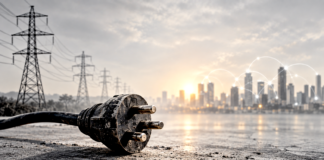
Infrastructure before innovation – you can’t digitise a blackout
Across East Africa, momentum is building around grid digitisation. Smart meters, automation and AI-enabled energy management are increasingly positioned as viable ways to establish efficient, sustainable and resilient energy provision. But there is a fundamental reality that cannot be overlooked - digitisation cannot compensate for gaps in basic infrastructure.

Junior mining exploration – repositioning to unlock mineral potential
The global shift toward clean energy, electric mobility and Artificial Intelligence (AI) is reshaping the world’s economic priorities. At the centre of this transition are critical minerals, including copper, lithium, cobalt, manganese, rare-earth elements, and platinum group metals. Without them, solar panels do not function, batteries do not store power, and data centres cannot scale. The green economy is, quite literally, built on rock.

Energy transition scorecard – from policy to delivery
While South Africa committed to significantly decarbonise its energy mix by 2030 in 2021, progress started slowly. However, momentum increased at the start of this year. Both President Ramaphosa’s State of the Nation Address and the recent National Budget placed strong emphasis on energy reform. At the same time, the Department of Electricity and Energy has announced a timeline for wholesale market phasing.

Project preparation – from concepts to bankability
As the global infrastructure and energy transition agenda intensifies, many prospective projects stall in their earliest stages - long before they become “bankable”. To address this roadblock, our upcoming Business Forum will bring together development finance institutions (DFIs), governments, developers and transaction advisors.

Just Energy Transition (JET) – building a socially inclusive future
When people discuss the Just Energy Transition (JET), they often focus on gigawatts, emissions targets, and investment flows. However, the Just Transition is not only about energy. At its core, it is about people and building a socially inclusive future. The decisions made in the next decade will shape the country’s trajectory.

Collaboration as a strategic imperative for energy resilience
As the global energy community gathers under the theme “Stronger Together” at this year’s Mining Indaba, the conversation about collaboration has never been more relevant. Supply chain volatility shapes the current environment. Rising operational costs add pressure. In addition, companies face increasing demands to improve productivity. As a result, energy businesses must rethink how they operate.

Digital innovation and SaaS can reshape Nigeria’s energy sector
Today, just over 60% of Nigerians have access to grid-connected electricity. Even those who do often endure erratic service. The country’s National Bureau of Statistics reports that the average daily supply stands at less than seven hours. Yet, as Albert Einstein famously said: “In the middle of difficulty lies opportunity”. In Nigeria’s case, the convergence of renewable energy, digital innovation and Software as a Service (SaaS) can establish an energy landscape built on reliability and long-term sustainability.

Just energy transition – just who gets left behind?
As South Africa plans to host the G20, there is revived interest and a hive of side events taking place looking at how to make the energy transition to cleaner energy use just for all. With an official unemployment rate of 32.9%, the justness of South Africa’s energy transition must consider potential job losses in the country’s high emission coal energy sector that still employs roughly 92,000 people.