





Corporate Law salary ranges – Employment guide
A Corporate Law salary in South Africa usually ranges from about R25,000 to R100,000+ per month, depending on experience, employer, qualification status, location, practice area and whether the role is in a law firm,...

Workplace injury claims – when does employment really end?
The Compensation for Occupational Injuries and Diseases Act (COIDA) requires the state’s Compensation Commissioner to compensate employees for losses resulting from workplace injuries. This applies when an injury complies with the legal definition. Some employers also acquire workplace injury cover from private insurance companies. However, these companies sometimes reject claims and create unnecessary workplace slip-ups for employees seeking compensation.

Career survival and AI – your adaptability is critical
Artificial Intelligence (AI) is rapidly reshaping the professional world. It is transforming how businesses operate and how employees remain competitive. AI is no longer a futuristic concept discussed in boardrooms, universities and science fiction movies. It has quietly moved into our offices, our workflows and increasingly, our decision-making processes. Whether we realise it or not, AI is transforming the modern workplace.

Cybersecurity as an exercise in risk tolerance
South African businesses have evolved alongside the reality of the country’s physical infrastructure challenges. Organisations instinctively build redundancies for power. These include solar installations, battery backup solutions, UPS systems and generators. When the grid fails, the failover system kicks in. Similarly, most businesses have multiple connectivity failovers because they understand operational disruption intimately.

Apartheid’s Granddaughter
Lidia Rauch was born at the crossroads of South Africa’s past and present. She is the granddaughter of one of apartheid’s longest-serving ministers, Fanie Botha. She grew up in a world built for her comfort, yet she chose to reckon with its cost. Her story moves between privilege and pain, from a childhood marked by fracture to a career inside the machinery of government.
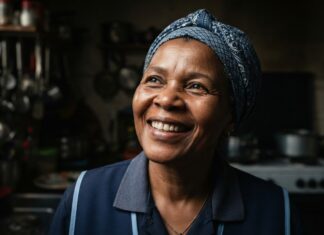
Domestic Worker salary ranges – Employment guide
A Domestic Worker salary in South Africa usually ranges from about R4,800 to R9,000+ per month for full-time work, depending on hours, duties, experience, location, transport arrangements and whether the role includes cleaning, laundry,...

Recruiter salary ranges – Employment guide
A Recruiter salary in South Africa usually ranges from about R8,000 to R35,000 per month. This depends on experience, employer, industry, commission structure, location and whether the role is in agency recruitment, internal recruitment,...

The connected citizen – advancing unified service delivery
For many South Africans, interacting with the government still involves repeating the same process over and over again. Whether citizens apply for an ID, access healthcare, navigate the justice system, or engage with social services, they often resubmit the same information. They also move between disconnected processes. Records do not always align. Each interaction can feel separate from the last.

AI driving organisational reinvention – beyond technology and automation
Much of the current conversation around Artificial Intelligence (AI) focuses on technology choices. Organisations ask which platform to use. They also ask which model works best. In addition, they debate which tools will replace existing systems. Across boardrooms and IT departments, leaders race to decide on AI platforms, copilots, automation layers and infrastructure upgrades.

Multiple futures planning – strategic foresight for resilience
Leaders are expected to plan for the future, whether they operate in big business, small business, government or good-deed organisations. And they do. Leaders collate data across all aspects of operations. They compare budgets with actuals. They also make projections for the next six months to five years. Leaders build detailed quantitative models and dashboards. Some projections include both positive and negative outcomes.