



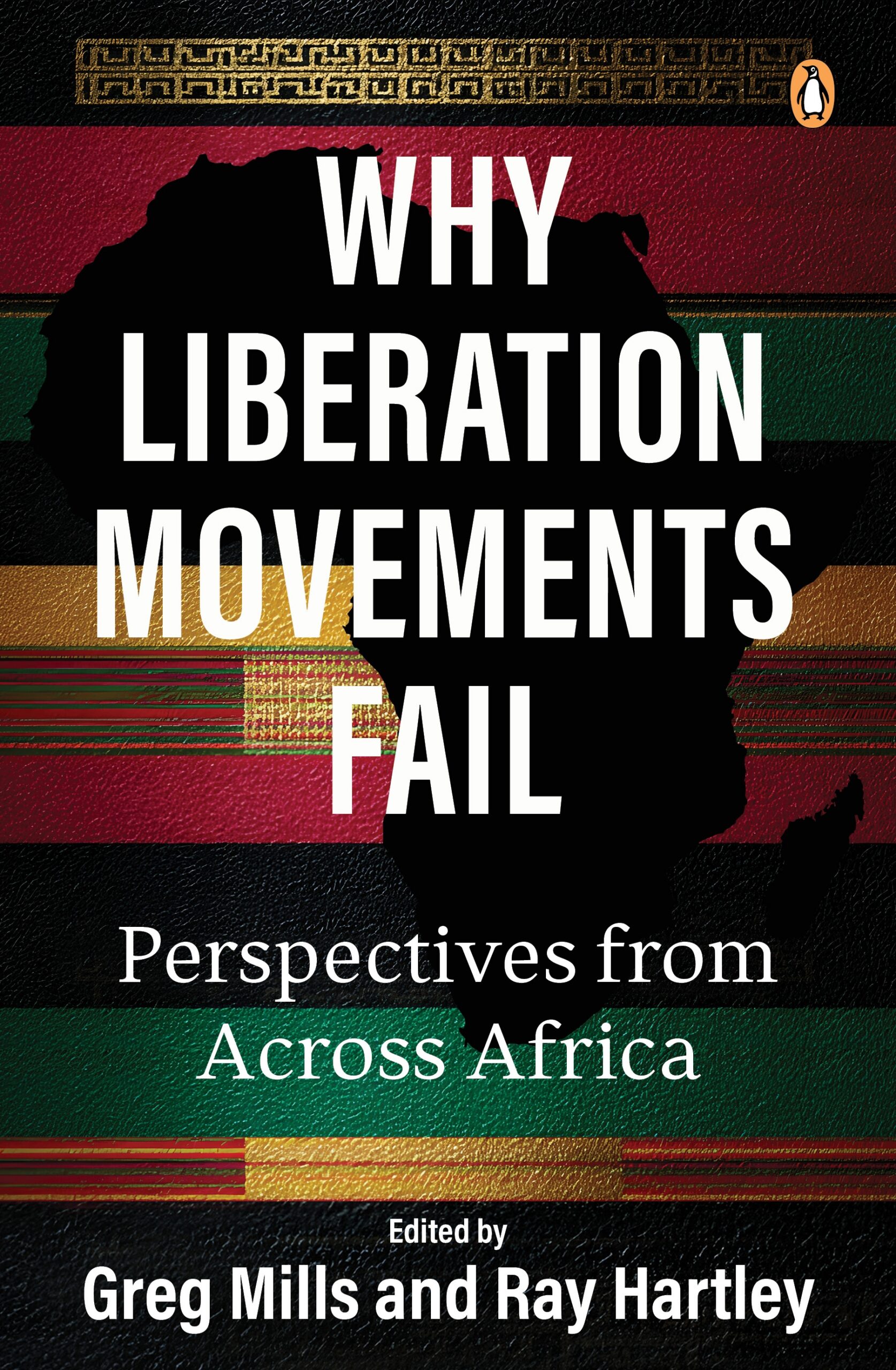
Perspectives from Across Africa
Edited by Greg Mills and Ray Hartley
Liberation movements once represented hope, unity and the promise of a better future for millions of Africans. However, their performance in government has often raised difficult questions about leadership, accountability and democratic progress.
Why Liberation Movements Fail examines this contradiction and challenges readers to reconsider the continent’s political trajectory.
Bringing together leading scholars, policymakers and political insiders, this thought-provoking volume examines liberation movements across South Africa, Mozambique, Angola, Nigeria, Kenya, Rwanda and South Sudan. Its contributors investigate why movements that successfully challenged oppression often struggle to deliver inclusive development after assuming political power.
When liberation becomes a political liability
The book explores how qualities such as discipline, unity and moral authority can become obstacles to democratic governance. It reveals how former liberation movements have reproduced extractive political economies and entrenched elite power. Furthermore, contributors examine how political leaders use patronage, coercion and institutional control to maintain their authority.
The publication also highlights the troubling gap between revolutionary ideals and political practice. At the time of publication, two contributors faced what the book describes as trumped-up treason charges. This development underscores the tensions surrounding democratic freedoms and political accountability.
Importantly, Why Liberation Movements Fail considers growing resistance from younger generations. Across Africa, citizens increasingly demand effective governance, economic opportunities and measurable progress. Consequently, the traditional liberation dividend no longer guarantees political legitimacy.
Rather than simply criticising historical movements, the book raises an important question. Can political organisations built around liberation reinvent themselves to meet contemporary demands for accountability, inclusion and development? This examination makes Why Liberation Movements Fail particularly relevant to ongoing debates about Africa’s political and economic future.
The book offers valuable perspectives for academics, policymakers, political analysts and readers interested in African governance. Ultimately, it challenges societies to distinguish historical achievements from present-day governing performance.
About the editors
Greg Mills is a visiting fellow at the University of Navarra in Spain and the strategic advisor to several African leaders. He has directed numerous reform projects with African heads of government and served four deployments to the International Security Force in Afghanistan as the advisor to the commander. He is a regular contributor to international journals and newspapers and the author of numerous books including Why Africa Is Poor, Rich State, Poor State and The Art of War and Peace.
Ray Hartley was the co-author of The Good, the Bad, and the Ugly. He previously edited the Sunday Times, Rand Daily Mail and Times Live. He also authored several books on African politics. A democracy activist, he helped administer South Africa’s constitutional negotiations. He now supports democratic development across Africa through the Platform for African Democrats (PAD).
- PUBLISHER | Penguin Random House SA |
- ISBN | 9781776392452 |
- Recommended Retail Price | R360.00 |
- Classification | Politics & Law |