





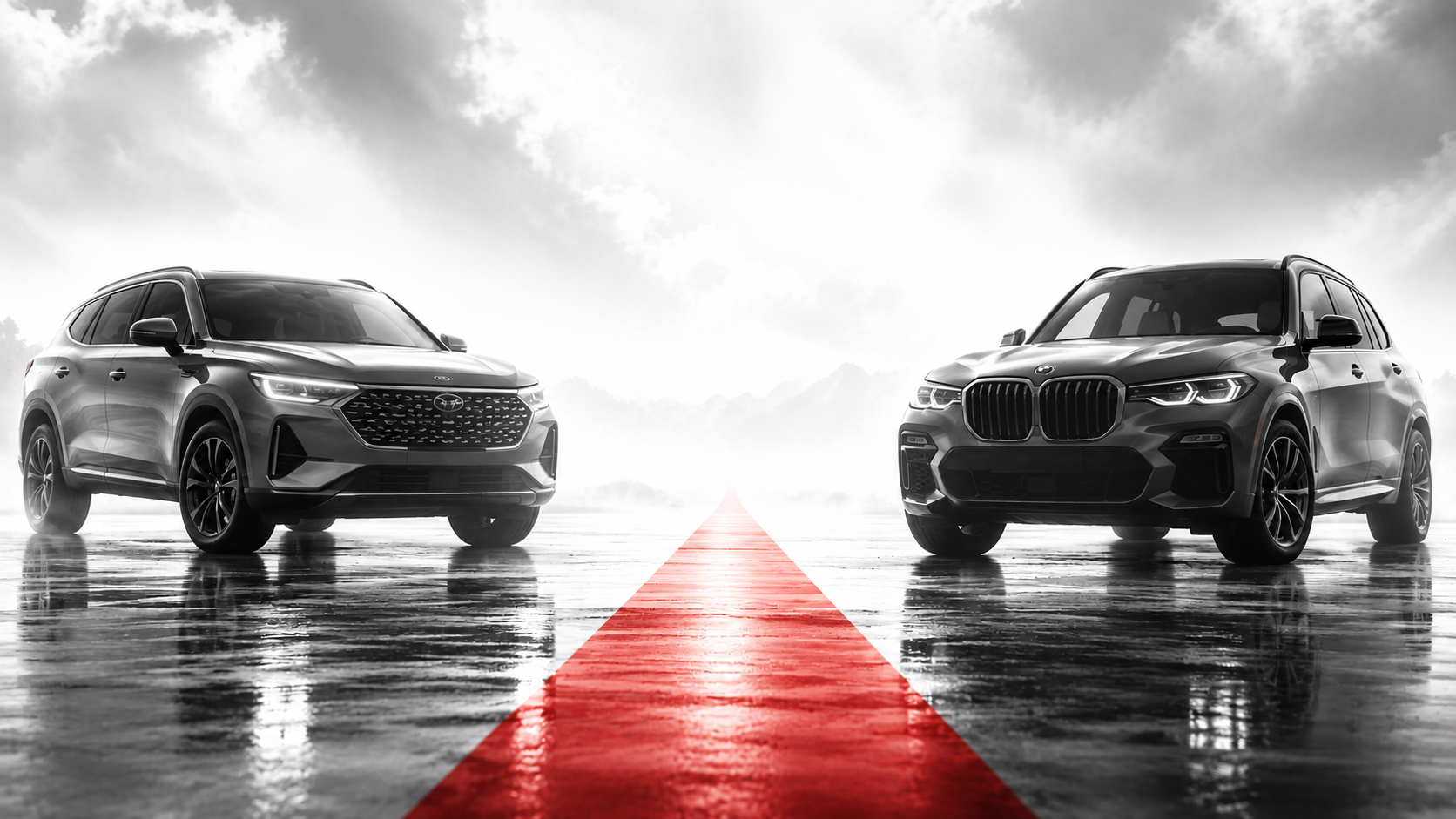
South Africans are rethinking what makes a car worth its price. German engineering, driving dynamics and badge appeal remain powerful. However, Chinese brands are countering with generous equipment, long warranties and lower entry prices.
Combined sales of Audi, BMW, Mini and Mercedes-Benz fell 68%, from 74,015 vehicles in 2014 to 23,881 in 2024. Over the same period, Chery grew from 1,297 to 19,911 vehicles. Haval also grew, from 428 to 13,396.
The comparison is therefore a new Chinese vehicle with warranty cover versus a proven German model on the used market. In other words, buyers are increasingly weighing a new Chinese car against the established appeal of a used German vehicle. These four listings show how the equation changes by price point.
Volkswagen Polo Vivo 1.4
The locally built Polo Vivo is a sensible entry into German-brand ownership. The 55kW 1.4 offers a five-speed manual gearbox and a nine-inch infotainment display with App-Connect. It also has two airbags, electronic stability control, tyre-pressure monitoring and Hill Start Assist. In addition, it has a four-star Global NCAP adult-occupant rating.
A new model costs R271,900. Meanwhile, a 2026 example with 5,000km is listed on ChangeCars for R244,900. That represents a R27,000 or 9.9% saving. Buying nearly new cuts the price without adding significant age or mileage.
Volkswagen Golf 1.4 TSI
The current Golf Life pairs a 110kW/250Nm turbo-petrol engine with an eight-speed Tiptronic gearbox. Equipment includes a 12.9-inch infotainment screen, wireless App-Connect, cruise control and a 10-inch digital cockpit. Volkswagen claims fuel consumption of 6.3l/100km. It also claims acceleration from 0-100km/h in 8.5 seconds.
A new Golf Life starts at R580,900. By comparison, a 2019 Golf VII 1.4 TSI Comfortline DSG with 152,500km is listed for R289,900. That is roughly half the price. However, its mileage makes service records and a mechanical inspection essential.
The used-car trader is known to thoroughly ensure these checks. Therefore, buyers comparing this Golf with a new Chinese car need to look beyond the headline purchase price. They should also consider the condition, maintenance history and potential repair costs.
Volkswagen Tiguan Allspace 1.4 TSI Life DSG
For families, the seven-seat Allspace provides more usable space. It combines this with a 110kW turbo-petrol engine and DSG transmission. A new Allspace Life costs R794,700. In comparison, a 2025 ChangeCars example with 46,051km costs R549,900. That represents a R244,800 or 30.8% reduction.
BMW X5 xDrive30d M Sport
The X5 captures the attraction and risk of used German luxury. The current xDrive30d produces 210kW and 650Nm. It reaches 100km/h in 6.1 seconds. It also offers xDrive all-wheel drive and a 650-litre boot.
A new xDrive30d starts at R1,796,000 before CO₂ tax and transfer costs. Meanwhile, a 2019 M Sport with 77,000km is listed for R799,900. The difference exceeds R996,000. However, the comparison spans different model years and specifications.
A stamped service book does not necessarily prove every recommended repair was completed. Once a maintenance plan ends, owners may authorise routine servicing while postponing costly suspension, electronic or drivetrain work.
So, a new Chinese car or a used German car?
My advice is to examine invoices and commission an independent inspection. Buyers should also compare remaining warranty cover, maintenance plans, insurance, tyres, brakes and likely resale value. They should consider these factors, not only the monthly instalment.
A new Chinese car may offer more equipment and cost certainty. A used German model may deliver stronger dynamics, heritage and depreciation-adjusted value. Ultimately, the smarter buy is the one that still makes financial sense after the purchase price.
For buyers considering a new Chinese car, the decision should therefore extend beyond the initial specification sheet. Likewise, buyers choosing a used German model should account for the potential costs that can emerge after purchase.
Michael Pashut | Founder | CEO | ChangeCars | mail me |