





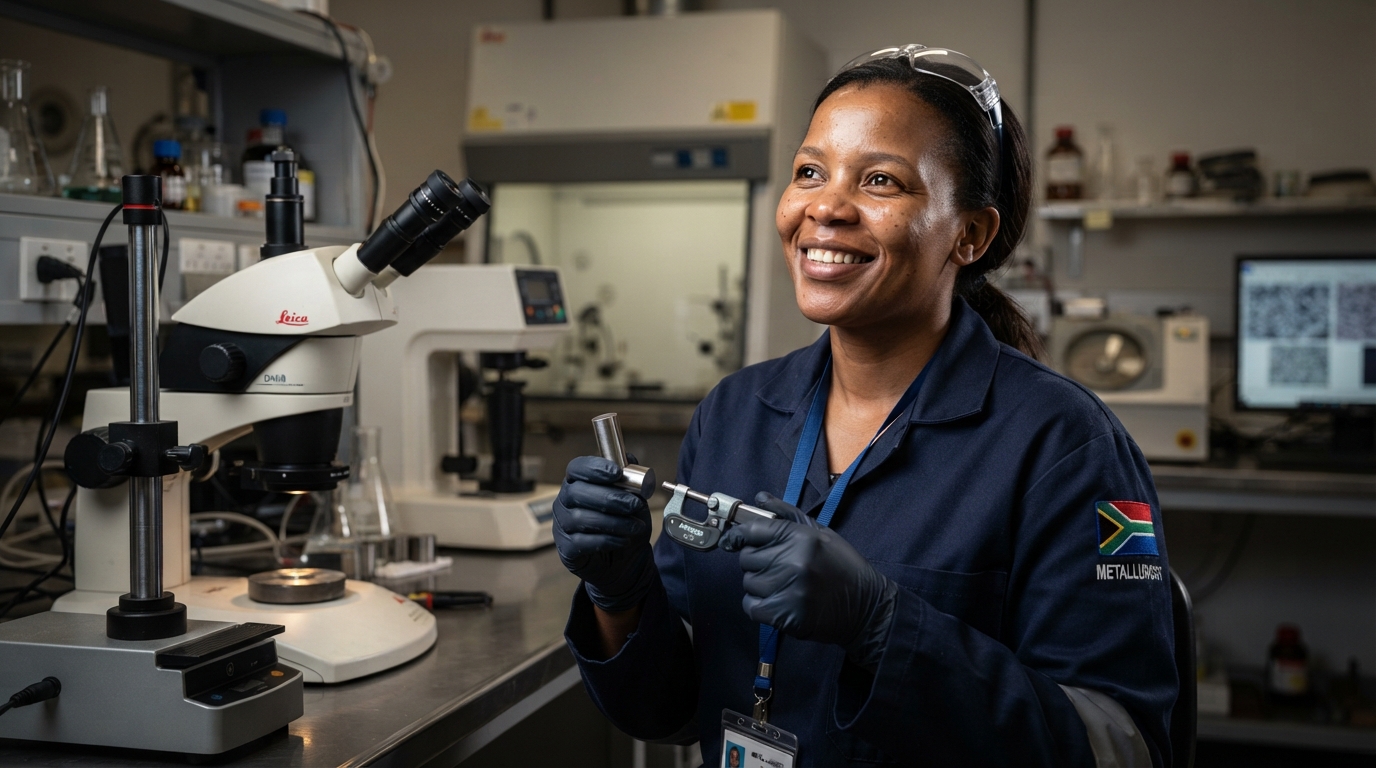
A Metallurgical Engineer salary in South Africa usually ranges from about R18,000 to R85,000+ per month, depending on experience, employer, industry, location, qualification level and whether the role is in mining, mineral processing, smelting, steel, manufacturing, materials engineering, quality control, process engineering or consulting. Senior Metallurgical Engineers, Process Metallurgists and technical specialists in mining and heavy industry can earn more.
Metallurgical Engineers study metals, minerals and materials, and help improve the way they are extracted, processed, tested and used. In South Africa, many roles are linked to mining, mineral processing, beneficiation, steel, foundries, smelters and industrial production.
Key takeaways
- Junior Metallurgical Engineers may earn around R18,000 to R30,000 per month.
- Experienced Metallurgical Engineers often earn between R30,000 and R55,000 per month.
- Senior or specialist Metallurgical Engineers may earn R55,000 to R85,000+ per month.
- Pay is usually higher in mining, mineral processing, smelting, heavy industry and specialist consulting.
- Process optimisation, plant experience, extractive metallurgy, materials testing and professional registration can improve earning potential.
Metallurgical Engineer salary range in South Africa
| Experience level | Estimated monthly salary |
|---|---|
| Junior Metallurgical Engineer | R18,000 – R30,000 |
| Experienced Metallurgical Engineer | R30,000 – R55,000 |
| Senior / specialist Metallurgical Engineer | R55,000 – R85,000+ |
| Metallurgical / Process Engineering Lead | R85,000 – R100,000+ |
| Wider market range | R14,378 – R72,157+ |
Salary sources vary because some roles are listed as Metallurgical Engineer, Metallurgist, Extractive Metallurgist, Process Metallurgist, Materials Engineer, Mining Metallurgist, Metallurgy Engineer, Process Engineer or Metallurgical Consultant.
Indeed reports an average Metallurgical Engineer salary of about R30,950 per month in South Africa, based on salary data updated in April 2026. Paylab places Metallurgy Engineers in a gross monthly range of about R14,378 to R37,046. PayScale reports Extractive Metallurgist salary data, while SalaryExpert reports an average SAP WM Consultant salary far outside this field, so for metallurgy-specific engineering roles, Indeed, Paylab, PayScale and mining-related job benchmarks are the most useful direct references. Related process and mining engineering roles may earn more, especially at senior or specialist level.
What does a Metallurgical Engineer do?
A Metallurgical Engineer works with metals, minerals and materials to improve extraction, processing, quality and performance.
Typical duties include:
- Testing ores, metals or materials
- Improving mineral processing methods
- Supporting smelting, refining or beneficiation processes
- Monitoring plant performance
- Analysing production and recovery data
- Investigating material failures
- Improving process efficiency
- Supporting quality control and laboratory testing
- Working with mining, production and engineering teams
- Developing process flow sheets
- Advising on metal properties and performance
- Supporting safety, environmental and compliance requirements
- Preparing technical reports and recommendations
In mining, the role may focus on extracting valuable metals from ore. In manufacturing, it may focus on material properties, heat treatment, quality control, failure analysis or production improvement.
What affects a Metallurgical Engineer salary?
Industry
Mining, mineral processing, smelting, steel, heavy manufacturing and engineering consulting usually offer stronger earning potential than basic laboratory or junior quality control roles.
Metallurgy type
Extractive metallurgy, physical metallurgy, process metallurgy and materials engineering can lead to different salary paths. Extractive and process metallurgy roles in mining and plant operations can pay well because they affect production output and recovery rates.
Plant and site experience
Metallurgical Engineers with hands-on plant experience are often more valuable than candidates with only laboratory or academic experience. Employers value people who can improve real production processes.
Technical software and analysis skills
Data analysis, process modelling, metallurgical accounting, plant optimisation, mineral processing software, statistical analysis and reporting skills can improve salary prospects.
Professional registration
Engineering registration or progress toward professional registration can support career growth, especially in consulting, technical leadership and senior engineering roles.
Entry-level Metallurgical Engineer salary
A junior or entry-level Metallurgical Engineer may earn around R18,000 to R30,000 per month.
At this level, the person may work as a graduate engineer, junior metallurgist, process trainee, lab support engineer or plant metallurgist in training. Duties may include sampling, testing, data capture, plant monitoring and support for senior engineers.
Experienced Metallurgical Engineer salary
An experienced Metallurgical Engineer may earn between R30,000 and R55,000 per month.
This level usually applies to someone who can analyse plant data, recommend process improvements, support production teams, manage metallurgical reporting and solve operational problems independently.
Senior Metallurgical Engineer salary
A Senior Metallurgical Engineer may earn R55,000 to R85,000+ per month.
Higher salaries are more likely where the role includes technical leadership, plant optimisation, mining production support, smelter operations, process design, feasibility studies, consulting, project work or management responsibility.
Metallurgical Engineer vs Metallurgist salary
A Metallurgical Engineer usually has an engineering-focused role linked to process design, plant performance, extraction methods, material behaviour and production optimisation.
A Metallurgist may work in a similar environment but can be more focused on testing, analysis, plant support, mineral recovery, quality control or laboratory work. In many South African mining and processing environments, the titles overlap.
Metallurgical Engineer vs Mining Engineer salary
A Metallurgical Engineer focuses on how minerals and metals are processed, recovered, refined and improved.
A Mining Engineer focuses on how minerals are extracted from the ground safely and efficiently. The two roles work closely together, but Mining Engineers are more focused on mine design and extraction, while Metallurgical Engineers are more focused on processing and recovery after the material has been mined.
How to earn more as a Metallurgical Engineer
To increase earning potential, build skills that directly improve plant performance, recovery, quality and production efficiency.
Useful areas include:
- Extractive metallurgy
- Mineral processing
- Process optimisation
- Plant operations
- Metallurgical accounting
- Smelting and refining
- Flotation, leaching and comminution
- Materials testing
- Failure analysis
- Quality control
- Data analysis
- Process modelling
- Project management
- Professional registration
The strongest Metallurgical Engineers combine technical knowledge with practical site experience and the ability to improve production outcomes.
FAQ: Metallurgical Engineer salary
What is the average Metallurgical Engineer salary in South Africa?
The average Metallurgical Engineer salary is often reported around R30,950 per month, although practical earnings can range from about R18,000 to R85,000+ per month depending on experience, industry and seniority.
Is Metallurgical Engineering a good career in South Africa?
Yes. Metallurgical Engineering can be a strong career in South Africa because of the country’s mining, minerals processing, steel, smelting and manufacturing sectors. It is especially useful for people interested in metals, materials, plants and industrial processes.
What qualifications do Metallurgical Engineers need?
Employers usually look for a metallurgical engineering, chemical engineering, materials engineering or mineral processing qualification. Practical plant, lab or mining experience is also valuable.
Do Metallurgical Engineers work on mines?
Many do. Metallurgical Engineers often work at mines, concentrators, smelters, refineries, laboratories, engineering consultancies or manufacturing plants.
What jobs can a Metallurgical Engineer move into?
A Metallurgical Engineer can move into roles such as Senior Metallurgist, Process Engineer, Plant Metallurgist, Metallurgical Consultant, Process Manager, Technical Services Manager, Operations Manager, Materials Engineer or Mining Process Specialist.
Sources
Indeed Metallurgical Engineer salary data
https://za.indeed.com/career/metallurgical-engineer/salaries
Indeed Western Cape Metallurgical Engineer salary data
https://za.indeed.com/career/metallurgical-engineer/salaries/Western-Cape
Paylab Metallurgy Engineer salary data
https://www.paylab.com/za/salaryinfo/mining-metallurgy/metallurgy-engineer
PayScale Extractive Metallurgist salary data
https://www.payscale.com/research/ZA/Job%3DMetallurgist_-_Extractive/Salary
Indeed Metallurgical Engineering job listings
https://za.indeed.com/q-metallurgical-engineering-jobs.html
SalaryExpert Metallurgical Engineer salary data
https://www.salaryexpert.com/salary/job/metallurgical-engineer/south-africa