


Dirk de Wet | Chief Operating Officer | Oricol | mail me |
South Africa is running out of landfill space fast. Major hubs like Cape Town and Johannesburg have less than five years of remaining landfill capacity. Therefore, the linear disposal method of landfilling is not serving the country’s waste management challenges.
In addition to the landfill airspace challenge, organic waste carries an estimated R8.7 billion annual cost on our economy. This cost results from landfill practices. Addressing the urgent need for organic waste diversion, we have partnered with Cape Town Biogas to transform how the Western Cape handles organic waste.
We now move beyond simple disposal toward a true zero-waste-to-landfill outcome, including turning tonnes of organic waste into ‘fuel and fizz’.
A new waste diversion model
As part of a broader industry network, we are participating in an organic waste diversion pathway. This pathway is anchored by a bio-digestion facility in Athlone. The facility serves various waste management providers and ensures a consistent feedstock supply. It is currently the only plant in Africa that can split biogas into two distinct, high-value output streams at the same time.
Altogether, the process transforms incoming organic waste into three recoverable commodities. These include clean-burning biomethane for energy use, beverage-grade CO2 for the food and beverage industry, and bioavailable nutrients for agricultural soil restoration. In effect, the system converts tonnes of organic waste into ‘fuel and fizz’ while supporting circular economy principles.
We have to look at the numbers to understand the scale of the challenge. The waste sector contributes 30.2% of South Africa’s total methane emissions1. The majority comes from organic waste decomposing in landfills. Through this partnership, we treat commercial organic waste as the valuable commodity it actually is. We recover resources that the old model simply buries.
From waste to resource
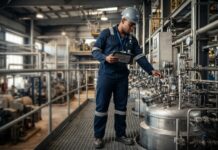
The journey from waste to resource begins at our permitted treatment facility in Cape Town. Here, expired or off-spec products undergo a secure depackaging process. This step is vital for brand protection, as it ensures non-compliant products cannot re-enter the market.
While teams shred solid packaging for recycling, they recover organic waste and send it to the bio-digester through an offtake agreement. This stage strengthens the system’s ability to convert tonnes of organic waste into ‘fuel and fizz’ at scale.
Through this partnership, we have processed approximately 8,000 tonnes of organic waste in 2025. We also aim to grow this volume further in 2026.
Policy pressure and industry response
The timing for organic waste diversion and beneficiation is critical. The Draft National Waste Management Strategy (NWMS) 2026 was published in December 2025. It formally designates organic waste as a priority waste stream for urgent national intervention. This marks the first time this has happened in South Africa’s waste regulatory history.
Nationally, waste diversion has fallen to approximately 10% today. The NWMS 2026 describes this trajectory as unsustainable. Consequently, initiatives that turn tonnes of organic waste into ‘fuel and fizz’ will play a central role in reversing this trend.
In the Western Cape, regulatory pressure is mounting across many commercial sectors. The province’s 100% organic waste landfill ban is embedded directly into waste management licences. It takes effect in 2027.
In conclusion
Businesses that have not secured diversion pathways before that deadline face compliance risks. Therefore, early adoption of systems that convert tonnes of organic waste into ‘fuel and fizz’ is becoming a strategic necessity.
For our clients, this is about staying ahead of a regulatory landscape that is moving fast. Together with Cape Town Biogas, we are proving that South African businesses can meet these targets. At the same time, they contribute to a growing secondary resource economy.