





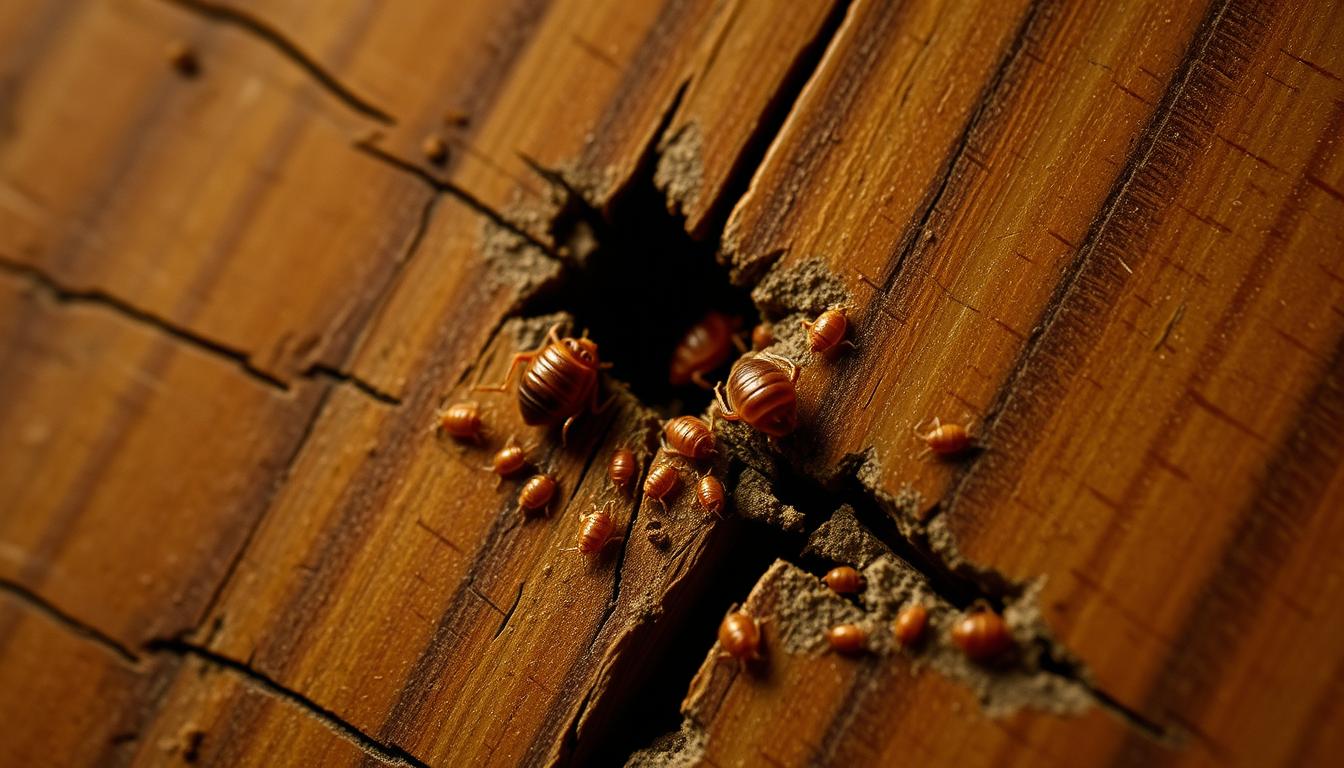
Bed bugs can infest many types of furniture, including wood. They often move from luggage, purses, clothes, and couches. If you think you have bed bugs, you need to act fast.
This guide will help you identify, treat, and prevent bed bugs in wood furniture. You might need to do this a few times to get rid of them all.
Key takeaways
- Bed bugs can hide in the cracks and crevices of wooden furniture, making them susceptible to infestations.
- Natural remedies like heat treatment and diatomaceous earth can effectively remove bed bugs from wood furniture without chemicals.
- Disposal of infested wood furniture should be considered only if the furniture is heavily infested and cannot be effectively treated.
- Bed bugs have become resistant to many pesticides, making them difficult to eliminate.
- Professional pest control services may be required for severe infestations, as they typically expect at least two treatments to completely get rid of bed bugs.
Understanding Bed Bugs and Their Habitats
Bed bugs are small, oval-shaped insects that feed on human blood. Adult bed bugs are reddish-brown and about the size of an apple seed. They often hide in the crevices and cracks of wooden furniture.
What Are Bed Bugs?
Bed bugs are parasitic insects that live near their human hosts. They are experts at hiding and can travel easily. They hitch a ride on personal belongings or furniture. Bed bugs are attracted to warmth and carbon dioxide, not dirt or decay.
Identifying Signs of Bed Bugs
Spotting bed bug signs is key to getting rid of them in wooden furniture. Look for itchy welts, blood specks on fabrics, and the bugs in furniture crevices. You might also see small, white bed bug eggs on wooden surfaces.
Where Bed Bugs Hide in Furniture
- Bed bugs love the tight spaces and cracks of wooden furniture, like bed frames and nightstands.
- They hide in the seams, edges, and zippers of upholstered wood furniture.
- Cracks, crevices, and spaces between cabinets and shelves are also perfect hiding spots.
Identifying potential bed bug problems early is crucial. Regularly check your wooden furniture with a flashlight, magnifying glass, and a credit card wrapped in double-sided tape. This can help find any signs of bed bugs that need to be removed.
Preparation for Treatment
Before you can treat wooden furniture for bed bugs, you need to prepare your home. This means getting the right supplies, picking the best treatment, and following safety rules.
Gathering Necessary Supplies
First, collect the key items for treating bed bugs in wood furniture. You’ll need a vacuum with a HEPA filter, plastic bags, a washing machine, a dryer, a steamer, and possibly chemical insecticides.
Choosing a Treatment Method
For bed bug control in wooden furniture, you have many options. You can wash and dry fabrics at high heat, vacuum, use heat, freeze, or steam clean. Steam treatment is especially good for wood furniture.
Safety Precautions to Consider
When preparing and treating, safety is crucial. Wear gloves and a mask to avoid bed bugs. Don’t move infested items to stop the bugs from spreading. Dispose of any contaminated items to kill bed bugs in wood furniture.
By following these steps and precautions, you’re ready for a successful bed bug treatment. Remember, preparation is key to treating wooden furniture for bed bugs.
Effective Removal Techniques
Dealing with bed bugs in wood furniture requires a multi-step plan. First, vacuum all surfaces and hidden spots like joints and cracks. Make sure to throw away the vacuum bag to stop bed bugs from spreading.
Using Heat Treatment
Heat is a top choice for killing bed bugs in wood. Items need to be heated over 120°F for a long time to kill all bugs. You can get this done by professionals or with steam cleaners that get hot enough.
Applying Chemical Solutions
For bad infestations, chemicals might be needed. Sprays with insecticides can protect for weeks, killing bugs and stopping them from coming back. But, always follow safety rules and think about how it might affect your wood furniture.
Post-Treatment Monitoring and Prevention
After treating bed bugs, keep watching for them. Use bed bug traps under furniture legs to keep bugs away. Check your furniture and home often for bed bugs. Clean well and keep your home tidy to stop bugs from coming back.
FAQ: How to Remove Bed Bugs From Wood Furniture
What are bed bugs and how can I identify them?
Bed bugs are small, oval insects that feed on human blood. Adult bed bugs are reddish-brown and about the size of an apple seed. Look for itchy welts, blood specks on fabrics, and bugs in furniture crevices.
Where do bed bugs hide in wood furniture?
Bed bugs hide in dark spots like seams, edges, and zippers. They also hide in cracks, crevices, and between cabinets, shelves, and baseboards.
What supplies do I need to treat bed bugs in wood furniture?
You’ll need a vacuum with a HEPA filter, plastic bags, a washing machine, dryer, steamer, and possibly chemical insecticides.
What are the most effective methods for removing bed bugs from wood furniture?
Effective methods include vacuuming all surfaces and crevices, then disposing of vacuum contents. Heat treatment, like steam cleaning or professional services, is also effective. For severe cases, chemical solutions with residual sprays can offer protection for weeks.
How can I prevent bed bug infestations in my wood furniture?
Prevent infestations by regularly inspecting furniture, especially secondhand items. Keep living spaces clean. Use bed bug interceptors under furniture legs after treatment. Monitor for signs of bed bugs for up to a year.
Source Links
- https://songbirdblog.com/prevent-pests-in-old-furniture/
- https://themaid-squad.com/how-to-remove-bed-bugs-from-wood-furniture/
- https://ngpest.com/how-to-get-rid-of-bed-bugs/
- https://www.quaggadesigns.com/post/can-bed-bugs-live-in-wood-how-to-check-remove-them
- https://www.reinforcedbeds.co.uk/blogs/news/do-bed-bugs-live-on-wooden-furniture?srsltid=AfmBOoroMYz_yjK_3Cy-fNk6Bt-9tAr7XM7LCvYkSbi-vFXFcEY1Gp4Y
- https://www.ondemandpestcontrol.com/do-bed-bugs-prefer-wood-furniture/
- https://www.gov.mb.ca/asset_library/en/bedbugs/bed_bug_treatment_guide.pdf
- https://extension.entm.purdue.edu/bedbugs/treatment.php
- https://www.theexterminators.ca/blog/can-bed-bugs-live-wood-furniture-remove/
- https://www.housedigest.com/1665561/best-way-remove-bed-bugs-from-wood-furniture-pest-removal/