








Bed bugs are tough pests that don’t usually disappear by themselves. They need to be cut off from blood for 6-12 months to naturally vanish. But, this is almost impossible in places where people live. So, getting help from pest control experts is usually the best way to get rid of them.
Bed bugs can live for a long time without eating and can quickly have more babies. This makes them hard to get rid of without help. Getting rid of bed bugs can take weeks or even months, showing how long it takes to get rid of them.
Key takeaways
- Bed bugs are resilient pests that rarely go away on their own.
- Depriving bed bugs of blood meals for 6-12 months is highly unlikely in inhabited spaces.
- Professional pest control treatment is typically necessary for effective bed bug elimination.
- Bed bugs can survive for extended periods without feeding and reproduce rapidly.
- Bed bug infestations can take weeks to months to treat properly, highlighting the prolonged nature of the eradication process.
- HIGHLY RECOMMENDED: Check out the following bed bug removal cost calculator for a professional estimate on getting rid of these pests.
Understanding Bed Bugs and Their Habits
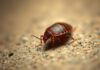
Bed bugs are small, flat, oval-shaped insects that have been around for centuries. They are 6-9.5mm long. Their bed bug identification and bed bug behavior make them hard to get rid of. Bed bugs are nocturnal, meaning they are most active at night. They feed on human blood and leave bed bug bites as a sign of their presence.
What Are Bed Bugs?
Bed bugs come from cave-dwelling bugs that fed on bat blood. They have spread all over the world, often hiding in luggage, bags, or clothing. Their bed bug hiding places make them hard to find and get rid of.
How Do Bed Bugs Spread?
Bed bugs are great hitchhikers, moving up to 4 feet per minute. They quickly spread through a place, looking for new hosts. They are drawn to human carbon dioxide and body heat, making people and animals their main targets.
Signs of a Bed Bug Infestation
- Live bed bugs, their eggs, or molted skins
- Unexplained bed bug bites on the body
- Small bloodstains on bedding, sheets, or mattresses
- Fecal spots or a sweet, musty odor from bed bug secretions
If you think you have bed bugs, act fast. Work with a pest control expert to get rid of these pests for good.
Can Bed Bugs Disappear Without Intervention?
Bed bugs won’t just go away by themselves. They are very good at surviving and growing. A female bed bug can lay up to 200 eggs in her lifetime. The whole life cycle can happen in just 6 to 10 weeks, depending on the environment and resources.
The Life Cycle of Bed Bugs
Bed bugs go through a complete change from eggs to adults. They grow and mature quickly, especially in warm places. Without treatment, infestations can grow fast and become a big problem.
Factors Influencing Bed Bug Populations
- Temperature: Bed bugs love warm places, best between 70°F to 82°F.
- Access to Blood Meals: They need blood to survive, and can live up to 4.5 months without it.
- Pesticide Resistance: Some bed bugs are resistant to common insecticides, making them harder to kill.
Common Misconceptions
Many people think bed bugs will leave on their own. But, bed bug infestations rarely disappear without help. Another myth is that DIY treatments work, but bed bugs can become resistant to strong chemicals over time.
| Myth | Reality |
|---|---|
| Bed bugs will leave on their own | Bed bug infestations rarely go away without professional help |
| DIY treatments are effective | Bed bugs can develop resistance to chemicals over time |
To get rid of bed bugs, you need professional help, thorough cleaning, and prevention. Trying to fight bed bugs alone can be a long and hard battle.
Effective Strategies for Bed Bug Management
Controlling bed bugs needs a mix of treatments. DIY methods can help, but pros are often better at getting rid of them all.
DIY Approaches for Bed Bug Control
Home remedies like high-heat treatments and steam cleaning can fight minor bed bug issues. Washing clothes and bedding at high heat kills bed bugs and their eggs. Steam cleaning furniture and tight spots can also get rid of them.
But, DIY methods might not work for big infestations. Bed bugs hide in places that are hard to reach and treat.
When to Call a Professional Exterminator
For serious bed bug problems, call a pro. Experts use whole-room heat treatments to kill bed bugs and their eggs. They also use targeted pesticides that need multiple visits to get rid of all bed bugs.
Preventative Measures to Avoid Future Infestations
To stop bed bugs from coming back, stay alert and take action. Check your home often, use bed bug-proof covers on mattresses, and keep your place tidy. Also, be careful when traveling and check your stuff for bed bugs.
FAQ: Can Bed Bugs Go Away On Their Own
Can bed bugs go away on their own?
No, bed bugs rarely disappear by themselves. They need to be cut off from blood for 6-12 months, which is unlikely. Professional help is usually needed to get rid of them.
What are bed bugs and how do they spread?
Bed bugs are small, flat insects that feed on human blood. They travel on luggage, bags, or clothes. They move fast and are drawn to heat and carbon dioxide, making them a threat to people sleeping.
What are the signs of a bed bug infestation?
Signs include live bugs, eggs, and fecal spots. They hide in mattress seams and other small spaces.
Why are bed bugs unlikely to disappear without intervention?
Bed bugs reproduce quickly. A female can lay up to 113 eggs. They are hard to get rid of because of their fast growth and resistance to pesticides.
What are some common misconceptions about bed bugs?
Many think DIY treatments work or that bed bugs will leave on their own. But, professional help is often needed for a complete solution.
What are the effective strategies for bed bug management?
Managing bed bugs requires a few steps. DIY methods like heat treatments can help but might not work fully. Professional exterminators use special techniques that often need multiple treatments. Preventative steps include regular checks, using mattress covers, and being careful when traveling.
When should I call a professional exterminator for bed bugs?
If DIY methods don’t work or if the infestation is big, call a professional. They have the tools and knowledge to get rid of bed bugs effectively.
Source Links
- https://www.healthline.com/health/healthy-home-guide/how-to-get-rid-of-bed-bugs
- https://www.trulynolen.ca/will-bed-bugs-leave-on-their-own/
- https://www.vdacs.virginia.gov/pdf/bb-biology1.pdf
- https://www.pinestatepest.com/understanding-bed-bug-habits-and-life-cycle
- https://extension.entm.purdue.edu/bedbugs/knowTheFacts.php
- https://www.pesticon.ca/blog/understanding-the-lifecycles-of-bed-bugs-can-they-naturally-disappear/
- https://www.dominionpestcontrol.com/how-long-can-bed-bugs-live-in-empty-house/
- https://privateexterminator.com/will-bed-bugs-go-away-by-themselves/
- https://extension.umn.edu/bed-bugs/bed-bug-prevention-and-control-home
- https://citybugs.tamu.edu/factsheets/biting-stinging/others/ent-3012/
- https://www.vdacs.virginia.gov/pdf/bb-nonchemical1.pdf










Can bed bugs live on dogs
Hi there, Bed bugs do not live on dogs or other pets in the same way fleas or ticks do, but they can occasionally bite dogs if the infestation is severe and their preferred human hosts are unavailable. Bed bugs are primarily attracted to humans because of the carbon dioxide we exhale and the warmth of our bodies, but they can opportunistically feed on other warm-blooded animals, including dogs.
Can bed bugs live in human hair
Hi there, They are not designed to cling to hair or scalps and prefer to live in hidden areas close to where humans sleep, such as mattress seams, bed frames, furniture crevices, or cracks in walls. However, they may occasionally crawl onto the scalp or hair briefly while feeding.
Does UV lights kill bed bugs
UV light can harm bed bugs to some extent, but it’s not a reliable method for fully eliminating them. UV light can damage their DNA and potentially kill them, but it requires prolonged and direct exposure, which is difficult to achieve given bed bugs’ tendency to hide in crevices and dark areas.
For effective bed bug control, it’s better to use proven methods like heat treatments, professional pest control services, or insecticides specifically designed for bed bugs. If you’re dealing with an infestation, it’s best to consult a pest control expert to ensure complete eradication.