








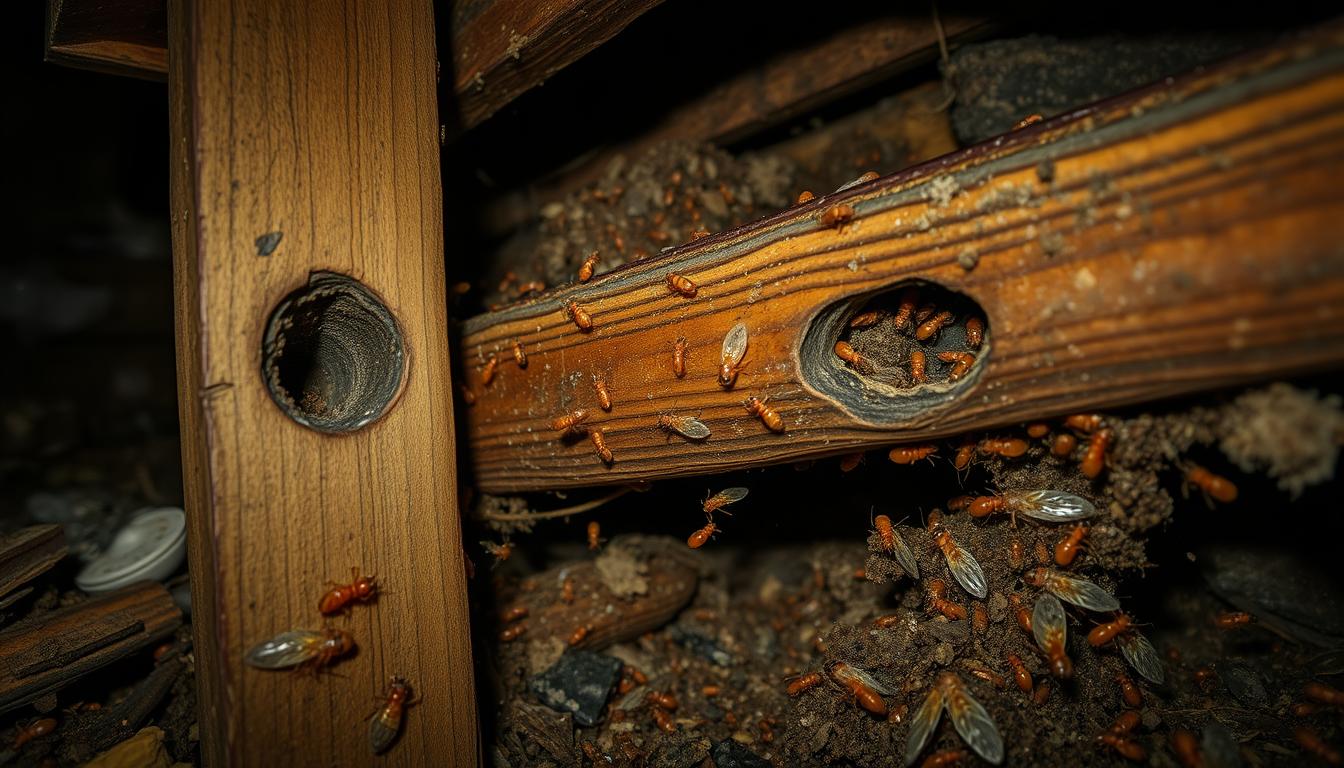
Termites are a common pest that can damage homes if not treated. There are three main types: dampwood, drywood, and subterranean. Each type is attracted to homes in different ways.
Dampwood and drywood termites like moist or dry wood, respectively. Subterranean termites need moist soil and build mud tubes to reach wood above ground. Moisture, wood-to-soil contact, and cracks attract termites.
Warm and humid climates are more likely to have termites. It’s important to know the signs of termite presence. Regular inspections and maintenance can help protect your home from damage.
Key takeaways
- Termites are attracted to homes for various reasons, including moisture, wood-to-soil contact, and cracks or gaps in the home’s exterior.
- Dampwood and drywood termites prefer moist or dry wood, respectively, while subterranean termites need nearby moist soil and construct mud tubes to access wood above ground.
- Geographic location plays a role, with warm and humid climates being more prone to termite activity.
- Recognizing the signs of termite presence and taking preventative measures, such as regular inspection and maintenance, is crucial for protecting a home from costly damage.
- Treatment by pest control experts is the most efficient way to address termite infestations.
Understanding Termite Attractants
Protecting your home from termites starts with knowing what attracts them. There are three main types of termites: dampwood, drywood, and subterranean. Each type has its own preferences that make them a threat to your home.
Dampwood and drywood termites live in the wood they eat. But subterranean termites mostly live in the soil. They come out to eat wooden structures.
Moisture: A Prime Attractant for Termites
Moisture is a big draw for termites, especially dampwood and subterranean ones. Leaks, poor drainage, and bad ventilation create damp conditions termites love. Dampwood termites are attracted to water-damaged wood.
Subterranean termites need moist soil to survive. They need constant access to it.
Access Points: Cracks, Gaps, and Wood-to-Soil Contact
Termites can sneak into your home through tiny cracks and gaps. Subterranean termites use mud tubes to get from soil to wood. Swarmer termites can find their way in through gaps around windows and doors.
Wood-based materials like mulch, firewood, or untreated lumber near your home’s foundation also attract termites. This gives them a direct path inside.
Knowing what attracts termites helps you make your home less appealing to them. This reduces the risk of expensive damage.
“Termites, especially dampwood and subterranean types, are highly attracted to excess moisture in homes.”
Geographical and Environmental Factors
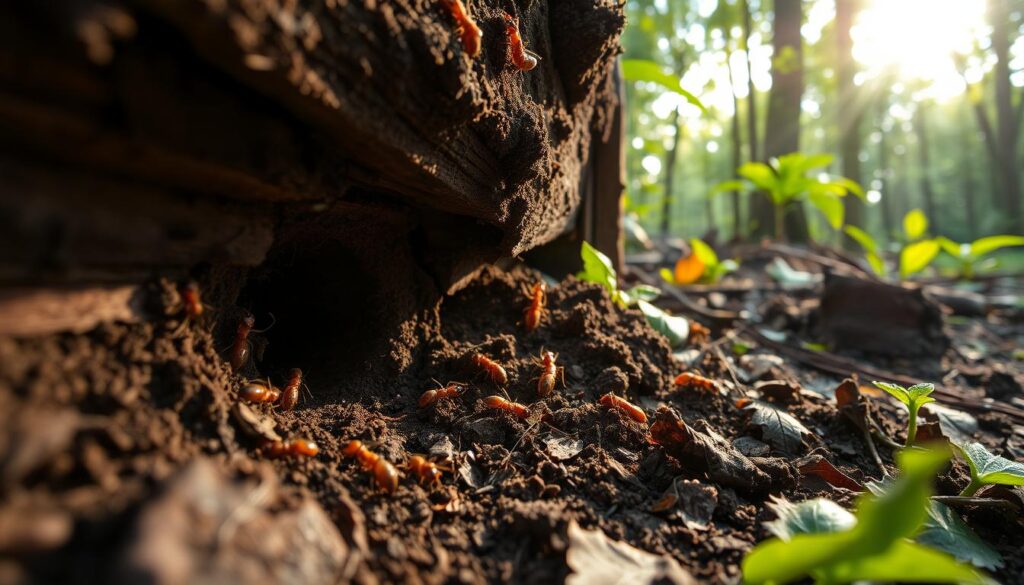
The risk of termite infestations changes a lot based on where you are and the weather. Places with [warm and humid climates] face a higher risk of termites. The good weather in these areas helps termites grow and spread quickly.
Warm and Humid Climates
The southern parts of the United States, like [https://www.bbrief.co.za/2018/04/10/feature-accounting-accountability/], have [warm and humid] weather. This makes them very attractive to termites. The steady temperatures and moisture levels are perfect for termite colonies to grow.
Wood Sources: Firewood, Mulch, and Untreated Lumber
Termites are also drawn to [external wood sources] like firewood, mulch, and [untreated building materials]. Homeowners might bring termites into their homes by storing these materials near the foundation. This creates a path for termites to get to the house’s structure.
To avoid this, keep wood sources away from your home’s edge. This can help lower the risk of termites getting in.
“Subterranean termites cause over $2 billion in damage annually in the United States.”
What Causes Termites in the House
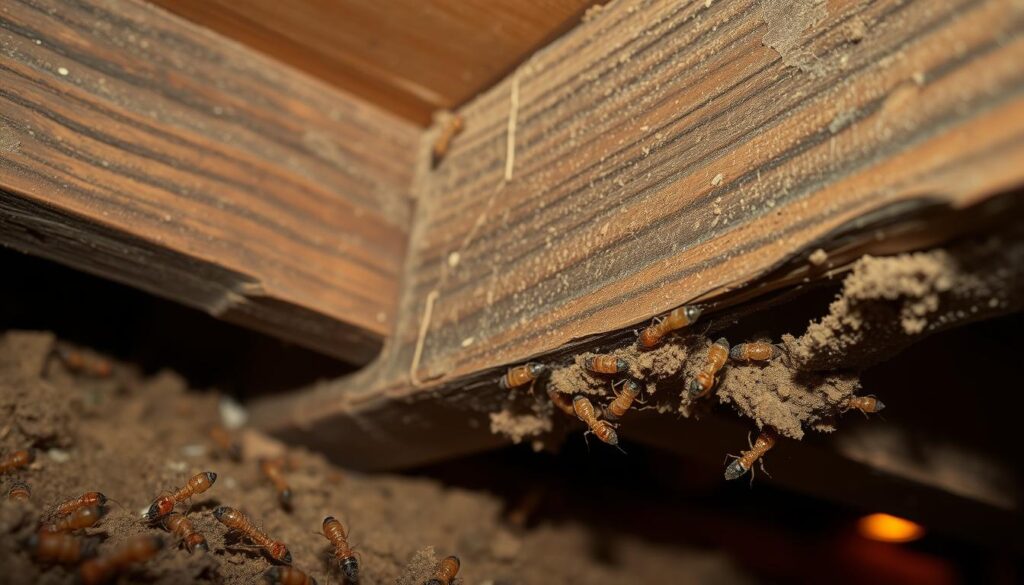
Termites can cause a lot of damage to homes in the United States. It’s important to know what leads to termite infestations to prevent them.
Moisture is a big reason for termites. Dampwood and subterranean termites love humid places. Basements, bathrooms, and laundry rooms are perfect for them. Subterranean termites need moisture to build their mud tubes to get to wood.
Wood near the home’s foundation is another problem. Termites can get through tiny cracks to reach wood. Firewood, mulch, and decorative wood too close to the house also attract termites.
Cracks and gaps in the home’s exterior let termites in. Openings around windows, doors, and roof shingles are entry points. If not fixed, termites can cause a lot of damage.
Where you live also matters. Warm and humid places have more termites. In the U.S., subterranean, dampwood, and drywood termites are common. Each type has its own habits.
“Termites can feed on various types of wood, including new, painted, treated, rotted, water damaged, and even decorative wood.”
Knowing why termites infest homes is key for homeowners. Regular checks, quick fixes, and pest control help prevent termite damage.
Preventative Measures and Early Detection
To keep your home safe from termites, you need to act early. Homeowners can prevent these pests and find infestations quickly. Regular checks and upkeep are key to spotting problems and fixing moisture issues that draw termites.
Inspection and Maintenance
Do a thorough home check every year, especially in moist spots like wood near soil. Look for mud tubes, discarded wings, and wood that sounds hollow. Fix any moisture issues fast, as termites love damp places.
Keep your home’s outside in good shape by sealing cracks and replacing rotten wood. Make sure water drains well around your home’s base. These steps help keep termites out and stop them from making a home in your house.
Professional Pest Control Services
While you can try to fight termites yourself, getting help from pest control pros is smarter. They use fumigation, insecticide, or baiting systems to get rid of termites for good.
Acting fast and getting expert help is crucial to avoid big damage. By being proactive, you can save your home and avoid the high costs of termite damage.
“Termites are among the most destructive insects globally, capable of causing significant damage to homes and other wooden structures. Early detection and proper treatment are key in protecting properties from termite damage.”
Conclusion
Termites are a big problem for homes, causing billions of dollars in damage each year in the U.S. Knowing why termites infest homes helps homeowners protect their homes. This includes avoiding moisture, wood touching soil, and fixing cracks in the home’s exterior. Regular checks, upkeep, and using pest control services are key to catching termite problems early.
Seeing winged termites inside means you have a serious problem. Termite colonies can have thousands of termites looking for food. Using treatments like liquid termiticides and termite baits can help get rid of them. A good plan includes preventing termites, finding them early, and getting help from experts.
Being proactive and watching for termite signs can prevent big problems. Regular checks and pest control services give homeowners peace of mind. They help keep the home safe and its value high.
FAQ: What Causes Termites In The House
What are the common types of termites that can infest homes?
There are three main types of termites that can invade homes. Dampwood termites like moist wood, while drywood termites prefer dry wood. Subterranean termites need moist soil to survive.
What factors can attract termites to a home?
Termites are drawn to homes for several reasons. Moisture, wood touching soil, and cracks in the exterior attract them. They also like untreated wood, like firewood and mulch. Dampwood and subterranean termites love humid places.
How does a home’s geographic location affect the risk of termite infestations?
A home’s location greatly affects termite risk. Warm, humid climates, especially in the south, are more likely to have termites. These conditions help termites thrive and spread.
What are some signs of a termite infestation?
Signs of termites include mud tubes, wood damage, and swarming termites. Finding discarded wings is also a sign. Regular checks and fixing moisture issues help spot problems early.
How can homeowners prevent and treat termite infestations?
Homeowners can prevent termites by inspecting regularly and fixing moisture issues. Keeping the exterior in good shape also helps. But, the best way to deal with termites is to call a professional. They use methods like fumigation and baiting to get rid of the colony.
Source Links
- https://www.orkin.com/pests/termites/what-causes-termites
- https://hicare.in/blog/termites-symptoms-and-causes-and-all-you-need-to-know/
- https://www.pest-ex.com.au/blog/what-causes-termite-infestations/
- https://www.holderspestsolutions.com/blog/what-do-termites-like/
- https://homeparamount.com/blog/what-causes-termites/
- https://www.michepestcontrol.com/blog/2023/september/what-causes-termites-/
- https://www.pestshare.com/what-causes-termites/
- https://williamson.agrilife.org/files/2014/08/Subterranean-Termites-B6080.pdf
- https://www.callnorthwest.com/2022/11/what-causes-a-termite-infestation/
- https://www.mightymitetermite.com/blog/what-causes-termites/
- https://luvalawn.com/preventing-termite-infestations-understand-their-behavior/
- https://www.fullscopepestcontrol.com/detecting-termites-in-house-expert-tips/
- https://entomology.ca.uky.edu/ef604
- https://foxmt.com/what-causes-termites/
- https://entomology.ca.uky.edu/ef605








