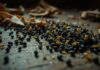





Spotting bed bug feces is key to spotting an infestation. Their droppings look like dark, rusty-brown to black stains, often in groups. These stains are made of digested blood, setting them apart from other pests.
At first, bed bug poop might look bright red. But as it gets older, it turns darker. Each dropping is about the size of a small dot, or 1 mm in diameter, similar to a ballpoint pen tip.
Because bed bugs like to stick together, you’ll often see many droppings in one spot. They might even line up, showing where they’ve been feeding and moving.
Spotting bed bug droppings is important. These stains can be a clear sign of bed bugs. Look for them on mattresses, bedding, and other places where bed bugs might hide.
Key takeaways
- Bed bug droppings are dark in color, ranging from rusty-brown to black.
- Each dropping is approximately 1 mm in size, similar to a small dot.
- Fresh droppings appear bright red, while older ones are darker in color.
- Bed bug feces are typically found in clusters, often in a linear pattern.
- Identifying bed bug droppings is crucial for recognizing a potential infestation.
- NEED A PROFESSIONAL ESTIMATE? Try out this bed bug removal cost calculator for a better idea.
Understanding Bed Bug Poop
Bed bugs are tiny, blood-sucking insects that live off human blood. They are active at night and hide in many places in your home. Their poop is a clear sign of their presence. Spotting bed bug feces early is key to treating the problem quickly.
What Are Bed Bugs?
Bed bugs are small, flat insects that feed on human and animal blood while we sleep. They are about the size of an apple seed and hard to see because they hide in small spaces. Bed bugs are mostly active at night, looking for hosts to feed on and then hiding again.
Why Identifying Poop Matters
Bed bug feces can stain fabrics and surfaces. While not harmful, they show that bed bugs are around. Knowing what bed bug droppings look like helps spot them early. Seeing many fresh droppings means there’s an active infestation.
| Statistic | Value |
|---|---|
| A single bed bug can produce between 5 to 20 fecal spots after one blood meal. | 5-20 |
| Bed bugs may feed daily if a host is available. | Daily |
| Even a modest infestation (10 to 15 bed bugs) can result in hundreds of fecal spots quickly. | Hundreds |
| Bed bugs can defecate several times during or immediately after a blood meal. | Several times |
It’s hard to count bed bugs just by looking at their poop. But seeing many droppings in different spots means there might be a big problem. Also, finding dead bed bugs can show there was a fight in the house. Fresh droppings with dead bugs mean bed bugs might come back.
“Bed bug droppings are typically small, comparable in size to a pinhead or a grain of rice, appearing as tiny black dots or specks on surfaces where bed bugs have been active.”
Characteristics of Bed Bug Excrement
It’s important to know how to spot bed bug feces. This helps us tell them apart from other insects’ waste. Finding bed bug droppings early can warn us of a possible infestation in our homes.
Size and Shape of Droppings
Bed bug droppings are tiny, about 1 mm in size. They look like dark spots, similar to ink on fabric. Their shape is regular, unlike the bigger, irregular droppings from cockroaches.
Color and Texture
The color of bed bug droppings can vary from rusty-brown to black. Fresh droppings might look smeared or muddy if touched with a damp cloth. On non-absorbent surfaces, they form beads. On porous materials, they spread out.
Comparison to Other Insect Droppings
Bed bug feces have a unique rusty smell because they contain blood. This smell is different from the scents of cockroach or ant droppings. Also, bed bug excrement is smaller and more uniform than other pests’ splatters.
“Regular checkups around the house are advised to detect signs of bed bug infestation early, and professional bed bug technicians should be contacted promptly upon suspicion to address the issue effectively.”
Where to Find Bed Bug Poop
Bed bug droppings are a clear sign of an infestation. These small, dark specks are found where bed bugs hide and feed. This includes mattress seams, box spring frames, and headboards. They can also be seen along baseboards near carpet edges and in furniture crevices.
In severe cases, bed bug droppings may appear on carpets and fabrics all over the house.
Common Locations in Your Home
Bed bugs hide during the day and feed at night. So, you’re more likely to find their droppings in certain areas. These include:
- Mattress seams and crevices
- Box spring frames
- Headboards
- Baseboards near carpet edges
- Furniture crevices and joints
Signs of an Infestation
Other signs of bed bug infestation include:
- Live bed bugs
- Shed skins from bed bug molting
- Hatched egg casings
- Blood spots on bedding
When looking for bed bugs, use a flashlight and check dark, hidden spots well. Also, inspect secondhand furniture carefully before bringing it home to avoid bed bugs.
It’s important to spot and deal with bed bug infestations early. These pests can spread quickly and become hard to get rid of. Regular checks and quick action can stop a small problem from getting worse.
How to Address Bed Bug Infestations
Dealing with bed bugs needs a few steps. First, clean the area well. Use a damp cloth with cold water and washing liquid to get rid of bed bug droppings. For tough stains, try hydrogen peroxide or baking soda paste. But, avoid hot water as it can make stains worse.
Cleaning can clear up visible signs, but you must tackle the main issue. Bed bugs are hard to get rid of alone. If you see signs like bed bug feces or stains, call a pest control expert.
When to Call a Professional
Pest control pros have the right tools and knowledge to fight bed bugs. They use heat or chemicals and check back to make sure all bugs are gone. Trying to fight bed bugs yourself can be a waste of time and risky. It’s safer and more effective to get help from a professional.
FAQ: What Does Bed Bug Poop Look Like?
What does bed bug poop look like?
Bed bug droppings are a clear sign of an infestation. They look like dark, rusty-brown to black spots, often in groups. These spots are made of digested blood, making them different from other pests’ droppings.
Fresh droppings are bright red, while older ones are darker. Each spot is about the size of a ballpoint pen tip. You can find these stains on mattresses, bedding, and other places where bed bugs hide.
What are bed bugs?
Bed bugs are small, parasitic insects that feed on human blood. They are active at night and can hide in many places in your home.
Why is identifying bed bug poop important?
Spotting bed bug poop early is key to catching an infestation quickly. This allows for fast treatment, stopping the problem before it gets worse. Bed bug feces can also stain fabrics and surfaces, showing you have these pests.
What are the characteristics of bed bug excrement?
Bed bug droppings are small, about 1 mm in size, and look like dark spots. They can be described as ink spots on fabric. The color changes from rusty-brown to black as they age.
When fresh, they smear if touched with a damp cloth. Their texture depends on the surface. On absorbent materials, they spread, while on non-absorbent surfaces, they bead up. Bed bug feces have a distinctive rusty smell due to their blood content.
Compared to other insects, bed bug excrement is smaller and more regular in shape. Cockroach droppings, for example, are larger and more irregular.
Where can you find bed bug poop?
Bed bug droppings are found in places where the insects hide during the day. This includes mattress seams, box spring frames, headboards, and along baseboards near carpet edges. In bad cases, you might find them in carpets and fabrics all over the house.
Other signs of bed bugs include live bugs, shed skins, hatched eggs, and blood spots on bedding.
How do you address bed bug infestations?
To clean bed bug droppings, use a cloth with cold water and washing liquid. Avoid hot water, as it can set the stain. For tough stains, try diluted hydrogen peroxide or a baking soda solution.
It’s crucial to treat the infestation first to avoid wasting time cleaning. Cleaning can remove visible signs, but it won’t get rid of the bed bugs. If you see many signs of bed bugs, get professional help. Experts have the knowledge and tools to get rid of them completely.
Source Links
- https://fantasticpestscontrol.com.au/bed-bugs/what-do-bed-bug-droppings-look-like/
- https://www.wikihow.com/Identify-Bed-Bug-Droppings
- https://www.michepestcontrol.com/blog/2023/october/what-do-bed-bug-droppings-look-like-/
- https://drkilligans.com/blogs/insects/bed-bug-poop-an-often-overlooked-way-to-detect-bed-bugs?srsltid=AfmBOoq66Zmc2dd3RYKWNJXb8Jt_lzyeL_V7ZDOJaAT7AAfBsOCdUyWJ
- https://naturalcarepestcontrol.com/bed-bug-poop-how-to-detect-them/
- https://www.bannerpc.com/bed-bug-feces/
- https://bedbugspecialist.co.uk/what-does-bed-bug-poop-look-like/
- https://bedbugs.tennessee.edu/biology-and-identification/
- https://orezon.co/blogs/bedding-care/early-bed-bugs-sheets?srsltid=AfmBOorYLvH5VsMYfQ2zKKYpfycNlSpdJz_i6LlG236f6O8X9fiv1G_C
- https://www.innovativepest.com/bed-bug-droppings/
- https://www.griffinpest.com/blog/do-i-have-bed-bugs/
- https://heavydutybunkbeds.com/bed-bug-droppings/