





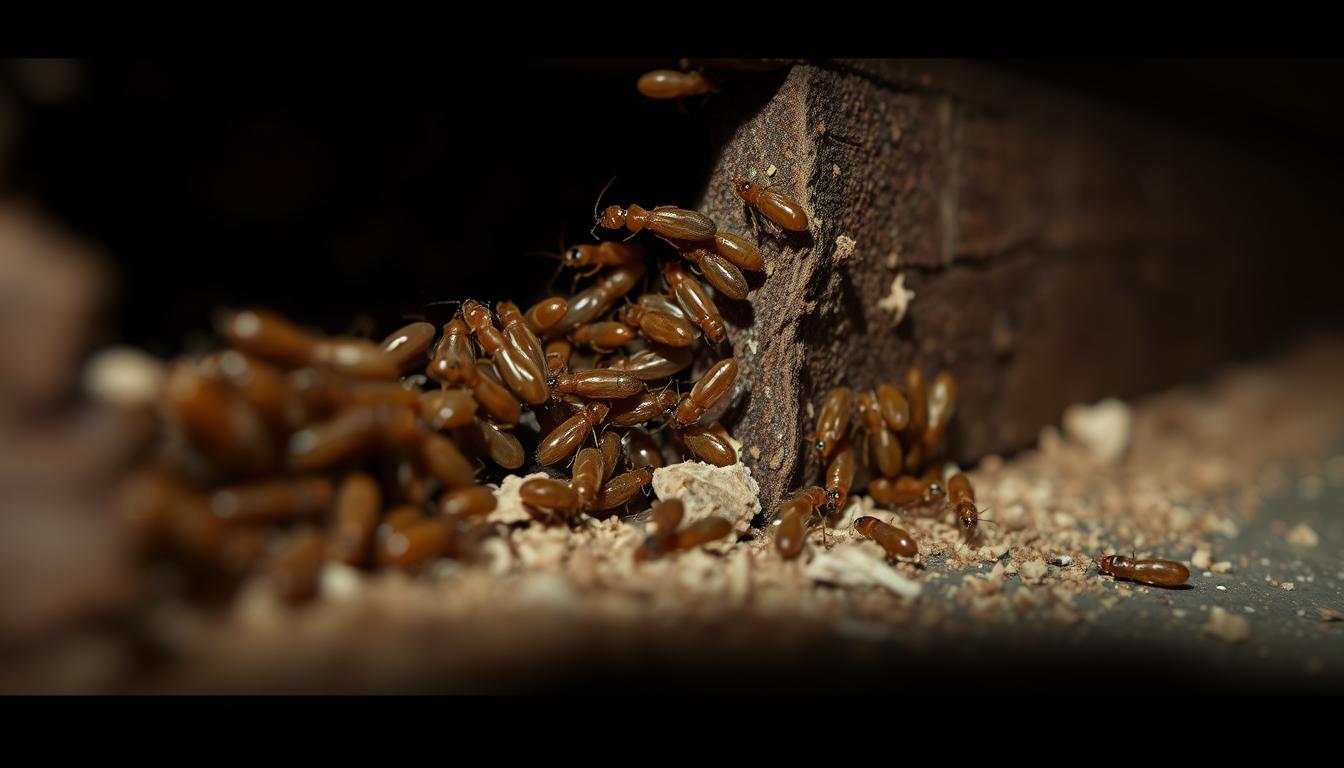
Termites are pests that can damage homes a lot. They are drawn to certain materials and conditions that help them survive. Knowing what attracts them is key to preventing and catching infestations early.
Termites love cellulose, found in wood, paper, cardboard, and some natural fibers like cotton. They eat these materials, which are their main food. Different types of termites, like dampwood, drywood, and subterranean, have their own likes and needs.
Key takeaways
- Termites are attracted to cellulose-rich materials, including wood, paper, cardboard, and natural fibers.
- Dampwood and subterranean termites thrive in humid environments, while drywood termites prefer dry wood.
- Factors like moisture, wood in contact with the home’s foundation, and cracks in the building’s exterior can attract termites.
- Proper storage of firewood, regular gutter cleaning, and maintaining a low-moisture environment can help deter termites.
- Professional termite inspections are recommended every 3-5 years to detect infestations early and take appropriate action.
Common Types of Termites and Their Preferences
Homeowners should know about the three main types of termites: dampwood, drywood, and subterranean. Each type has its own habits and likes. Knowing these can help you spot problems early and take steps to control them.
Dampwood Termite Behavior
Dampwood termites love moist, humid places and damaged wood. They often live in rotting trees, stumps, and damp cellulose. Since they prefer damp areas, they’re less likely to harm a home’s wood compared to others.
Drywood Termite Characteristics
Drywood termites can live in dry wood, away from soil. They sneak into homes through small openings. Unlike dampwood termites, they don’t need constant moisture to survive.
Subterranean Termite Habits
Subterranean termites are the most damaging. They need moist soil and can build mud tubes to reach wood. They’re attracted to moisture and can get into homes through foundation cracks or around windows and doors.
Knowing which termite you have is key to finding the right treatment. A professional termite control expert can help you protect your home from these pests.
“Termites can cause significant damage to a home’s structure, and it’s important for homeowners to be proactive in preventing and addressing infestations.”
What Are Termites Attracted To – Key Environmental Factors
Termites are attracted to certain conditions that help them survive and grow. Moisture is a big draw, often from leaky pipes, poor drainage, and bad airflow. It’s key to get rid of extra moisture around your home to stop termites.
Wood piles, like firewood, should be far from your home and off the ground. This stops termites from finding an easy meal. Also, remove dead trees or stumps to keep termites away and block their entry to your home.
Mulch in your garden can attract termites because it holds moisture. Keep it at least 15 inches from your home’s base. Clean your gutters often to avoid moisture buildup and roof damage, which termites like. Also, trim tree limbs close to your home to block termite access.
By tackling these environmental factors with proper termite prevention and proactive control, you can lower termite risks and protect your home.
FAQ: What Termites Are Attracted To
What are termites attracted to?
Termites are drawn to homes for food and the right environment. They eat cellulose in wood, paper, cardboard, and cotton. Different types of termites like different conditions.
Dampwood and subterranean termites like humid places. Drywood termites prefer dry wood. Moisture, wood near foundations, and cracks in buildings attract them.
Warm weather and steady humidity make termites more active. This increases the chance of infestations.
What are the common types of termites and their preferences?
There are three main types of termites that invade homes: dampwood, drywood, and subterranean. Dampwood termites like damp wood and humid places.
Drywood termites infest dry wood and don’t need soil. Subterranean termites need moist soil and build mud tubes to move between soil and wood.
Subterranean termites are the most destructive. They need water to survive and are drawn to moisture in homes. All termites can get into homes through cracks, gaps, or around windows and doors.
What environmental factors attract termites to homes?
Several environmental factors attract termites to homes. Moisture is a big attractant, caused by leaks, poor drainage, and bad airflow.
Wood piles, including firewood, should be far from homes and off the ground. Dead trees and stumps attract termites and should be removed.
Mulch near foundations retains moisture and attracts termites. It should be kept away from foundations. Clogged gutters cause moisture buildup and attract termites.
Tree limbs near homes provide easy access for termites. They should be trimmed regularly. Proper landscaping and controlling moisture are key to preventing termites.
Source Links
- https://www.callnorthwest.com/2020/04/5-things-that-could-be-attracting-termites-to-your-home/
- https://florida-environmental.com/what-attracts-termites/
- https://www.smithereen.com/blog/surprising-things-termites-eat/
- https://www.orkin.com/pests/termites/what-causes-termites
- https://www.orkin.com/pests/termites
- https://proofpest.com/what-attracts-termites/
- https://entomology.ca.uky.edu/ef605