As the weather gets warmer, homeowners in the United States might see a problem: termite swarming season. Termites usually swarm between August and November, and in early spring. They leave their colonies to find new places to start new ones. This is important for their growth, but it can also harm homeowners.
Homeowners need to watch out for signs of termites’ swarms. This is because termite swarming season can cause a lot of structural damage. It also means homeowners might have to spend a lot on termite control.
In the United States, termites damage over 600,000 homes every year. This costs about $5 billion. It’s very important to know the signs of a termite swarm. This way, homeowners can stop and fix infestations before they cause a lot of wood damage.
Key takeaways
- Termite swarming season typically occurs from August to November and in early spring.
- Termites swarm to reproduce and establish new colonies, which can lead to significant structural damage.
- Recognizing the signs of a termite swarm is crucial to preventing and addressing infestations.
- The annual cost of termite damage in the U.S. is estimated to be around $5 billion.
- Prompt action is necessary to prevent extensive wood damage from termite infestations.
Introduction to Termite Swarming
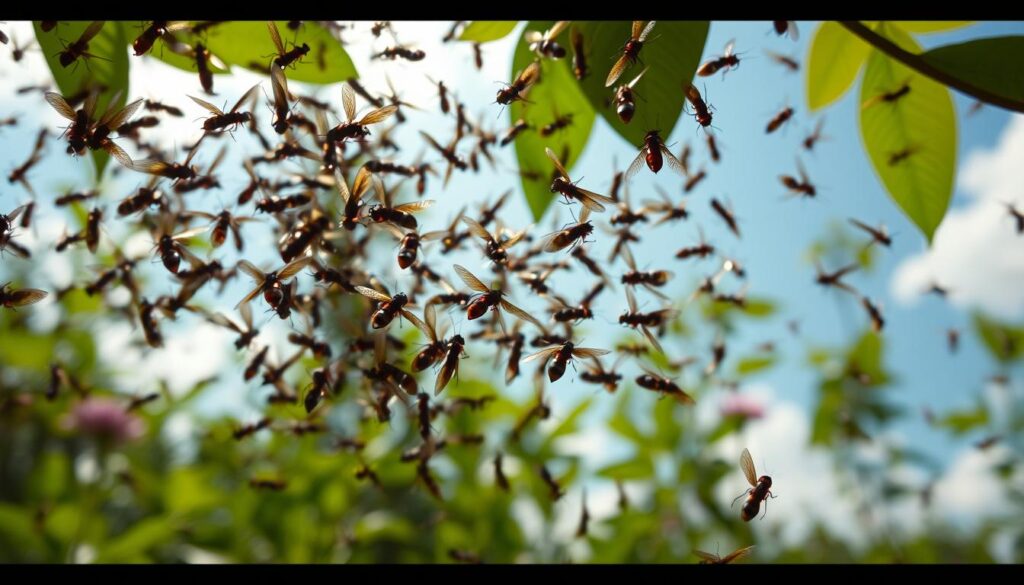
Termites are fascinating creatures, and their swarming behavior is a key part of their life cycle. A termite swarm happens when thousands of winged termites leave their colony. These winged termites, called “alates,” are the colony’s reproductive members. Their main job is to mate and start new colonies.
What is a Termite Swarm?
A termite swarm is a natural event that happens when a colony gets too big. The winged termites, or alates, fly off to find new places to build nests and start new colonies. This helps the termite species grow and survive.
Why Termites Swarm
Termites swarm for two main reasons: to reproduce and disperse. When a colony gets too large, the alates fly out to find mates and start new colonies. This behavior helps termites spread out and colonize new areas, preventing overcrowding.
Statistics show that termite swarming happens during the daytime, often in spring. Subterranean termites, common in North Carolina, need lots of moisture to live. The female and male swarmers form pairs in flight, then look for a place to build a new nest after landing.
Indoor termite swarmers may die because they can’t find enough moisture. Termite wings are all the same length and size, unlike ant wings, which can help tell them apart.
“Termite swarmers are an indicator of a potential problem rather than a problem in itself. Swarmers do not cause structural damage; worker termites in a colony do.”
A termite swarm is not a problem itself but a sign of a nearby colony. It’s crucial to inspect thoroughly to protect homes or businesses from termite infestations.
Types of Termites and Their Swarming Habits
Knowing about termite types and their swarming habits is key. There are two main types: subterranean termites and drywood termites.
Subterranean Termites
Subterranean termites live underground. They build mud tubes to reach above ground and infest buildings. These termite species swarm during the day in spring. They do this after heavy rain and when it’s warm and humid.
Subterranean termite swarms can be huge. They pose a big threat to homes if not stopped.
Drywood Termites
Drywood termites live in the wood they infest. They don’t need soil to survive. These termites swarm in the evening, usually in late summer or fall.
Their swarming is triggered by temperature and humidity changes.
Knowing how each termite species swarms helps homeowners spot infestations early. Quick action is key to prevent damage and expensive repairs.
“Termites collectively cause billions of dollars in structural damage every year, with homeowners spending an average of two billion dollars annually on remediation.”
When Is Termite Swarming Season?
Homeowners need to know about termite swarming season. It’s a time to spot and fix infestations early. Termites usually swarm from late summer to fall, and in early spring. Warm weather and high humidity help them mate and spread out.
Subterranean termites swarm in spring, while drywood termites do it in late summer or fall. The exact timing depends on the type and where you live. For example, in the eastern U.S., Eastern subterranean termites swarm in April. Then, Dark Southern subterranean termites follow in May.
Light Southern subterranean termites swarm in the fall. Their flight times vary by region, from August to November.
| Termite Species | Typical Swarming Season |
|---|---|
| Subterranean Termites | Spring and summer months |
| Drywood Termites | Late summer and fall (August to November) |
| Eastern Subterranean Termites (Reticulitermes flavipes) | April |
| Dark Southern Subterranean Termites (R. virginicus) | May |
| Light Southern Subterranean Termites (R. hageni) | August to November |
Knowing when termites swarm is key for homeowners. It helps spot and fix infestations early. Keep an eye out for signs like discolored drywall or hollow wood. If you see a swarm, get help from a professional right away.
Identifying a Termite Swarm

Spotting the signs of a termite swarm is key to catching a problem early. Termite swarms show there’s a termite colony nearby. It’s important to act fast to protect your home.
Signs of a Termite Swarm
- Presence of winged termites – Look out for lots of winged termites flying around your home during a swarm.
- Piles of discarded wings – After the swarm, you’ll see piles of shed wings around your property.
- Mud tubes – Termites use mud tubes to get to food. You might see these tubes on your home’s exterior.
Distinguishing Termites from Flying Ants
It’s vital to tell termites from flying ants. Both have wings, but they look different:
| Feature | Termites | Flying Ants |
|---|---|---|
| Antennae | Straight | Bent |
| Wing Size | Equal-sized | Unequal-sized |
| Waist | Straight | Pinched |
Knowing what insects are swarming is key. It helps figure out if you have a termite infestation or not.
What a Termite Swarm Means for Your Home
If you’ve seen a termite swarm near your home, it means a termite colony is close. Your home might be at risk of termite damage and infestation. Both subterranean and drywood termites can harm your home’s structure.
Inspecting for Termite Damage
To find out how bad the termite infestation and damage are, you need to inspect your home well. Look for signs like:
- Mud tubes on the exterior or interior walls
- Hollowed or damaged wood structures, especially in the foundation, crawl spaces, and lower walls
- Piles of discarded termite wings near windows or entry points
If you think you have a termite infestation, get help from a pest control expert. They can check it out and suggest the best treatment.
“Less than 4% of all termite inspectors use the TermaTrac® locating system, which utilizes radar, thermal, and moisture sensors to locate and track termites behind walls, floors, and ceilings.”
Acting fast is key to reduce termite damage and stop more harm to your home. Early action and professional pest control can save your home and keep it strong.
Preventing and Treating Termite Infestations
Keeping your home safe from termites is key to its value and structure. Start by keeping wood products away from your home’s base. Seal any cracks and fix leaks quickly. Also, get regular checks from pest control experts to catch termites early.
Preventative Measures
- Keep your crawl space or basement dry and well-ventilated to stop termites.
- Store firewood and lumber at least 20 feet from your home’s base.
- Make sure water flows away from your home’s foundation.
- Use termite-resistant materials for building.
Treatment Options
If you find termites, act fast. Experts suggest termite baiting stations or liquid treatments around your home. These methods kill the colony and protect your home. Always get help from a licensed pest control expert for the best results.
| Treatment Method | Description | Effectiveness |
|---|---|---|
| Termite Baiting | Places bait stations around your home to kill the colony. | Works well against subterranean termites. |
| Liquid Termite Treatment | Uses liquid termiticides around your home’s base for protection. | Protects against many termite types for a long time. |
“Annual inspections by termite professionals can help detect termite activity before it becomes noticeable.”
Use termite prevention strategies and get termite treatment quickly to protect your home. This way, you can keep your home safe from termites and ensure it lasts long.
Conclusion
Termite swarming season is a time when homeowners need to watch out for signs of infestations. Knowing how to spot a termite swarm and how to prevent and treat infestations is key. This helps protect your home from the damage and expensive repairs termites can cause.
Being aware of termite prevention and control is crucial. Regular inspections, sealing cracks, and fixing moisture issues can help prevent termites. If you see a swarm, act fast and call a pest control expert to stop the problem.
By staying alert and taking action, you can keep your home safe from termites. Remember, being vigilant and quick to act during termite swarming season is vital. It ensures your home stays safe and protected for years to come.
FAQ: When Is Termite Swarming Season
When is termite swarming season?
Termite swarming season is in late summer and fall, from August to November. It also happens in early spring. This is when the weather is warm and humid, perfect for termites to mate and spread out.
What is a termite swarm?
A termite swarm is when thousands of winged termites leave their colony. These termites, called “alates,” are the colony’s reproductive members. Their main job is to mate and start new colonies.
Why do termites swarm?
Termites swarm to spread and reproduce. Their colony has grown too big and needs to expand. Swarming lets termites find new places to build nests and start new colonies, helping the species grow.
What are the different types of termites and their swarming habits?
There are two main types of termites: subterranean and drywood. Subterranean termites live underground and use mud tubes to go above ground. Drywood termites live in the wood they infest. Subterranean termites swarm in the daytime in spring. Drywood termites swarm in the evening in late summer or fall.
How can I identify a termite swarm?
Look for winged termites, piles of discarded wings, and mud tubes to spot a swarm. Termites have straight antennae, equal-sized wings, and straight waists. Flying ants have bent antennae, unequal wing sizes, and pinched waists.
What does a termite swarm mean for my home?
A termite swarm near your home means there’s an active colony nearby. Your home might be at risk of infestation and damage. Subterranean termites damage wood near the ground. Drywood termites can damage wood throughout your home.
How can I prevent and treat termite infestations?
Keep wood and wood products away from your home. Seal cracks and gaps in the foundation. Fix any leaks or moisture issues. Regularly check your home for termite signs.
If you find an infestation, you can use termite baiting stations or liquid treatments around your home’s perimeter. It’s best to get help from a professional pest control specialist to get rid of the colony and protect your home.
Source Links
- https://www.trianglepest.com/blog/termite-swarming-everything-you-need-know-about-swarming-season
- https://www.orkin.com/pests/termites/life-cycle/termite-swarm
- https://www.callpauls.com/blog/termite-season
- https://content.ces.ncsu.edu/termite-swarmers-what-do-they-mean-for-you
- https://www.pestworld.org/news-hub/pest-articles/spring-swarmers/
- https://www.preferredpest.com/blog/its-swarm-season-learn-the-differences-between-ants-termites-infographic-
- https://www.accuratepest.net/blog/2022/april/everything-you-must-know-about-termite-swarming-/
- https://www.jppestservices.com/blog/termite-swarming-when-to-worry
- https://www.lloydpest.com/blog/termite-season-termite-warning-signs-and-termite-prevention/
- https://www.orkin.com/pests/termites/termite-season
- https://www.evergreenpc.com/about/our-blog/3-things-you-need-know-about-termite-swarm-season/
- https://www.palmettoexterminators.net/pest-news/how-to-prepare-for-termite-swarming-season
- https://360pestpro.com/blog/termite-swarm-season/
- https://www.nativepestmanagement.com/blog/2023/august/when-do-termites-swarm-in-florida/
- https://www.championtermiteandpestcontrol.com/what-you-need-to-know-about-termite-swarming-season/
- https://www.mightymitetermite.com/blog/what-time-of-year-is-best-for-termite-treatment/
- https://www.mccallservice.com/blog/what-do-swarming-termites-mean-for-you/
- https://vinxpestcontrol.com/termite-swarming-season-the-top-10-things-you-need-to-know/
- https://knockoutpestcontroljacksonville.com/unveiling-the-swarming-season-understanding-the-phenomenon-of-termites-in-spring/