





Pressure-treated wood is a favorite for outdoor projects because it fights off decay and termites. But, many ask: Will termites eat pressure treated wood? The truth is, pressure-treated wood is “termite-resistant,” but not completely “termite-proof.”
This wood gets treated by forcing chemicals into its pores. This creates a barrier against termites, fungi, and other pests. It’s great for fence posts, decking, and other projects where wood meets soil.
Even though it’s resistant, pressure-treated wood isn’t perfect. The chemicals can fade over 7-10 years, making it less effective. Also, any damage to the wood, like cuts or holes, can leave it open to termites.
Key takeaways
- Pressure-treated wood is resistant to termites, but not completely termite-proof
- The chemical preservatives in pressure-treated wood can leach out over time, reducing its effectiveness against termites
- Pressure-treated wood is still susceptible to termite damage if it is in direct contact with soil or has unprotected areas
- Proper construction practices, such as keeping wood elevated and sealing any exposed areas, are crucial for maximizing the termite resistance of pressure-treated lumber
- Building codes may require the use of pressure-treated wood for certain construction projects to help prevent termite infestations
Understanding Pressure Treated Wood
Pressure-treated wood is a strong defense against termites. It’s made by forcing chemicals into the wood under high pressure. This makes the wood resistant to decay, fungi, and insects like termites and carpenter ants.
What is Pressure Treated Wood?
Pressure-treated wood is lumber treated with chemicals to last longer. The pressure-treating process creates a protective layer. This layer helps the wood withstand damage from elements, rot, and termites.
How Does it Resist Termites?
The chemicals in pressure-treated wood keep termites away. In places like California, building codes require it to protect homes. This ensures the structure stays strong.
But, it’s not completely termite-proof. The chemicals can wear off after 7-10 years. Also, if the wood touches soil or water, it can decay. This makes it more vulnerable to termites.
| Benefits of Pressure Treated Wood | Limitations of Pressure Treated Wood |
|---|---|
|
|
To keep pressure-treated wood effective, follow proper construction methods. Make sure the wood is at least six inches off the ground. Also, apply termiticides around the foundation regularly.
Homeowners should watch for signs of termites, like swollen wood. If you see any, call a pest control expert right away.
Will Termites Eat Pressure Treated Wood
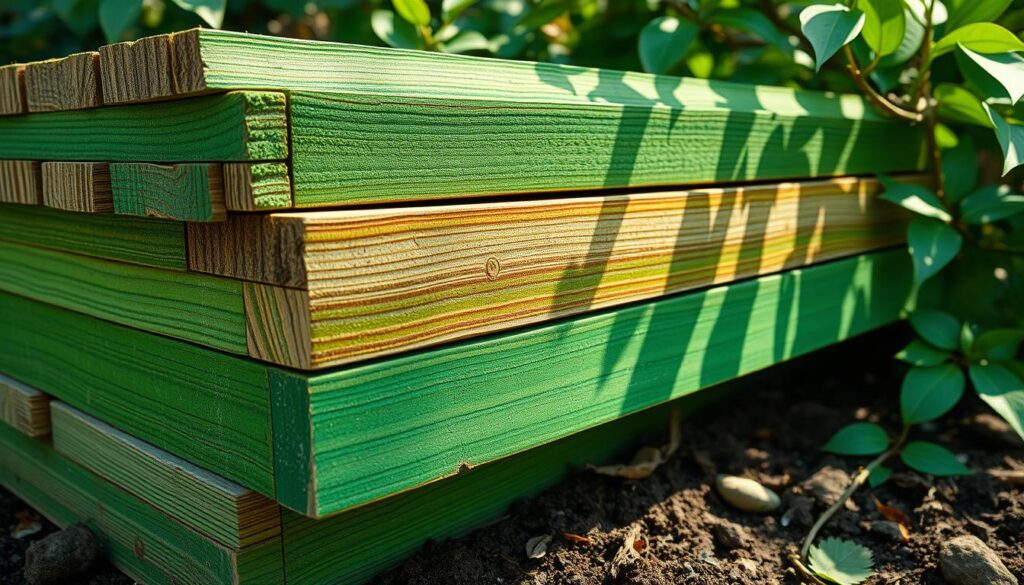
Termite-Resistant vs. Termite-Proof
Pressure-treated wood is a good defense against termites, but it’s not foolproof. The chemicals in it protect for about 8-10 years. After that, weather and leaching can weaken the wood.
Termites can still eat pressure-treated wood if it gets damp or starts to rot. They might even make mud tubes to get to the untreated wood inside. So, it’s better to say it’s termite-resistant, not termite-proof.
Limitations of Pressure Treated Wood
The chemicals in pressure-treated wood can wear off over time. Any new cuts, notches, or holes that aren’t re-treated can let termites in. This makes the wood vulnerable to termite attacks.
Termites cause over $5 billion in damage in the U.S. each year. This is more than damage from hurricanes, fires, and tornadoes. Knowing the limits of pressure-treated wood is key to preventing termite problems.
| Termite-Resistant Wood Species | Termite-Resistant Wood Treatments |
|---|---|
| Heartwood, southern red cedar, Alaska cedar, and redwood lumber | Wood treated with copper boron azole (CBA) or alkaline copper quaternary (ACQ) |
Regular termite checks and using termiticides around your home’s foundation are good ways to keep termites away.
“Termites can still feed on pressure-treated wood, especially if it becomes damp and starts to rot. The chemicals used in pressure treatment may lose their effectiveness over time, typically within 7-10 years, and the inner wood may become vulnerable to termite attack.”
Termites and Their Adaptive Nature
Termites have been around for over 250 million years. Their ability to adapt is why they’ve lasted so long. Despite humans trying to stop them, like with termite shields and treated wood, they find ways to get to the wood they want.
The Longevity of Termites
Termites’ survival for so long is amazing. They’ve faced many changes, predators, and human efforts to stop them. But they keep going. Their special way of eating wood, thanks to tiny helpers, lets them survive.
This skill lets them live in many places. From rainforests to deserts, termites can be found.
Termites’ Ability to Tube Over Treated Wood
Termites can even get past treated wood. They make mud tubes to get to the wood that’s not treated. These tubes keep them safe from the bad stuff in treated wood.
This shows why we need to fight termites in many ways. It’s not just about one thing.
“Termites are persistent and can find ways to bypass the protective measures in place, making it crucial to understand their adaptive nature and take comprehensive steps to prevent and address termite infestations.”
Termites’ long life and ability to adapt show their strength. Knowing how they work helps us fight them better.
Proper Construction Practices with Pressure Treated Wood

Using pressure-treated wood is a smart way to prevent termite damage. But, it’s not just about the wood. Proper construction practices are also key. By following some guidelines, you can make pressure-treated wood work best and protect your home from termites.
First, make sure no wood touches the soil. Wood members like door frames or lattice work should be at least 6 inches above the ground. Wooden support steps or posts should be on a concrete base. This makes it harder for termites to get to the wood.
Also, treat any new cuts, notches, or drill holes in the wood with preservative on-site. This keeps the wood’s protection strong and stops termites from getting in.
- Ensure that pressure-treated wooden posts buried in the ground are completely encapsulated with concrete to deter termite access.
- Avoid letting pressure-treated wood come into direct contact with masonry or concrete, as this can compromise the wood’s protective properties.
- Consider using termite-resistant materials like concrete, steel framing, or metal mesh in addition to pressure-treated wood for added protection.
By following these best practices for proper construction with pressure-treated wood, you can effectively prevent termite damage. This ensures your home or commercial building lasts longer. A little care during construction can save you a lot of trouble and money later.
“The average pressure-treated deck only lasts 9 years according to a technical report in the Forest Products Journal from November-December 1998. Proper construction practices can significantly increase the lifespan of pressure-treated wood and protect it from termite infestations.”
Conclusion
Pressure-treated wood is often seen as a termite-resistant option. Yet, it’s not completely safe. Termites can still attack it, especially when it gets damp and starts to rot. It’s key to know the limits of pressure-treated wood and take steps to prevent termites.
This includes following good construction practices, avoiding wood-to-soil contact, and checking for termite signs regularly. By using pressure-treated wood with other termite prevention methods, you can protect your home better. Regular checks, professional treatments, and keeping your home well-ventilated are important.
Pressure-treated wood is a useful tool against termites, but you must stay alert and take a full approach to protect your home. Being informed and proactive can help you enjoy the benefits of pressure-treated wood while reducing termite risks.
FAQ: Termites vs Pressure Treated Wood
Will termites eat pressure treated wood?
Pressure-treated wood is hard for termites to eat, but it’s not completely safe. The chemicals in it make it less tasty to termites. But, termites might still find a way to get to the untreated wood inside.
Is pressure treated wood really termite resistant?
Yes, pressure-treated wood is “termite-resistant.” It offers some protection against termites. But, the chemicals used can wear off after 7-10 years. This makes the wood inside more open to termite damage.
How do I protect my pressure treated wood from termites?
To keep your pressure-treated wood safe from termites, follow some key steps. Make sure no wood touches the soil. Also, treat any new cuts or holes in the wood right away.
Can termites damage pressure treated lumber?
Pressure-treated wood is more resistant to termites, but it’s not safe forever. Termites can find ways around the protection, especially if the wood gets wet and starts to rot. It’s important to check the wood often and keep it in good shape.
How long does pressure treated wood last against termites?
Pressure-treated wood can resist termites for about 7-10 years. After that, the chemicals used to protect it start to fade. This makes the wood more open to termite attacks.
Source Links
- https://www.colonialpest.com/2014/06/25/will-termites-infest-pressure-treated-wood/
- https://www.chemfreeexterminating.com/can-termites-infest-pressure-treated-wood/
- https://insight-pest.com/blog/is-pressure-treated-wood-termite-resistant/
- https://www.toropest.com/can-termites-eat-pressure-treated-wood/
- https://www.linkedin.com/pulse/termites-eat-pressure-treated-wood-stephen-omondi
- https://www.vulcantermite.com/education-and-prevention/bugs-love-bugs-can-pets-2/
- https://www.michepestcontrol.com/blog/2022/october/what-do-termites-eat-/
- https://www.ncbi.nlm.nih.gov/pmc/articles/PMC6303793/
- https://www.tractorbynet.com/forums/threads/pressure-treated-wood-ratings-pole-barns.304551/page-2
- https://content.ces.ncsu.edu/termite-prevention-approaches-for-new-construction
- https://www.hitechtermite.com/articles/termite-prevention-during-the-construction-of-new-homes
- https://www.bbrief.co.za/2024/10/22/will-termites-eat-treated-wood/
- https://entomology.ca.uky.edu/ef605