



Termites are a big problem for homeowners, causing about $5 billion in damage each year in the U.S. The National Pest Management Association says termites cause over $5 billion in damage yearly. They are called “silent destroyers” because they can eat through wood, flooring, and even wallpaper without being seen. But how much termite damage is too much for home owners?
Termite damage is hard to spot and can go unnoticed for years. This can lead to a lot of structural damage. This article will look at how much damage is too much, signs of an infestation, repair costs, and ways to prevent and control termites.
Key takeaways
- Termites can cause up to $5 billion in annual damage across the U.S.
- Termite damage can go undetected for years, leading to significant structural problems
- Identifying the signs of a termite infestation is crucial for early intervention
- Repair costs for termite damage can range from $250 to $20,250 or more
- Preventive measures, like regular inspections and moisture control, are essential to avoid excessive damage
Understanding Termite Infestations and Damage
Termites are a big problem for homes in the U.S., causing billions of dollars in damage each year. They include aggressive Formosan termites and common subterranean species. These insects can harm your property quietly if not stopped early.
Knowing about different termites and their effects is key. It helps in spotting and fixing infestations before they get worse.
Types of Termites and Their Impact
Subterranean termites are the biggest problem, causing 95% of termite damage in the U.S. They like damp, cool places and can damage homes as far north as Canada. A single colony can have up to 2 million worker termites. Each can eat a foot of 2″ x 4″ lumber in over five months.
Drywood termites are less common but still a threat in southern areas. Dampwood termites need damp wood and live in cool, coastal areas.
Signs of a Termite Infestation
Spotting early signs of termites is vital for quick action. Look out for:
- Hollow-sounding wood
- Presence of mud tubes
- Discarded wings
- Frass or termite droppings
These signs mean termites have damaged wood, furniture, floors, and even wallpaper and paint. Acting fast is crucial. Termite colonies can grow fast and cause a lot of damage in a few years.Termite damage can severely affect a property’s value, making early action essential.
The Cost of Termite Damage and Repairs
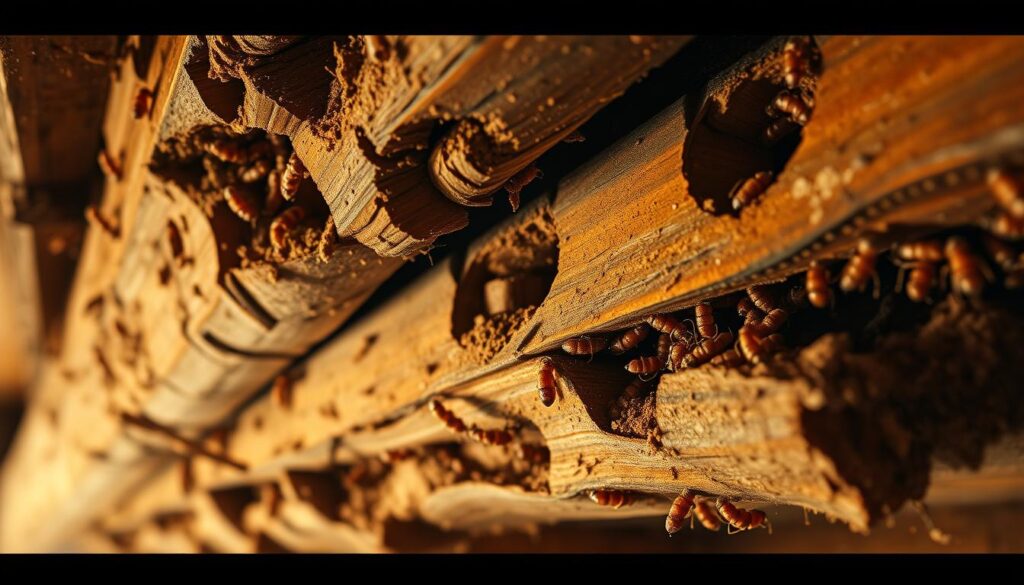
Termite damage can be very costly for homeowners. In the United States, the average homeowner spends about $3,000 to fix termite damage. But, the cost can change a lot based on several things. These include the size and location of the infestation, and the home’s construction.
Factors Affecting Repair Costs
The cost of fixing termite damage depends on a few things. The type of termites, the size of the colony, and the wood type all play a role. For example, a small infestation might only need cosmetic fixes, costing a few hundred dollars. But, a big infestation can cause structural damage, costing thousands to fix.
Every year, U.S. residents spend at least $1 billion on Formosan termite control and repairs. Some say it’s closer to $2 billion. Termites and similar pests cause about $30 billion in damage to crops and buildings in the U.S. each year.
| Repair Cost Range | Damage Level |
|---|---|
| $250 – $1,000 | Smaller areas of damage |
| $1,000 – $3,000 | Medium damage |
| $3,000 – $6,000 or more | Extensive structural damage |
Preventative steps can help avoid the high costs of termite damage. Regular inspections and treatments can save homeowners a lot of money. By acting fast when you see signs of termites, you can save thousands on repairs.
How Much Termite Damage Is Too Much

Figuring out how much termite damage is too much can be tricky. It depends on the type of termites, the size of their colony, and the wood’s condition. But, there are clear signs that show when damage gets too bad.
One clear sign is when floors or walls start to buckle. This happens when termites weaken the wood, causing it to warp. Also, look for dry rot in wood, which makes it soft and weak. And, if wood feels damp or spongy, it’s likely termites are at work.
If you see these signs, get a professional termite inspector to check the damage. The age of the infestation, other food sources, and local climate can affect the damage level. Quick action is key to avoid more damage and expensive fixes.
Assessing the Extent of Damage
When checking termite damage, consider these factors:
- Type of termites present (subterranean, drywood, or dampwood)
- Size of the termite colony
- Duration of the infestation
- Accessibility of the affected areas
- Structural integrity of the wood
- Presence of secondary damage, such as dry rot or water damage
A professional termite inspector can give a detailed report. They’ll suggest the best steps, like targeted treatment, repairs, or full extermination.
Spotting and acting on termite problems early is key. Knowing the signs of damage and getting expert advice helps protect your home. This way, you can avoid the high costs of dealing with severe termite damage.
Preventing and Controlling Termite Infestations
Keeping your home safe from termites is very important to avoid damage. Termite prevention strategies include making sure water drains well, not touching wood to the ground, and using materials that resist termites. You can also try DIY termite treatment options like boric acid or termite baits.
For big infestations, you might need professional termite extermination methods like fumigation. Staying ahead of termites can save you money and keep your home safe from these pests.
Home Modifications for Termite Control
- Improve drainage around your home to prevent moisture buildup
- Eliminate wood-to-ground contact to eliminate access points
- Use termite-resistant building materials, such as treated wood or concrete
- Install termite shields to create a barrier between the soil and your home
DIY Termite Treatment Options
- Apply boric acid to vulnerable areas of your home
- Use termite baits to attract and eliminate the colony
- Seal cracks and crevices to deny termites entry points
If termites are a big problem, get help from a professional pest control service that knows about termite extermination methods. They can figure out the best termite prevention and control strategies for your home.
“Proactive termite prevention is key to protecting your home from costly and destructive infestations. A combination of DIY measures and professional services can help you stay ahead of these wood-munching pests.”
By using a full plan for termite prevention and control, you can protect your home and avoid termite damage. Always be on the lookout for termites and get help if you see any.
The Role of Professional Inspections
Regular professional inspections are key to spotting termite infestations. Home inspectors might see some termite activity. But a termite inspector is trained to find all signs of wood-destroying organisms.
Termite inspectors look for termites, damage, and the best treatment. They focus on termites, not like a home inspector who checks many things. Getting a termite inspector early can save a lot of money and trouble.
Difference Between Home and Termite Inspections
- Termite inspectors focus on termite damage and wood-destroying organisms. Home inspectors check more.
- Termite inspections help catch problems early. This saves money on big repairs later.
- Get a termite inspection every year. More often if you live in a termite-prone area.
- Quick action with termite inspections reduces termite damage in termite-prone areas.
Knowing the difference helps homeowners see why termite inspections are important. They protect your property for years to come.
Conclusion
Termites are a big problem for homeowners in the United States, causing about $5 billion in damage each year. Figuring out how much damage termites have done and when to call a professional can be hard. But knowing the signs of an infestation and how it affects your home’s value is key.
Regular termite checks, taking steps to prevent them, and acting fast when you see signs of an infestation can save your home. This way, you avoid the expensive fixes needed for serious termite damage.
Being proactive about termite control helps keep your home safe and its value up. Getting regular checks from professionals, using materials that resist termites, and keeping your home well-maintained are all important. If you see signs of termites, it’s crucial to call an exterminator right away.
Keeping your home safe from termites is a continuous job. But, the effort you put into prevention and early action can really pay off. By staying alert and taking the right steps, you can protect your home’s safety and value for many years.
FAQ: Assessing Termite Damage
How much termite damage is considered too much?
It’s hard to say when termite damage is too much. It depends on the termites, the colony size, and the wood condition. But, if you see buckling floors, dry rot, or soft wood, it’s likely too much and needs a pro.
What are the signs of a termite infestation?
Look out for buckling floors, dry rot, mud tubes, and swarms of termites near lights. These are signs of termites.
How much does it cost to repair termite damage?
Fixing termite damage can cost about ,000 on average. But, it really depends on the damage size, location, and home type. In bad cases, the home might need to be torn down.
What factors affect the level of termite damage?
The damage level can change based on the infestation age, food availability, and climate.
How can homeowners prevent and control termite infestations?
To prevent termites, ensure good drainage, avoid wood touching the ground, and use termite-resistant materials. For DIY, try boric acid or termite baits. But, for serious cases, you might need a pro like fumigation.
Why is it important to have a professional termite inspection?
Getting a pro to check for termites is key. They know how to spot wood-destroying pests. This is different from a general home inspection.
Source Links
- https://www.insightfulreibuyhouses.com/blog/how-much-termite-damage-is-too-much-ways-to-reduce-termite-impact-on-your-property/
- https://castleconstruction.contractors/how-much-termite-damage-is-too-much/
- https://www.forbes.com/home-improvement/pest-control/termite-damage-repair-cost/
- https://pestech.com/blog/termite-damage/
- https://www.controlsolutionsinc.com/csi-pest/blog/identifying-signs-of-termite-damage
- https://americanpest.net/blog/the-real-facts-about-termite-damage/
- https://www.flapest.com/termites/damage/how-much-does-termite-damage-cost-to-repair/
- https://www.bobvila.com/articles/termite-damage-repair-cost/
- https://www.orkin.com/pests/termites/termite-statistics
- https://www.inspectify.com/blog/how-much-damage-can-termites-do-everything-you-need-to-know-about-wdos