




Termites are small insects that eat wood and can damage homes and wooden structures. They feed on various materials like lumber and cardboard. Knowing about different termite types helps homeowners manage and get rid of them.
Spotting termite signs like hollow wood and mud tubes is key. Once found, homeowners can choose from many termite treatments. These include liquid termiticides, baits, fumigation, and natural methods to keep termites away.
Key takeaways
- Termites can cause extensive damage to wood structures if left untreated
- Understanding the different types of termites and their characteristics is crucial for effective control
- Liquid termiticides, termite baits, and fumigation are some of the expert solutions for instant termite elimination
- Natural remedies, such as essential oils and extreme temperatures, can also be effective in battling termites
- Seeking professional termite control services is often the best approach for comprehensive and long-lasting protection
Understanding the Termite Menace
Termites are a big problem for homeowners in the United States. They cause billions of dollars in damage each year. Most home insurance doesn’t cover termite damage. Knowing about different termites and their signs can help protect your home.
Types of Termites
The main types of termites in North America are subterranean termites, drywood termites, and dampwood termites. Subterranean termites are the most common and cause most damage. They live in many places except Alaska. Drywood termites like dry places and don’t need soil. Dampwood termites prefer wet, rotting wood.
Some areas also have invasive termites like Formosan termites. They can reproduce fast and damage buildings a lot.
Signs of Termite Infestation
It’s important to know the signs of termites. Look for mud tubes, frass (termite droppings), hollow or crumbling wood, blistered drywall, and swarming termites. Tapping on wood can also show if it’s hollow, meaning termites are inside.
| Termite Type | Identification | Damage |
|---|---|---|
| Subterranean Termites | Mud tubes, frass, hollow wood | Extensive, up to 95% of total termite damage |
| Drywood Termites | No soil contact, droppings, blistered wood | Localized, but can be difficult to detect |
| Dampwood Termites | Presence in wet, decaying wood | Concentrated in areas with high moisture |
| Formosan Termites | Aggressive, rapid reproduction | Significant structural damage |
Knowing about different termites and their signs helps protect your home. Regular checks by termite experts can find and fix problems early. This saves you from expensive repairs later.
What Kills Termites Instantly?
Homeowners often seek quick fixes for termite extermination. Luckily, there are several methods that offer instant termite control. These can help get rid of these pests fast.
Liquid Termiticides
Liquid termiticides are a strong tool against termites. They are applied around the home’s perimeter. This creates a barrier that harms the termites’ nervous system or stops them from molting.
This quick action can kill the entire termite colony. It’s a great choice for termite elimination.
Termite Baits
Termite baits are also effective for instant termite control. These baits contain toxins that termites carry back to their colony. Over time, the toxins spread, killing the entire termite population.
Fumigation
Fumigation is a thorough way to get rid of termites. A special gas is released, reaching all hidden areas. This gas kills all termites, offering a complete termite extermination.
These methods give homeowners instant termite control. They ensure the problem is solved and protect homes from further damage.
Battling Termites with Natural Solutions

Many homeowners choose natural and organic methods over chemical treatments for termite control. These options are safer and better for the environment. They work well without harming the planet.
Exposing Termites to Extreme Temperatures
Termites can’t handle big changes in temperature. This makes using heat or cold to kill them a good choice. You can use sunlight or special tools to change the temperature in their area.
Essential Oils and Organic Repellents
Essential oils and organic repellents are great for fighting termites. Oils from plants like clove and orange can harm termites. They mess with the termites’ breathing and nervous systems.
Other natural items like boric acid and diatomaceous earth also work. Boric acid stops termites from getting nutrients. Diatomaceous earth dries them out. Nematodes, tiny worms, can also kill termites if there are enough.
Using these natural methods together helps homeowners fight termites. It’s a safer and greener way to keep pests away.
The Importance of Professional Termite Control
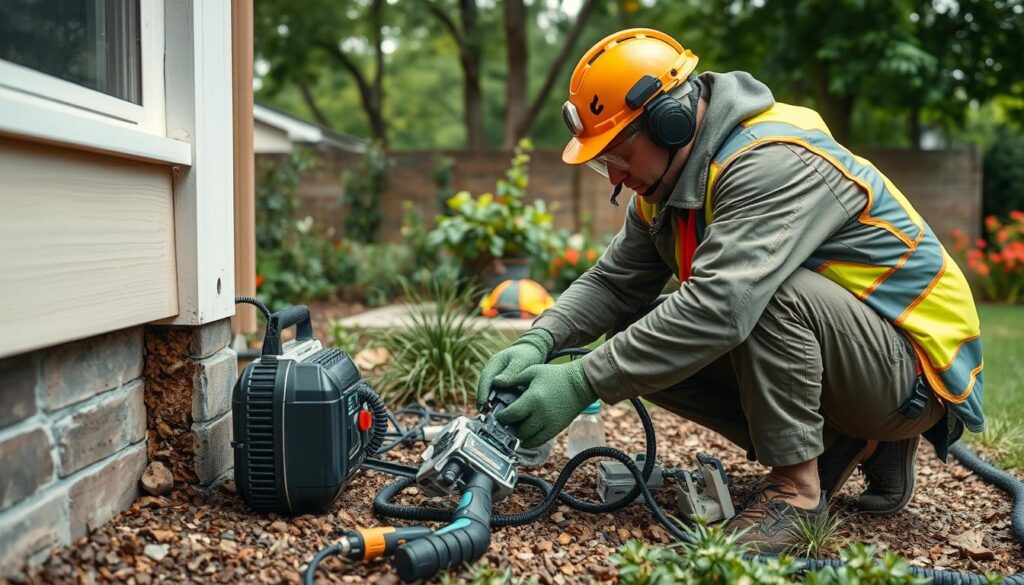
Termites are a big threat to homes and properties, causing billions of dollars in damage each year in the United States. While DIY methods can help, it’s best to let professionals handle them. Experts have the right tools and products to find and get rid of termite colonies.
Professional pest control services can also keep an eye on your home and treat it to stop termites from coming back. Trying to fix a termite problem yourself might not work well. This could leave your home open to more damage and expensive fixes.
The Benefits of Professional Termite Control
- Comprehensive inspection to identify all areas of infestation
- Utilization of specialized equipment and products for effective treatment
- Targeted application of termiticides to eliminate the entire colony
- Ongoing monitoring and retreatment to prevent reinfestation
- Expertise to recommend the most suitable and cost-effective solution
Termites can damage your home in ways you can’t see, and most homeowners’ insurance policies don’t cover repairs. Getting professional termite inspection and treatment is the smartest way to protect your home and avoid expensive damage.
| Termite Control Method | Effectiveness | Longevity |
|---|---|---|
| Liquid Termiticides | High | Up to 5 years |
| Termite Baits | High | Continuous |
| Fumigation | Very High | Single treatment |
“Selecting the wrong approach for termite treatment can result in reinfestation and further problems down the road.”
To keep your home safe from termites, it’s best to work with a licensed pest control company. They offer the best protection for your home.
Conclusion
Termites are a big problem for homeowners, causing billions of dollars in damage each year in the United States. It’s important for homeowners to watch for signs of termites, like winged termites inside. This usually means there’s a bigger problem that needs to be fixed right away.
While DIY termite control methods can help with small problems, professional services are usually better for big issues. Experts can find out what kind of termites you have and how bad the problem is. They can then use the best treatments, like liquid termiticides or baits.
Knowing about different termite types and how to control them helps homeowners protect their homes. Getting professional help with termite prevention and control can save a lot of money and time. It helps avoid the hassle and cost of fixing big termite damage.
FAQ: What Kills Termites?
What are the different types of termites?
Termites come in four main types: subterranean, drywood, dampwood, and Formosan. Subterranean termites live underground and use mud tunnels to get to wood. Drywood termites prefer drier areas and don’t need soil. Dampwood termites like wet wood, while Formosan termites are the most aggressive and can cause a lot of damage.
What are the signs of a termite infestation?
Look out for mud tubes, frass (termite droppings), and hollow wood. Also, check for blistered drywall and swarming termites or discarded wings.
What are the most effective methods for instant termite elimination?
Liquid termiticides, termite baits, and fumigation are top choices for quick termite removal. Liquid termiticides kill termites by disrupting their nervous system. Termite baits are slow-acting but effective, as termites carry the bait back to their colony. Fumigation uses gas to reach and kill termites in every corner.
What are some natural and DIY solutions for termite control?
You can use extreme temperatures or natural repellents to control termites. Try exposing them to cold or heat, or use boric acid, orange oil, garlic, and diatomaceous earth. These methods disrupt termites’ nervous systems or dry them out, making their environment hostile.
Why is it important to hire a professional pest control service for termite infestations?
Professionals are best for termite problems. They have the skills, tools, and approved products to find and kill termites. They also offer ongoing checks and treatments to keep termites away and protect your home. Trying to fix it yourself might not work fully, leaving your home at risk of more damage and expensive fixes.
Source Links
- https://hicare.in/blog/home-remedies-to-get-rid-of-termites/
- https://www.hitechtermite.com/articles/how-to-kill-termites-the-natural-way
- https://proofpest.com/what-kills-termites-instantly-4-treatments-for-infestations/
- https://www.davespestcontrol.com/blog/the-silent-destroyer-understanding-termites-and-how-to-stop-them/
- https://www.amdro.com/learn/wood-damaging-pests/protecting-your-home-from-destructive-termites
- https://www.flatlinepest.com/termite-control-the-pest-menace/
- https://buckarooservices.com/blog/diy-termite-tips/
- https://www.homedepot.com/c/ab/how-to-get-rid-of-termites/9ba683603be9fa5395fab90f3bcc9e4
- https://www.agropestpros.com/blog/how-to-get-rid-of-termites-naturally
- https://www.varsitytermiteandpestcontrol.com/blog/natural-ways-of-eliminating-termites
- https://www.mightymitetermite.com/blog/top-five-benefits-of-termite-control/
- https://www.ecopest-control.com/blog/2022/april/is-professional-termite-control-a-necessity-/
- https://www.unitedtermitecontrol.net/the-importance-of-professional-termite-inspections-before-treatment/
- https://www.a-1pc.com/denver-nc-pest-control
- http://www.lakenormanpest.com/denver-pest-control/
- https://entomology.ca.uky.edu/ef604
- https://www.quaggadesigns.com/post/goodbye-termites-six-effective-tips-to-get-rid-of-those-annoying-insects