





Attention-deficit/hyperactivity disorder (ADHD) is a common brain disorder. It affects how we manage our emotions, thoughts, and actions. People with ADHD often struggle with staying focused, feeling too active, and acting impulsively. So, what causes ADHD in the brain?
These symptoms can really disrupt daily life. It’s important to understand what causes ADHD to help manage it better.
Key takeaways
- ADHD is a neurodevelopmental disorder that affects the brain’s ability to regulate attention, activity levels, and impulse control.
- Differences in brain structure and neural networks, as well as imbalances in neurotransmitters like dopamine, are believed to contribute to the development of ADHD.
- Genetic factors and environmental influences, such as prenatal exposures and head injuries, can also play a role in the onset of ADHD.
- Coexisting conditions and gender differences are important considerations in understanding and managing ADHD.
- A comprehensive approach, including evaluating symptoms, history, and behavior, is crucial for accurately diagnosing ADHD and ruling out other potential causes.
Disclaimer
The information provided on this blog is for informational purposes only and is not intended as a substitute for professional medical advice. While we strive to share knowledge and insights on wellness topics, readers should not interpret any content found here as medical advice. We encourage all readers to consult with qualified healthcare practitioners for personalized medical guidance and to address any health concerns they may have.
Understanding ADHD – A Neurodevelopmental Disorder
Attention Deficit Hyperactivity Disorder (ADHD) is a brain condition. It makes it hard to focus, control behavior, and manage mood. It’s a disorder that affects how people pay attention, act, and feel.
Definition and Symptoms of ADHD
ADHD is a long-term condition that often starts in childhood. It can last into adulthood. The main signs include:
- Inattention – Trouble staying focused, easily getting distracted, and disorganization
- Hyperactivity – Feeling restless, fidgeting, and trouble sitting still
- Impulsivity – Acting without thinking, interrupting others, and trouble waiting
Prevalence and Types of ADHD
The CDC says nearly 11% of U.S. kids aged 2 to 17 have ADHD. Boys are more likely to be diagnosed than girls. There are four main types of ADHD:
- Predominantly Inattentive Type – Trouble focusing and paying attention
- Predominantly Hyperactive-Impulsive Type – Too much movement and impulsive actions
- Combined Type – Shows signs of both inattention and hyperactivity-impulsivity
- Unspecified Type – ADHD symptoms that don’t fit into the other categories
Knowing about the definition of ADHD, its symptoms, prevalence, and types is key. It helps us understand and deal with this brain disorder.
| ADHD Type | Characteristics |
|---|---|
| Predominantly Inattentive | Difficulty maintaining focus, easily distracted, and struggling with organization |
| Predominantly Hyperactive-Impulsive | Excessive movement, fidgeting, and impulsive behavior |
| Combined | Exhibiting symptoms of both inattention and hyperactivity-impulsivity |
| Unspecified | Individuals who experience ADHD symptoms but do not fit neatly into the other three categories |
“ADHD is a real, neurobiological condition that affects an individual’s ability to focus, control their behavior, and regulate their mood.”
The Brain Anatomy and Function in ADHD

Attention Deficit Hyperactivity Disorder (ADHD) is a condition that affects how the brain works. It shows differences in brain structure and function. Researchers have found interesting insights into the ADHD brain anatomy and ADHD neural networks that cause ADHD symptoms.
Differences in Brain Structure and Neural Networks
People with ADHD have different brain sizes and activity levels. This is especially true in the prefrontal cortex, which helps with planning and focus. The ADHD brain structure also varies in the striatum, a part that deals with rewards and motivation.
These brain differences make it hard for those with ADHD to control their attention and impulses. Research is ongoing to understand how ADHD brain anatomy affects ADHD symptoms.
Role of Neurotransmitters and Chemical Imbalances
ADHD is also linked to ADHD neurotransmitters and chemical imbalances. People with ADHD might have less dopamine, a key neurotransmitter for focus and motivation.
This imbalance affects ADHD symptoms, making it hard to stay focused and control impulses. Knowing how ADHD brain anatomy, ADHD neural networks, and ADHD neurotransmitters work together is key to helping those with ADHD.
Genetic and Environmental Factors Contributing to ADHD
ADHD is a common neurodevelopmental disorder linked to genetics and environment. Knowing the causes helps in diagnosis and treatment.
Heredity and Genetic Influences
ADHD often appears in families, showing a genetic link. A child with ADHD has a 1 in 4 chance of having a parent with it. Siblings are also likely to have ADHD. Researchers found genes that may cause ADHD by affecting brain chemicals and networks.
| Genetic Factors Associated with ADHD | Description |
|---|---|
| Dopamine Receptor Genes | Play a role in regulating attention and impulsivity |
| Serotonin Transporter Genes | Influence mood, focus, and behavioral control |
| Norepinephrine Transporter Genes | Affect concentration and activity levels |
Environmental factors, like prenatal toxins or head injuries, also raise ADHD risk.
“The heritability of ADHD is estimated to be around 70-80%, meaning that genetic factors play a significant role in the development of the condition.”
Healthcare professionals can tailor treatments by understanding ADHD genetic factors and environmental triggers.
What Causes ADHD In The Brain
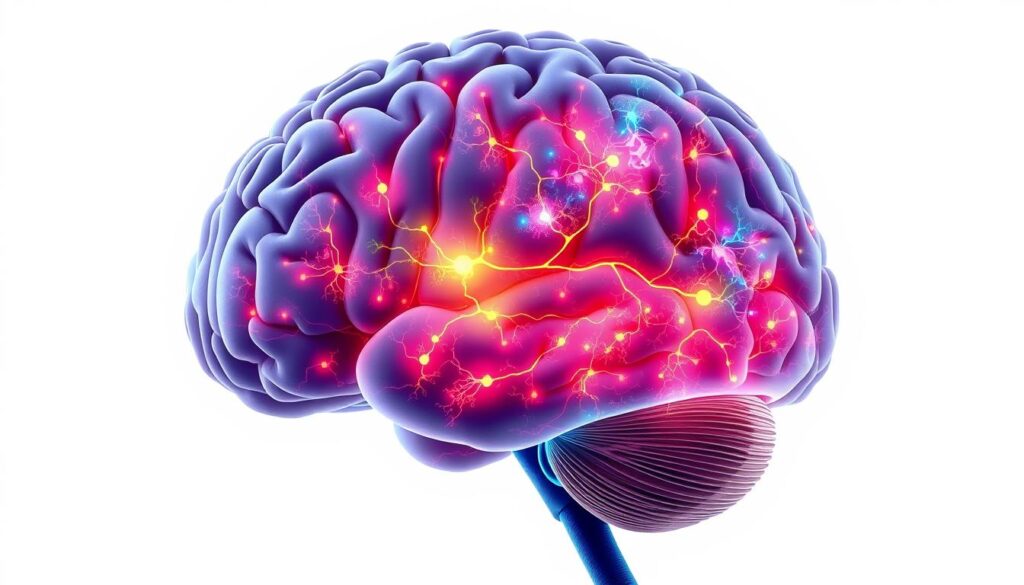
The exact causes of attention-deficit/hyperactivity disorder (ADHD) are still a mystery. But, studies point to a mix of genetic and environmental factors. These can affect brain growth and function, especially during key development periods.
Brain Development and Prenatal Exposures
Exposure to alcohol or nicotine before birth can harm a fetus’s brain. These substances can mess with the brain’s neural networks. This can lead to ADHD-like symptoms later on.
Environmental Toxins and Head Injuries
Environmental toxins, like lead, can also harm brain development. They can cause ADHD symptoms. Head injuries in childhood or teens can affect the brain too. This can lead to ADHD-like symptoms.
| Potential Causes of ADHD in the Brain | Description |
|---|---|
| Prenatal Exposures | Alcohol, nicotine, and other substances during pregnancy can interfere with fetal brain development. |
| Environmental Toxins | Exposure to toxins like lead can disrupt the normal growth and functioning of the brain. |
| Head Injuries | Significant head injuries sustained during childhood or adolescence can sometimes cause ADHD-like symptoms. |
“The causes of ADHD are complex and involve a combination of genetic, neurological, and environmental factors that can impact brain development and functioning.”
Coexisting Conditions and Gender Differences
ADHD is often the main focus, but it’s key to know that over two-thirds of people with ADHD also have another condition. These ADHD coexisting conditions can include anxiety, mood disorders, learning disabilities, or autism spectrum disorder. These conditions can make diagnosing and managing ADHD even harder.
ADHD also shows up differently in boys and girls. ADHD gender differences show that boys often have more hyperactive and impulsive behaviors. Girls, on the other hand, tend to show more inattentive symptoms. This difference can lead to girls being underdiagnosed because of societal expectations and how ADHD is usually seen.
| ADHD Coexisting Conditions | Prevalence |
|---|---|
| Anxiety Disorders | 50% |
| Mood Disorders (e.g., Depression) | 30-50% |
| Learning Disabilities | 20-30% |
| Autism Spectrum Disorder | 20% |
It’s vital to understand how ADHD coexisting conditions and ADHD gender differences affect ADHD. By knowing these details, doctors can give better care to those with ADHD. This approach helps in diagnosing and treating ADHD more effectively.
“ADHD is a highly complex condition, and the presence of co-occurring disorders and gender-based variations in symptom presentation underscores the need for a multifaceted approach to diagnosis and treatment.”
Diagnosing ADHD – A Comprehensive Approach
Getting a correct ADHD diagnosis needs a detailed check-up by a healthcare expert. This step involves looking at the person’s symptoms, medical history, and how they act in different places. It helps to figure out if it’s ADHD and what treatment is best.
Evaluating Symptoms, History, and Behavior
The first step in diagnosing ADHD is to look at the symptoms closely. These can be trouble focusing, being too active, or acting on impulse. The doctor will talk to the person, their family, and teachers to see how these symptoms affect daily life.
The doctor will also check the person’s medical history and any other health issues. This helps to see if the symptoms really point to ADHD.
Ruling Out Other Potential Causes
While checking for ADHD, the doctor will also look for other reasons for the symptoms. This might include medical problems, learning disabilities, or environmental factors. More tests might be needed to make sure the symptoms aren’t from something else.
By taking a detailed approach to diagnosing ADHD, doctors can give a treatment plan that really helps. This plan aims to manage symptoms and improve life quality for those with ADHD.
| Key Steps in ADHD Diagnosis | Description |
|---|---|
| Symptom Evaluation | Assess inattention, hyperactivity, and impulsivity symptoms across different settings |
| Medical History Review | Examine any co-existing conditions or factors that may contribute to the observed behaviors |
| Ruling Out Other Causes | Conduct additional tests or assessments to ensure symptoms are not due to other underlying issues |
| Comprehensive Assessment | Integrate information from multiple sources to determine if ADHD diagnosis criteria are met |
“The key to an accurate ADHD diagnosis is a thorough, multifaceted evaluation that considers all potential factors contributing to the individual’s symptoms.”
Conclusion
ADHD is a complex disorder that affects how the brain handles attention, behavior, and emotions. It’s important to understand the brain differences and how ADHD works. This knowledge helps in diagnosing and managing the condition.
The exact reasons for ADHD are still a mystery. But, it’s thought that genetics and environment both play a part. Healthcare professionals can tailor treatments by recognizing how ADHD affects each person differently.
As research on ADHD grows, it’s key for everyone to stay updated. This includes individuals, families, and healthcare teams. Working together, we can better support those with ADHD. This approach makes a brighter future for them.
FAQ: What Causes ADHD In The Brain
What is the neurological basis of ADHD?
People with ADHD often have different brain structures and functions. The prefrontal cortex, which helps with planning and focus, is affected. The striatum, involved in rewards and motivation, is also different. They may also have lower levels of dopamine, a key neurotransmitter for attention.
What are the genetic and environmental factors that contribute to ADHD?
ADHD often runs in families, showing a strong genetic link. A child with ADHD has a 1 in 4 chance of having a parent with it. Siblings are also more likely to have ADHD. Genes play a big role by affecting brain chemicals and networks.
Environmental factors, like prenatal exposures or head injuries, can also increase ADHD risk.
How does brain development and prenatal exposures contribute to ADHD?
Brain development is critical, and prenatal exposures can disrupt it. Alcohol or nicotine from smoking can harm brain growth. Postnatal toxins, like lead, can also affect brain function.
Significant head injuries can cause ADHD-like symptoms by altering brain structure and networks.
How do coexisting conditions and gender differences affect the presentation of ADHD?
Most people with ADHD also have another condition, like anxiety or learning disabilities. These conditions make diagnosing and managing ADHD harder. ADHD shows differently in boys and girls.
Boys often show more hyperactive and impulsive behaviors. Girls tend to show more inattentive symptoms. This can lead to underdiagnosis in girls, especially due to societal expectations.
What is the process for diagnosing ADHD?
Diagnosing ADHD requires a detailed evaluation by a healthcare professional. They assess symptoms, medical history, and behavior. This helps rule out other causes.
Information from the individual, family, and teachers is gathered. A thorough diagnosis is key for effective treatment and support.
Source Links
- https://magazine.medlineplus.gov/article/understanding-adhd-what-you-need-to-know
- https://www.healthychildren.org/English/health-issues/conditions/adhd/Pages/Causes-of-ADHD.aspx
- https://my.clevelandclinic.org/health/diseases/4784-attention-deficithyperactivity-disorder-adhd