





Termites can seriously damage your home if not treated. The time needed for termite treatment varies. It depends on the type of infestation, the treatment method, and the area size. Knowing how long termite treatment takes is key to protecting your home. This guide will quickly explain the typical time needed and what affects it.
Key takeaways
- Liquid-soil treatments for termites can last up to 5 years and typically eliminate colonies within 3 months.
- Bait stations may take up to 6 months to completely eradicate a termite colony.
- Sprays and foams used for termite treatment can start killing termites within 1 to 2 days.
- Termite heat treatment typically takes around 6-8 hours on average, with the temperature range between 120-140°F.
- Factors like the size of the infested area, type of heating equipment, and severity of the infestation can affect the duration of termite treatment.
Understanding Termite Treatment Duration
The time it takes to treat termites depends on several things. These include how bad the infestation is, the type of termites, and the treatment method used. The size and location of the infestation also play a role. Plus, the treatment method, like liquid-soil treatments or bait stations, can change the timeline.
Factors Influencing Treatment Time
Several factors can affect how long termite treatment takes:
- Severity of the infestation: Bigger infestations need more time and effort to treat.
- Type of termites – Different termites need different treatments, each with its own time frame.
- Treatment method – The type of treatment, like liquid-soil or bait stations, can change the time needed.
- Access to affected areas – How easy it is to get to the infested areas can affect treatment time.
- Environmental factors – Things like soil type, moisture, and weather can impact treatment success and time.
Types of Termite Treatments
There are many termite treatment options, each with its own benefits and time frames:
| Treatment Method | Approximate Duration | Key Considerations |
|---|---|---|
| Liquid-Soil Treatments | 5-12 years | Applied before or after construction, with periodic inspections required for long-term protection. |
| Bait Stations | Ongoing monitoring and refilling | Offer year-round protection but require regular maintenance and monitoring. |
| Sprays and Foams | Immediate effect, but limited reach | Provide a quick solution, but may not address the entire infestation. |
Knowing these factors and treatment options helps homeowners plan better for termite control.
Liquid-Soil Treatment – A Speedy Solution
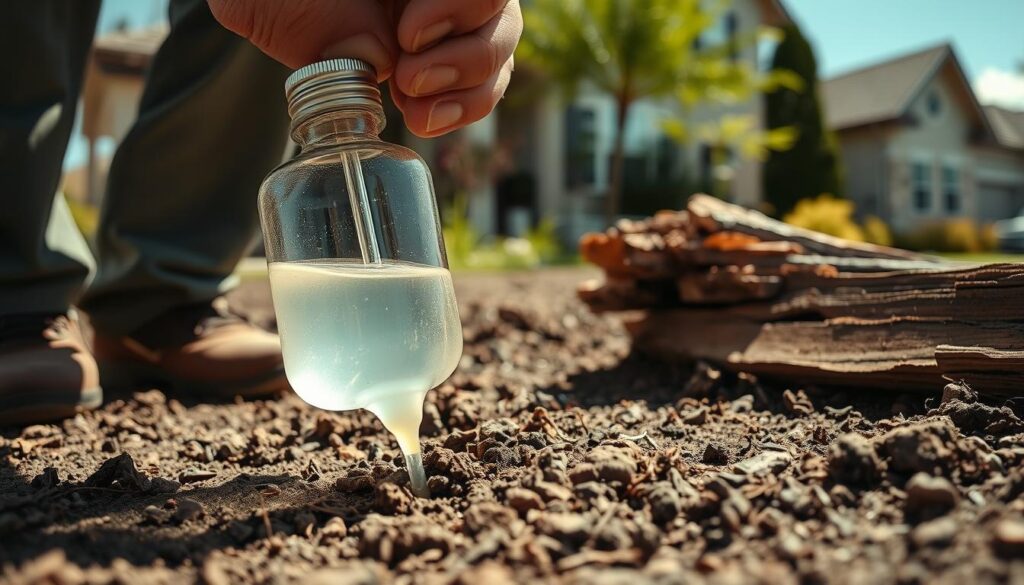
Liquid-soil treatments are a top choice for quick termite control. They create a chemical barrier around your home. This barrier is made by digging trenches and applying a liquid termiticide. A single technician can do this in about 8 hours, offering up to 5 years of protection.
These treatments are fast and effective in killing termite colonies. Often, they can wipe out a colony in just 3 months. This is because they use a barrier-based termite control method. This blocks termites from getting to your home and stops them from eating and nesting.
| Termite Treatment Method | Typical Treatment Time | Effectiveness Duration |
|---|---|---|
| Liquid-Soil Treatments | 8 hours (single technician) | Up to 5 years |
| Bait Stations | 8-12 months to become effective | Ongoing monitoring and refilling required |
| Sprays and Foams | Fast-acting, but limited reach | Short-term, often requiring repeat treatments |
Fast-acting termite treatment methods like liquid-soil treatments are great for quick fixes. They create a strong chemical barrier that lasts up to 5 years. This gives you long-term peace of mind.
“Liquid-soil treatments are an excellent choice for homeowners who want a comprehensive and rapid solution to their termite problems. The speed and effectiveness of these treatments are truly impressive.”
If you’re worried about termites or want to protect your home, consider liquid-soil termite treatments. They are a fast-acting and reliable way to control termites for a long time.
Bait Stations – A Slower but Effective Approach
Termite bait station treatments are a great way to fight termite problems. They take longer than other methods but are very effective. Unlike quick liquid-soil treatments, bait stations target and kill the whole termite colony slowly.
How Bait Stations Work
Bait stations are set up around your home’s exterior. They offer termites a food source that they carry back to their nests. The bait has a slow-acting substance that spreads through the colony, killing the queen and the rest of the termites. This process can take up to 6 months but is better for the environment and more precise.
Monitoring and Refilling Bait Stations
- It’s important to regularly check and maintain the bait stations for them to work well.
- Homeowners must check the bait stations often and refill them as needed. This keeps termites coming back for more.
- This routine can cost more over time. But it’s a targeted and sustainable way to get rid of termites.
Even though they work slower, termite bait stations are a good choice compared to liquid-soil treatments. By placing and keeping up with these stations, you can kill the termite colony. This method also helps protect the environment. With patience and care, it’s a great way to keep your home safe from termites.
How Long Does Termite Treatment Take

Speed is key in termite control. Termite sprays and foams work fast, killing termites in 1-2 days. They are applied directly to the wood or where termites are found. But, they can’t reach everywhere.
These treatments are quick, helping homeowners act fast. Yet, they might not kill the whole colony, especially the queen. This can cause termites to come back. To fully solve the problem, other methods like liquid-soil treatments or bait stations are often used too.
It’s important to know the limits of spray-based treatments. They work fast but might not solve the problem completely. A professional exterminator can help find the best treatment plan for your home.
“Termite sprays and foams are a quick fix, but they may not reach the entire colony. A comprehensive approach is often needed for lasting termite control.”
Preventing Termite Reinfestation
After treating termites, it’s key to prevent them from coming back. Watch for signs of termite activity like mud tubes and wood damage. Also, remove dead wood and paper products to keep termites away.
Monitoring for Signs of Termites
Keep an eye out for these signs of termites:
- Mud tubes on walls or foundations
- Hollow-sounding wood
- Discarded wings from swarming termites
- Darkened or damaged wood
Spotting these signs early can stop major damage.
Eliminating Food Sources
Termites love cellulose-based materials. So, remove any around your home. This includes:
- Stacking firewood or lumber away from the home’s foundation
- Disposing of any dead trees, stumps, or wooden debris
- Storing paper products, cardboard, and other cellulose-rich materials in sealed containers
By removing their food, you make your home less appealing to termites.
Reducing Moisture Levels
Moisture control is vital for termite prevention. Termites love damp places. So, fix any moisture issues around your home, like:
- Repairing leaks in plumbing, roofs, or gutters
- Ensuring proper drainage around the foundation
- Addressing any standing water or excess moisture in crawl spaces or basements
By monitoring, removing food sources, and controlling moisture, you can greatly reduce termite risks. This protects your home from expensive damage.
Professional Termite Inspection and Control
When termites invade, it’s key to call on professional pest control. These experts have the skills, tools, and experience needed. They can do a detailed inspection, find out what kind of termites you have, and suggest the best way to treat them.
Getting a termite inspection service usually takes 30 minutes to two hours. This depends on how big and complex your property is. The termite control experts will check places with wood, like outside structures, cracks, firewood, fences, and wood mulch. They look for signs of termites, like mud tubes, wood damage, termite droppings, and swarming termites or discarded wings.
After checking, the certified pest control companies will give you termite treatment recommendations that fit your property’s needs. This might include baiting stations, liquid barriers, or sprays and foams. It depends on how bad the infestation is and your building’s design.
It’s important to deal with termites quickly with the help of experts. This stops more damage and keeps your property safe. By getting a detailed inspection and the right treatment, you protect your home or business from termites.
“Termites are found in 49 of the 50 states, with Alaska being the only state without reported sightings.”
Conclusion
Termite infestations can be a big problem for your home. Knowing how long treatment takes is key. The time needed depends on the type of termites, the treatment method, and the area size.
Some treatments, like sprays and foams, work fast. But bait stations might take longer. They are better for the environment and target termites more precisely.
It’s important to get help from pest control experts. They can figure out how bad the problem is and choose the best treatment. They also help you keep your home safe from termites in the future.
Preventing termites is better than treating them. Check your home regularly and fix any moisture issues. Remove wood debris and seal any gaps. This way, you can avoid the need for expensive treatments.
Being proactive about termite control helps protect your home. It keeps your home safe and strong for years to come.
FAQ: Termite treatment
How long does a typical termite treatment take?
The time needed for termite treatment varies. It depends on the infestation’s severity, the termites’ type, and the treatment method. Liquid-soil treatments usually take about 8 hours. Bait stations might need up to 6 months for full elimination.
What factors influence the timeline for termite treatment?
Several factors affect termite treatment duration. These include the infestation’s size and location, the termites’ type, and the chosen treatment method. This can be liquid-soil treatments, bait stations, or sprays and foams.
How long do liquid-soil termite treatments take?
Liquid-soil treatments create a chemical barrier around homes. They usually take a single technician about 8 hours. This method protects for up to 5 years and can eliminate termites in 3 months.
How long do bait station treatments take?
Bait station treatments use a food source to kill termites. They can take up to 6 months for complete eradication. This method is slower but more targeted and eco-friendly.
How long do termite sprays and foams take to work?
Sprays and foams kill termites quickly, within 1-2 days. But they might not kill the entire colony, especially the queen. This can lead to the problem coming back. They’re often used with other methods for better control.
What should I do to prevent termite reinfestation?
To stop termites from coming back, take proactive steps. Monitor for signs, remove food sources, and keep moisture levels low. Regular checks and professional help are key to protecting your home.
Why is it important to work with a professional pest control company for termite treatment?
Professional pest control is vital for termite issues. Experts can inspect, identify problems, and suggest the best treatment. They ensure effective treatment and minimize damage to your property.
Source Links
- https://www.callnorthwest.com/2022/05/how-fast-do-termite-treatments-work/
- https://www.precisionenv.com/posts/how-long-does-termite-heat-treatment-take-a-comprehensive-guide
- https://www.architecturaldigest.com/reviews/pest-control/how-long-does-termite-treatment-last
- https://www.prohealthpestcontrol.com/how-long-does-termite-treatment-take/
- https://www.thisoldhouse.com/pest-control/reviews/how-long-does-termite-treatment-last
- https://safeguardpestcontrol.com.au/blog/counting-the-years-how-long-does-a-termite-treatment-last/
- https://www.mightymitetermite.com/blog/how-does-liquid-termite-treatment-work/
- https://msianpestcontrol.com/termites-baiting-or-drilling-barrier/
- https://www.cititurf.com/blog/a-breakdown-of-the-different-ways-to-treat-termite-infestations/
- https://brock360.com/how-long-does-termite-tenting-take/
- https://timesuptermite.com/blog/how-long-does-it-take-to-kill-a-termite-colony/
- https://www.diamondcertified.org/prevent-termite-re-infestation/
- https://www.cascadepest.com/can-termites-return-after-a-termite-treatment/
- https://www.forbes.com/home-improvement/pest-control/termite-inspections/
- https://brock360.com/how-long-does-a-termite-inspection-take/
- https://absolutepestco.com/what-to-expect-during-a-termite-treatment/
- https://www.ondemandpestcontrol.com/how-long-does-a-termite-inspection-take/