





Many people think termites are a big threat to humans, but that’s not true. Termites can bite, but it’s very rare for them to bite people. If they do, it usually just causes a small red bump, not serious harm.
Termites live in colonies and talk to each other using pheromones. They eat wood and plants, not people. The real problem with termites is the damage they can do to buildings, not their bites.
Key takeaways
- Termites do not typically bite humans, and instances of termite bites are extremely rare.
- Even when a termite bite occurs, it typically results in only minor irritation, such as a small red bump.
- Termites have a highly sophisticated communication system, using pheromones to coordinate their colony activities.
- Termites’ diet consists primarily of cellulose, which they obtain from wood and other plant materials, not human flesh.
- The primary concern with termites is the structural damage they can cause to homes and buildings, not the risk of their bites.
Understanding Termite Behavior and Colony Structure
Termites are fascinating creatures with a complex social structure. They have a division of labor in their colonies. These tiny insects communicate using pheromones. This allows them to differentiate between the various termite castes, such as soldiers, workers, and reproductives.
Termite Communication and Social Organization
The termite colony has a hierarchical structure. At the top are the queen and king. Below them are the reproductive termites, then the workers and soldiers. Each caste has specific roles and responsibilities. This ensures the colony runs smoothly.
Roles of Soldiers, Workers, and Reproductives
- The soldiers have strong mandibles to defend the colony from predators and intruders.
- The workers are responsible for building and repairing the nest, as well as foraging for food.
- The reproductives, including the queen and king, are responsible for the colony’s growth and expansion through egg-laying and reproduction.
Understanding the intricate termite social organization and communication methods is crucial. It helps in developing effective control strategies and managing termite infestations.
| Termite Caste | Percentage of Colony | Primary Responsibilities |
|---|---|---|
| Workers | 90-98% | Building, repairing, and maintaining the nest, foraging for food |
| Soldiers | 2-10% | Defending the colony from predators and intruders |
| Reproductives (Queen and King) | Less than 1% | Egg-laying and reproduction, ensuring the colony’s growth and expansion |
“The termite colony has a complex social organization that is critical to its survival and growth. Understanding these intricate relationships is key to effectively managing termite infestations.”
Termite Diet and Feeding Habits
Termites love to eat cellulose-based materials. They munch on dead and decaying wood, paper, cardboard, and plant debris. Thanks to bacteria in their stomachs, they can break down cellulose, a tough plant carbohydrate.
Different Types of Termites and Their Preferred Foods
Termites have different tastes, depending on their type. Subterranean termites love to eat wood and other cellulose-rich stuff, damaging homes and buildings. Drywood termites prefer dry, smooth wood like furniture and hardwood floors. Dampwood termites go for moist wood, helping break down dead trees in forests.
| Termite Type | Preferred Food Sources |
|---|---|
| Subterranean Termites | Wood, cellulose-rich materials |
| Drywood Termites | Dry, smooth wood (furniture, hardwood floors) |
| Dampwood Termites | Decaying wood, high-moisture content |
Knowing what termites eat helps figure out the problem and fix it. By understanding their food choices, we can stop them from causing more harm. This is key for homeowners and pest control experts to protect our homes.
Can Termites Bite? Unraveling the Myths
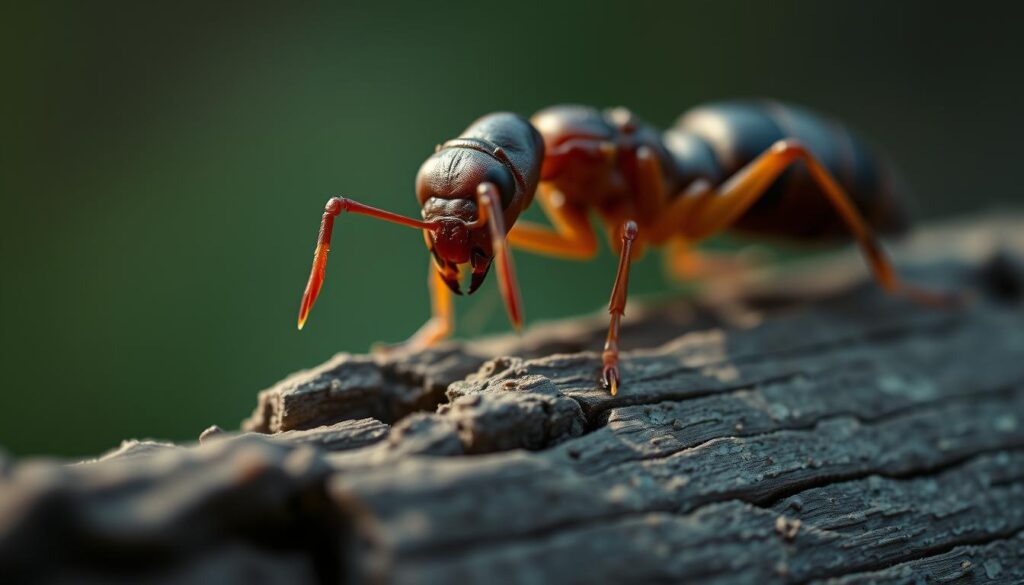
Many people think termites can bite humans. But this is just a myth. Termites have strong jaws for chewing wood, but they can’t harm people. They might damage homes, but they don’t threaten human health or safety.
The confusion about termite bites comes from their ability to eat wood fast. This makes people think they could bite humans too. But termites only want to eat wood and build their nests.
Termites have different roles in their colonies, like soldiers and workers. Their strong jaws help them dig tunnels and defend their homes. But these jaws can’t hurt humans.
If you see termites at home, don’t worry. They won’t bite you or your family. The real worry is the damage they can do to your house. Getting help from a pest control expert is key to stop damage and save money.
| Termite Bite Myths | Facts |
|---|---|
| Termites can bite humans | Termites do not have the capability to bite or harm humans |
| Termite bites can cause physical harm | Termites are not equipped to puncture human skin or cause any physical injuries |
| Termite infestations pose a direct threat to people | Termite infestations are primarily a concern due to the structural damage they can cause, not because of any direct threat to human health or safety |
In conclusion, termites biting humans is just a myth. They can damage homes but don’t harm people. Knowing how termites act helps us protect our homes without fear.
Factors Influencing Termite Behavior
Termite behavior is complex and interesting. It’s shaped by many environmental factors and chemical signals. Knowing these elements is key for controlling termites.
Environmental Factors and Chemical Signals
Termites’ activity and eating habits change with temperature and humidity. They are very sensitive to their environment. For example, studies found termites groom more after spore germination.
Chemical signals, or pheromones, are also important. They help termites talk to each other and work together. These messages help them find food, mate, and protect their homes. By using these signals, termites keep their social structure strong and their species alive.
“Termites are more likely to move between houses that are in close proximity to each other, especially if they share common walls, roofs, or underground tunnels. Certain building materials, like wood, can also attract termites and facilitate their movement between neighboring structures.”
Knowing how environment and chemical signals affect termites is important. It helps homeowners, pest control experts, and researchers. With this knowledge, they can better prevent and manage termite problems. This protects our homes and communities.
Conclusion
Stopping termite infestations needs a full plan. Check your home often for termite signs like mud tubes or wood damage. Keeping your home dry and well-ventilated helps a lot.
Remove wood debris or mulch near your home’s base. Use termite treatments like liquid termiticides or baits to fight them. Natural options like orange oil, neem oil, and borax can also work well.
Knowing how termites act helps homeowners protect their homes. Spotting and fixing termite problems early is key. This way, you can avoid damage and health issues.
Stay alert and get help when you need it. Use both prevention and treatment methods to keep termites away. Knowing how to prevent and treat termite problems is important for keeping your home safe.
FAQ: Termite bites
Can termites bite humans?
No, termites do not bite humans. They can bite, but it’s rare and doesn’t hurt much. If it happens, it might leave a small red bump.
What is the social structure of termite colonies?
Termites live in complex societies. They use pheromones to talk to each other. This helps them know who’s who in the colony.
At the top are the queen and king. Then come the reproductive termites. Workers and soldiers are at the bottom.
What do termites eat?
Termites eat wood and plant materials. They have different tastes. Subterranean termites like wood, while drywood termites prefer dry wood.
Are termite bites dangerous?
No, termite bites are not dangerous. Termites don’t bite or harm people. The damage they do to wood might make you think they’re a threat, but they’re not.
What factors influence termite behavior?
Many things affect termite behavior. Temperature and humidity are big factors. So are chemical signals, or pheromones.
These signals help them find food, mate, and defend themselves.
How can I prevent and treat termite infestations?
To stop termites, check your home often. Keep it dry and well-ventilated. Remove wood debris and mulch near your home.
Use termite treatments like liquid termiticides or baits. Natural options like orange oil and borax can also work well.
Source Links
- https://newmanpestcontrol.com/blog/termite/can-termites-bite-humans-uncovering-the-truth-about-termite-behavior
- https://newmexicopestcontrol.com/termites/identification/can-termites-hurt-me/
- https://mynatureguard.com/blog/do-termites-bite-people/
- https://ipestpros.com/termite-colony-what-you-need-to-know/
- https://eliminateem.com/blog/termites/termite-colonies/
- https://todayshomeowner.com/pest-control/guides/what-do-termites-eat/
- https://www.smithereen.com/blog/surprising-things-termites-eat/
- https://www.lakenormanpest.com/blog/2019/july/termites-their-eating-habits/
- https://hornpestmanagement.com/unraveling-the-top-five-ant-control-misconceptions-your-ultimate-handbook-from-horn-pest-management/
- https://www.imperialpestprevent.com/post/what-are-the-most-common-pests-in-florida-that-homeowners-must-be-aware-of
- https://247pestcontrolnyc.com/early-warning-signs-of-termites-at-your-property/
- https://www.ncbi.nlm.nih.gov/pmc/articles/PMC6158180/
- https://newmanpestcontrol.com/blog/termite/can-termites-move-between-houses-a-comprehensive-analysis
- https://www.actiontermitecontrol.com/are-termites-harmful-to-humans/
- https://www.termitecontrol.com.sg/articles/can-a-termite-bite-you.html
- https://allsouthpestcontrol.com/do-termites-bite/