





Can what you eat affect your focus or how active you are? Research shows that diet might play a role in ADHD symptoms for some people. An ADHD diet is personal and depends on your needs. It includes the foods you eat and any supplements you take.
Your diet should help your brain function better. This can reduce symptoms like restlessness or trouble focusing.
Key takeaways
- ADHD symptoms can be affected by certain foods, although the link is not fully understood.
- Sugary and processed foods, artificial additives, and food sensitivities may worsen ADHD symptoms.
- A balanced, nutrient-rich diet can help manage ADHD by supporting brain function and overall health.
- Individualized dietary adjustments may be necessary to find the best ADHD management approach.
- Consulting a healthcare professional is recommended to develop an ADHD-friendly eating plan.
Disclaimer
The information provided on this blog is for informational purposes only and is not intended as a substitute for professional medical advice. While we strive to share knowledge and insights on wellness topics, readers should not interpret any content found here as medical advice. We encourage all readers to consult with qualified healthcare practitioners for personalized medical guidance and to address any health concerns they may have.
What Role Does Diet Play in ADHD?
Understanding the link between ADHD and food sensitivities is challenging. Yet, knowing how diet can impact ADHD symptoms is key to managing them. While research is ongoing, many believe diet plays a big role in easing symptoms.
Exploring the Link Between Food and ADHD Symptoms
Experts say eating well is good for the brain, which helps with ADHD. They suggest a high-protein diet, complex carbs, and omega-3 rich foods are best. These nutrients are vital for brain health.
Iron deficiencies might lead to ADHD, and supplements with iron, zinc, and omega-3s can help some people.
However, foods like sugary ones, simple carbs, unhealthy fats, and caffeine can make ADHD worse. Removing foods like milk, chocolate, soy, wheat, eggs, and others can improve symptoms for some.
“The consumption of certain fish and seafood with trace amounts of mercury can exacerbate ADHD symptoms in the long term.”
Even though research is still out, many experts think managing ADHD through diet is worth trying. Eating brain-healthy foods and avoiding triggers can be part of a good treatment plan.
Foods to Avoid for Better ADHD Management
Your diet is key in managing ADHD. Some foods lack the nutrients needed for ADHD management and should be avoided. Sugary foods and simple carbs are especially bad, as they can make ADHD symptoms worse.
Sugary Foods and Simple Carbs
Sugary drinks, sweets, and processed foods with lots of sugar can harm your health and ADHD symptoms. These foods cause quick spikes in blood sugar, affecting mood, focus, and energy. It’s better to eat complex carbs from fruits, veggies, and whole grains instead.
- Limit or avoid sugary drinks, such as soda and fruit juices
- Cut back on candies, cookies, and other sweet treats
- Opt for complex carbohydrates like whole grains, fruits, and vegetables
Choosing to eat less sugary and simple carb foods can help manage ADHD symptoms. It also supports overall ADHD-friendly nutrition.
“A balanced diet with plenty of vegetables, fruits, protein sources, healthy fats, and complex carbohydrates can make a significant difference in managing ADHD symptoms.”
Always talk to healthcare professionals about your diet. They can check for nutrient deficiencies and suggest the best foods for you.
Unhealthy Fats and Caffeine

Managing ADHD symptoms is more than just avoiding sugary and carb-heavy foods. People with ADHD should also watch their intake of unhealthy fats and caffeine. Saturated fats in fried or baked goods, dairy, and meats can increase cholesterol and heart disease risk.
Caffeine might help focus temporarily but can cause anxiety, sleep problems, and stomach issues. This is especially true when combined with ADHD medications that have stimulants.
About 5.4% of adult men and 3.2% of adult women have been diagnosed with ADHD. Choosing the right foods can help manage symptoms and improve well-being for those with ADHD.
Limiting Unhealthy Fats
Unhealthy fats can harm brain function and worsen ADHD symptoms. To keep your brain healthy, focus on healthy fats like:
- Salmon, walnuts, and avocados, which are rich in omega-3 fatty acids
- Nuts, seeds, and olive oil, which provide monounsaturated fats
Cutting Back on Caffeine
While a little caffeine can help focus, too much can make ADHD symptoms worse. Caffeine can lead to more significant ADHD symptoms in individuals with high consumption levels. It’s wise to cut back on caffeinated drinks like soda, energy drinks, and coffee, especially if you’re on ADHD meds.
Being careful with unhealthy fats and caffeine can help manage ADHD symptoms. A balanced, nutrient-rich diet is key to a good ADHD management plan.
ADHD and foods to avoid
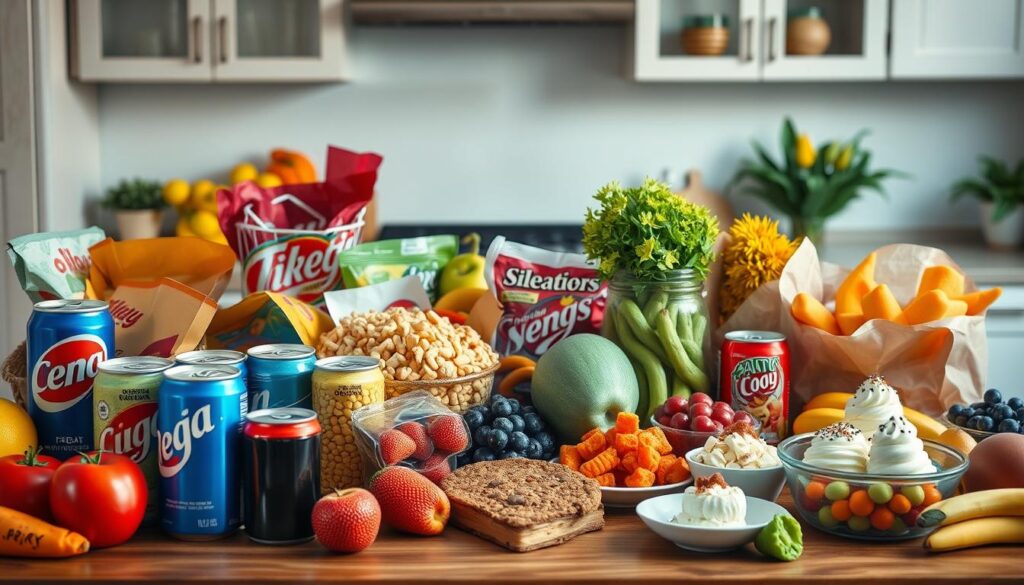
Managing ADHD through diet means finding and removing foods that make symptoms worse. Common troublemakers include artificial additives, food dyes, and preservatives. Also, foods like dairy, gluten, or citrus can be problematic.
Watching how your child reacts to different foods is key. An elimination diet can help find out which foods cause issues. This can lead to better focus, attention, and behavior. Studies show that up to 5 percent of kids with ADHD might react to certain chemicals in food.
Kids with ADHD often get hyperactive, inattentive, and impulsive after eating processed sugar. Artificial food colors can also cause hyperactivity, irritability, and sleep problems in some kids.
Other foods that might make ADHD symptoms worse include dairy, wheat, corn, soy, eggs, nuts, and citrus. Cutting these out can help figure out what your child needs to eat.
Practical Tips for Eliminating Trigger Foods
- Watch how your child reacts to different foods and note any changes in behavior, focus, or energy.
- Try the Few Foods diet to find out which foods are causing problems.
- Stay away from processed snacks, candies, and cereals with artificial dyes, flavors, and preservatives.
- Choose whole, unprocessed foods like fruits, vegetables, nuts, and lean proteins.
- Keep meal and snack times the same to help keep your child’s energy steady.
| Recommended ADHD-Friendly Foods | Foods to Avoid |
|---|---|
|
|
By removing your child’s trigger foods, you can help manage their ADHD symptoms. This can greatly improve their health and well-being.
Brain-Boosting Foods for ADHD
Some foods should be limited, but there are many good ones for brain health. Adding adhd-friendly foods to your diet can give your brain what it needs. This includes vitamins, minerals, and healthy fats for better thinking.
Eggs are packed with nutrition, having 6 grams of protein and nine amino acids. They also have vitamin D and choline, which help brain cells talk to each other. Greek yogurt, leafy greens, nuts, seeds, and omega-3 rich fish like salmon and tuna are also good for ADHD.
Whole grains like oatmeal are great for the brain too. They offer complex carbs, fiber, and important nutrients. Eating more of these foods can help fuel your brain and might improve ADHD symptoms.
FAQ: Foods to avoid for ADHD
Can your dietary choices affect your attention, focus, or hyperactivity?
Yes, research suggests that diet might affect ADHD symptoms in some people. There’s no solid proof that diet causes ADHD. But, certain foods could play a role in symptoms for a few individuals.
What are the different ways to approach a diet to help ADHD symptoms?
There are several ways to tackle ADHD through diet. You can focus on nutrition, use supplements, or try elimination diets. Experts say that what you eat might help manage symptoms, even though research is mixed.
What foods should be limited or avoided for better ADHD management?
Some foods might not be great for ADHD management. Avoid sugary foods and simple carbs. Sugary drinks and sweets can harm health and worsen ADHD symptoms.
Also, cut down on simple carbs like corn syrup and white flour. Choose complex carbs from fruits, veggies, and whole grains instead.
Should individuals with ADHD also limit their intake of unhealthy fats and caffeine?
Yes, it’s wise to limit unhealthy fats and caffeine too. Unhealthy fats in fried foods and dairy can raise cholesterol. Caffeine might help focus but can cause anxiety and sleep issues with ADHD meds.
How can you identify and eliminate any trigger foods that may be exacerbating your ADHD symptoms?
To manage ADHD through diet, find and avoid trigger foods. Common culprits include artificial additives and certain sensitivities like dairy or gluten. Watch how you react to different foods and try an elimination diet to find problem areas.
What are some nutrient-dense options that can support brain health and potentially improve ADHD symptoms?
There are many foods that support brain health and might help ADHD symptoms. Include eggs, Greek yogurt, leafy greens, nuts, and seeds in your diet. Also, eat fish rich in omega-3s and whole grains like oatmeal. These foods provide essential nutrients for better brain function.
Source Links
- https://www.tewv.nhs.uk/about-your-care/conditions/adhd/diet/
- https://www.ldrfa.org/simple-diet-changes-will-improve-add-symptoms/
- https://www.fuzzymama.com/adhd-and-sugar/
- https://www.webmd.com/add-adhd/adhd-diets
- https://www.everydayhealth.com/adhd-pictures/how-food-can-affect-your-childs-adhd-symptoms.aspx
- https://www.ncbi.nlm.nih.gov/pmc/articles/PMC9608000/
- https://www.verywellhealth.com/adhd-diet-5206146
- https://www.medicalnewstoday.com/articles/adhd-diet-for-kids
- https://chadd.org/about-adhd/nutrition-and-adhd/
- https://www.amenclinics.com/blog/3-worst-foods-for-adhd/
- https://www.singlecare.com/blog/adhd-diet/
- https://www.additudemag.com/best-foods-for-adhd-diet-nutrition/
- https://www.healthline.com/health/adhd/foods-to-avoid
- https://www.additudemag.com/adhd-diet-plan-children/
- https://www.medicalnewstoday.com/articles/325352
- https://www.ucihealth.org/blog/2023/08/adhd-recipes
- https://www.thebrainworkshop.com/blog/adhd-diet-foods-to-eat-and-foods-to-avoid/