





Attention Deficit Hyperactivity Disorder (ADHD) is a common mental health issue. It can deeply affect a person’s emotional state. Studies show that up to 30% of children with ADHD also face serious mood disorders. Experts believe that over half of those with ADHD will seek depression treatment at some point.
There’s a clear connection between ADHD and mental health issues like anxiety and depression. People with ADHD are more likely to be diagnosed with these conditions. Anxiety often comes before depression in those with ADHD. Family history also plays a big role in both disorders.
ADHD can cause depression due to its symptoms. Kids with ADHD might find it hard to make friends or do well in school. Adults may struggle at work, leading to feelings of hopelessness and low self-esteem.
Key takeaways
- ADHD is often linked with anxiety and depression, with up to 30% of children with ADHD also experiencing a mood disorder.
- More than half of individuals with ADHD will receive treatment for depression at some point in their lives.
- People with ADHD are more frequently diagnosed with anxiety and depression compared to the general population.
- Anxiety often precedes depression in individuals with ADHD, and family history plays a significant role in the development of both disorders.
- ADHD can contribute to depression when individuals struggle with the symptoms of the disorder, leading to feelings of hopelessness and low self-esteem.
Disclaimer
The information provided on this blog is for informational purposes only and is not intended as a substitute for professional medical advice. While we strive to share knowledge and insights on wellness topics, readers should not interpret any content found here as medical advice. We encourage all readers to consult with qualified healthcare practitioners for personalized medical guidance and to address any health concerns they may have.
Understanding the Link Between ADHD and Mood Disorders
Prevalence of Depression and Anxiety in ADHD
If you have ADHD, you’re not alone in facing mental health challenges. Studies show people with ADHD are three times more likely to develop mood disorders like depression or anxiety. Almost 50% of adults with ADHD also have an anxiety disorder. Many others might be dealing with mental health issues without knowing it.
The link between ADHD and mood disorders is complex. ADHD can cause frustration, low self-esteem, and daily life challenges. These can lead to depression or anxiety. Emotional dysregulation in ADHD also plays a role in these conditions.
It’s hard to tell ADHD, anxiety, and depression apart because their symptoms can be similar. That’s why seeing a mental health professional is key. They can give a detailed evaluation and a treatment plan just for you.
“People diagnosed with ADHD may still have feelings that are missing from the diagnosis. An estimated 20 to 30 percent of individuals with ADHD will struggle with a clinical anxiety disorder in their lifetime.”
If you’re feeling down or anxious, don’t wait to get help. The right support and treatment can help you tackle the root causes. This way, you can improve your mental health overall.
Distinguishing Symptoms: ADHD vs. Anxiety and Depression
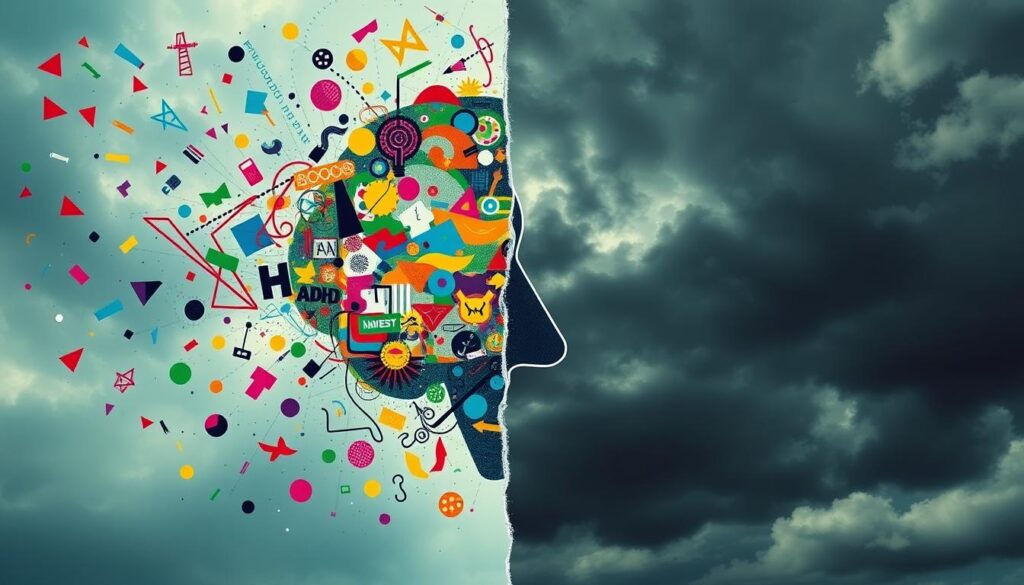
Understanding ADHD, anxiety, and depression can be tough because their symptoms often overlap. Yet, knowing the unique signs of each can help you find the right help.
People with ADHD might feel irritable, have trouble focusing, and avoid certain places. They might also sleep too much or too little and eat differently. Those with anxiety often worry a lot and fear things, which makes it hard to focus and avoid certain situations. They also might feel physically off.
Depression is different, with feelings of sadness and not caring about things anymore. People with depression might also feel very tired and lack energy. Knowing these differences can help you figure out what you’re dealing with, so you can get the right treatment.
| Symptom | ADHD | Anxiety | Depression |
|---|---|---|---|
| Concentration | Difficulty focusing | Difficulty focusing due to worry | Difficulty focusing due to low motivation |
| Mood | Irritability | Persistent worry and fear | Persistent sadness |
| Physical Symptoms | Sleep and appetite changes | Sleep and appetite changes | Fatigue and low energy |
| Behavior | Avoidance of certain situations | Avoidance of fear-inducing situations | Loss of interest in activities |
By knowing the special signs of ADHD, anxiety, and depression, you can understand yourself better. This can help you find the right support and treatment. Always remember, getting help from a professional is key to dealing with these complex mental health issues.
Can ADHD Cause Anxiety and Depression?
The Parisito-Morbidity Relationship
Instead of just saying depression or anxiety is a “comorbid” condition with ADHD, we might call it parisito-morbidity. This term means the depression or anxiety is directly caused by the untreated ADHD. It exists only because of the ADHD symptoms.
People with ADHD often feel down and unmotivated because they can’t meet their goals. This can lead to depression. Anxiety also happens, usually because they know their ADHD limits and get frustrated with not being productive.
It’s key to understand this parisito-morbid relationship. Treating the ADHD can get rid of both the ADHD and the mood disorders. This shows why early diagnosis and full ADHD management are so important. They help tackle the linked issues of anxiety and depression.
| Statistic | Percentage |
|---|---|
| Approximately half of adults with ADHD are also diagnosed with an anxiety disorder. | 50% |
| Over two-thirds of people with ADHD also have at least one additional coexisting condition. | 66.7% |
| About 60 percent of children with ADHD in the United States become adults with ADHD, affecting approximately 4 percent of the adult population, around 8 million adults. | 60% |
| Less than 20 percent of adults with ADHD have been diagnosed or treated, and only about one-quarter of those adults seek help. | 20% |
| ADHD symptoms were found in 20.3% of the sample, but only 7.3% of these subjects had ever received a formal diagnosis. | 7.3% |
“Recognizing the parisito-morbid relationship between ADHD and mood disorders is crucial, as effectively treating the underlying ADHD can potentially eliminate both the ADHD and the associated anxiety and depression.”
Treatment Approaches for ADHD and Comorbid Conditions

Managing Attention-Deficit/Hyperactivity Disorder (ADHD) needs a mix of treatments. This is especially true when it’s combined with anxiety, depression, or other mental health issues. The usual approach includes ADHD medication, ADHD therapy, and ADHD coping strategies.
Stimulant meds like Adderall or Ritalin are often used to help with ADHD symptoms. They can improve focus and control impulses. Antidepressants might be used for depression and anxiety. Therapy, like Cognitive Behavioral Therapy (CBT) and Dialectical Behavior Therapy (DBT), teaches people how to deal with ADHD and mood issues.
When ADHD and mood disorders are together, treating ADHD first can help. This can reduce anxiety and depression. But, if depression is a big risk, treating it first might be needed.
| Therapy Approach | Description |
|---|---|
| Cognitive Behavioral Therapy (CBT) | Focuses on identifying and modifying negative thought patterns and behaviors to improve mood and functioning. |
| Acceptance and Commitment Therapy (ACT) | Encourages passive acknowledgment of negative thoughts and emphasizes aligning behavior with personal values. |
| Interpersonal Therapy (IPT) | Examines the impact of relationships and social interactions on the development and maintenance of depression. |
| Dialectical Behavior Therapy (DBT) | Provides concrete, skills-based treatment to address emotional regulation, interpersonal effectiveness, and distress tolerance. |
Creating a treatment plan that fits each person’s needs is key. This helps manage ADHD and related issues well.
Conclusion
ADHD is a common condition that affects your mental health. It can lead to anxiety and depression. It’s important to understand how ADHD, anxiety, and depression are connected.
By knowing this, doctors can treat ADHD first. This might help reduce anxiety and depression too. This approach can make a big difference in treatment.
Managing ADHD symptoms is possible with the right help. You can learn to handle your emotions better. This includes using coping strategies and staying consistent.
Having a support network is also key. It helps you deal with the emotional ups and downs of ADHD. Remember, you’re not alone in this fight.
Addressing ADHD’s mental health aspects can lead to a better life. With the right support, you can overcome ADHD’s challenges. Stay informed and seek help when you need it.
Don’t forget to use ADHD support resources for your ADHD mental health. This will help you thrive despite ADHD.
FAQ: ADHD, Anxiety and Depression
Can ADHD cause anxiety and depression?
Yes, ADHD and depression often go together. Up to 30% of kids with ADHD also have depression. Experts say over half of people with ADHD will get depression treatment at some point.
Why are people with ADHD more likely to experience anxiety and depression?
ADHD makes people more likely to get anxiety and depression. ADHD can make it hard to manage symptoms. This can lead to feelings of hopelessness and depression in kids and adults.
How are the symptoms of ADHD, anxiety, and depression different?
Symptoms of ADHD, anxiety, and depression can look similar. But, the causes are different. ADHD symptoms include irritability and trouble focusing. Anxiety is about worry and fear.
Depression is marked by sadness and loss of interest. Physical symptoms like fatigue are common in all three.
What is the relationship between ADHD and mood disorders like anxiety and depression?
ADHD and mood disorders like anxiety and depression are closely linked. Depression and anxiety in ADHD patients are often a result of untreated ADHD. This can lead to feelings of hopelessness and frustration.
Anxiety in ADHD patients often comes from feeling limited by their ADHD symptoms. This can cause frustration and anxiety.
How is ADHD, depression, and anxiety typically treated?
Treatment for ADHD, depression, and anxiety usually involves medication and therapy. ADHD is often treated with stimulants to improve focus. Antidepressants help with depression and anxiety symptoms.
Psychotherapy offers strategies for managing ADHD, depression, and anxiety. Treating ADHD first can help reduce or eliminate depression and anxiety symptoms.
Source Links
- https://www.webmd.com/add-adhd/depression-adhd-link
- https://www.ncbi.nlm.nih.gov/pmc/articles/PMC2861517/
- https://www.relationalpsych.group/articles/adhd-anxiety-and-depression
- https://www.additudemag.com/adhd-anxiety-depression-the-diagnosis-puzzle-of-related-conditions/
- https://www.helloklarity.com/post/depression-anxiety-and-undiagnosed-adhd/
- https://www.additudemag.com/slideshows/depression-symptoms-or-adhd/
- https://www.webmd.com/add-adhd/anxiety-adhd-link
- https://adaa.org/understanding-anxiety/related-illnesses/other-related-conditions/adult-adhd
- https://www.additudemag.com/treatment-depression-adhd-medication-comorbid-mood-disorders/
- https://www.ncbi.nlm.nih.gov/pmc/articles/PMC5567978/
- https://www.relationalpsych.group/articles/the-emotional-toll-of-adhd-exploring-mental-health-impacts
- https://www.ncbi.nlm.nih.gov/pmc/articles/PMC7717502/
- https://www.ncbi.nlm.nih.gov/pmc/articles/PMC8381237/