



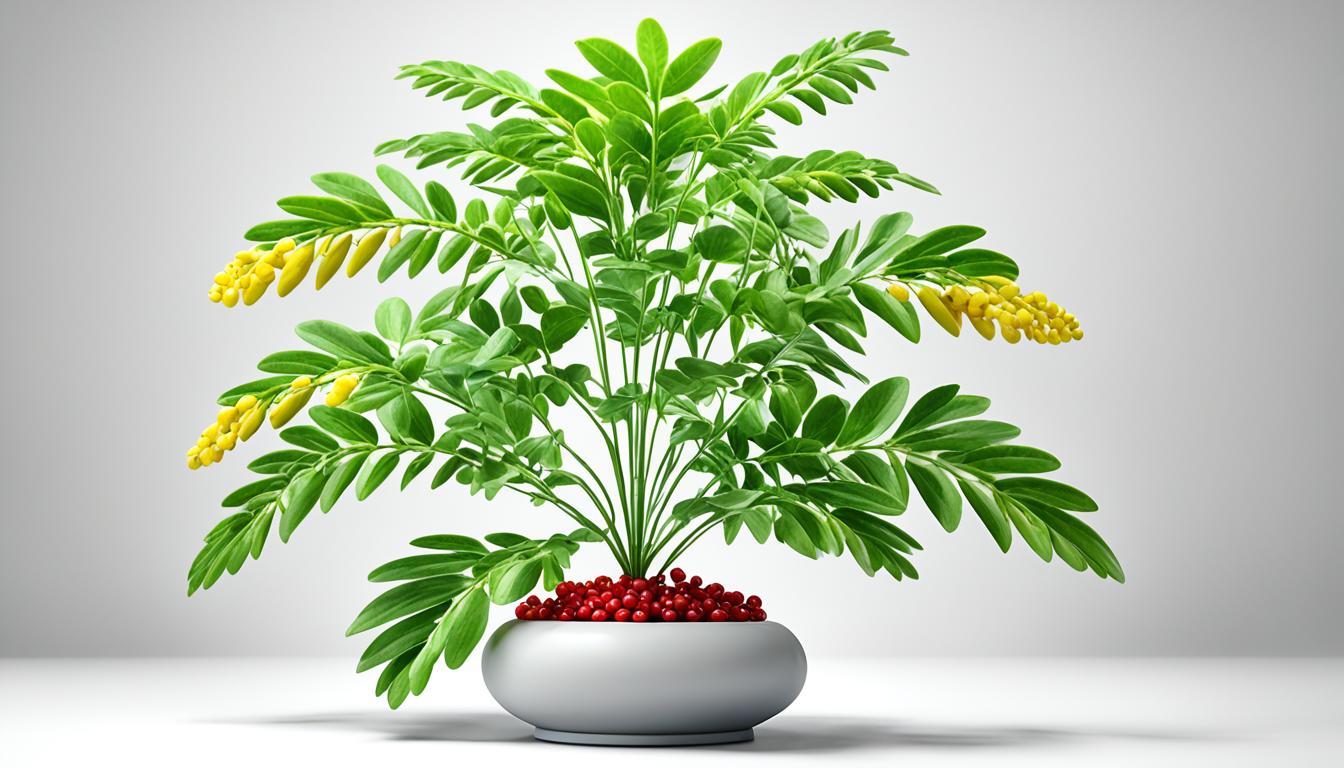
Ashwagandha, known as Indian ginseng and winter cherry, is a cornerstone in Ayurveda, a traditional form of medicine rooted in Indian natural healing. For millennia, it has been employed to alleviate stress, boost energy, and enhance focus. The botanical name for this plant is Withania somnifera, and it’s also referred to as “Indian ginseng” and “winter cherry”. Native to India and Southeast Asia, the ashwagandha plant is a diminutive shrub with yellow blooms. Its root or leaf extracts are utilized to address conditions such as anxiety and fertility challenges.
Key takeaways
- Ashwagandha is an ancient Ayurvedic herb with a wide range of health benefits.
- It’s known for its stress-reducing and anxiety-lowering effects, as well as its ability to improve sleep quality and overall well-being.
- Ashwagandha is also believed to support brain health and boost immunity.
- The plant’s root and leaves are used to create supplements, powders, and extracts.
- Ashwagandha is generally considered safe, but it’s important to consult with a healthcare provider before use, especially if taking medications.
- USER WARNING – Avoid untested products. Opt for reputable brands with verified quality and positive social proof to ensure safety and efficacy.
- NEED TO PURCHASE? – OUR PREFERRED PRODUCT PICKS:
- Best overall supplement – Physician’s Choice with over 27,000 user reviews
- Best root powder extract – KSM-66 Ashwagandha with over 6,800 reviews
- Best value – Nutricost Ashwagandha Capsules with over 1,900 reviews
-
Disclaimer
The information provided on this blog is for informational purposes only and is not intended as a substitute for professional medical advice. While we strive to share knowledge and insights on wellness topics, readers should not interpret any content found here as medical advice. We encourage all readers to consult with qualified healthcare practitioners for personalized medical guidance and to address any health concerns they may have.
Introduction to Ashwagandha Plant
Ashwagandha, an ancient adaptogenic herb, boasts a deep history in Ayurvedic medicine. Derived from Sanskrit, its name means “smell of the horse,” hinting at its strong scent and its ability to boost strength and vitality. This plant, recognized as an adaptogen, aids the body in managing stress, making it essential for enhancing wellness routines.
Definition and Origin
Known scientifically as Withania somnifera, ashwagandha is a small evergreen shrub from the Indian subcontinent. For millennia, it has been integral to traditional Ayurvedic practices, celebrated for its role in enhancing overall well-being and bolstering the body’s resilience.
Traditional Uses in Ayurvedic Medicine
In Ayurvedic medicine, ashwagandha is classified as a Rasayana, a term for herbs and tonics aimed at extending life, rejuvenating the body, and maintaining health. It has been employed to alleviate stress, anxiety, fatigue, and inflammation. Additionally, it is sometimes used to treat specific health issues, such as certain cancers, Alzheimer’s disease, and fertility problems, though further research is necessary to substantiate these uses.
“Ashwagandha is a remarkable herb that has been used in Ayurvedic medicine for centuries to promote physical and mental well-being.”
For those looking to reduce stress and anxiety, enhance athletic performance, or support cognitive function, ashwagandha is an intriguing natural option. Its extensive history in Ayurvedic traditions and the accumulating scientific evidence of its benefits underscore its value in wellness regimens.
What is the Ashwagandha plant?
The ashwagandha plant, scientifically known as Withania somnifera, is a small evergreen shrub native to India and parts of the Middle East. It is often called “Indian ginseng” or “winter cherry” due to its medicinal properties and unique appearance.
Botanical Name and Nicknames
The botanical name “Withania somnifera” comes from the Sanskrit word “ashwagandha.” This translates to “the smell of a horse.” The name reflects the plant’s distinct aroma and its potential to enhance strength and vitality, similar to a horse.
Plant Description and Habitat
- The ashwagandha plant is a small, evergreen shrub that can grow up to 3 feet (0.9 meters) tall.
- It has oval-shaped leaves and produces small, yellow flowers that develop into red, berry-like fruits.
- The plant thrives in dry, hot climates and is commonly found in India, the Middle East, and parts of North Africa.
The versatile ashwagandha plant has been used in traditional Ayurvedic medicine for centuries. It is valued for its potential health benefits and ability to promote overall well-being. Its unique characteristics and widespread use continue to make it a topic of interest for both traditional and modern-day wellness enthusiasts.
Potential Health Benefits of Ashwagandha

Ashwagandha, a revered herb in Ayurvedic medicine, is gaining attention for its potential health benefits. It excels in reducing stress and anxiety and enhancing athletic performance.
Stress and Anxiety Reduction
Studies indicate ashwagandha could be a natural solution for stress and anxiety. Consuming 250 to 600 mg of ashwagandha extract daily for eight weeks can lessen stress and lower cortisol levels, the stress hormone. Its adaptogenic properties also improve sleep quality, aiding in stress relief.
Improved Athletic Performance
Athletes and fitness enthusiasts may benefit from ashwagandha. Supplements of 120 mg to 1,250 mg daily can boost physical performance. These enhancements include VO2 max, a measure of aerobic fitness, and muscle strength. Ashwagandha may increase energy, endurance, and recovery, making it a valuable supplement for athletes.
While research on ashwagandha’s benefits is promising, more studies are needed to determine the best dosages and forms for specific conditions. Always consult a healthcare professional before adding ashwagandha to your wellness routine.
“Ashwagandha’s adaptogenic properties may help improve sleep quality, further supporting its role in stress relief.”
| Potential Benefits | Dosage Range |
|---|---|
| Stress and Anxiety Reduction | 250-600 mg per day |
| Improved Athletic Performance | 120-1,250 mg per day |
Ashwagandha for Specific Conditions

Ashwagandha, an ancient Ayurvedic herb, has drawn attention for its potential health benefits. It ranges from ashwagandha for fertility to enhancing brain function. This versatile plant is seen as a support for overall well-being.
Its potential to boost male fertility is a key area of interest. Studies indicate ashwagandha could increase testosterone levels and improve sperm count and motility. This is crucial for men facing infertility challenges.
There’s also a focus on ashwagandha for diabetes. Research points to its ability to lower blood sugar levels and enhance insulin sensitivity. This could be a game-changer for type 2 diabetes management.
The herb’s anti-inflammatory properties are another area of study. Ashwagandha may reduce inflammatory markers in the body. This could help manage conditions like arthritis and chronic pain.
Furthermore, ashwagandha’s impact on brain function is being explored. Some studies suggest it can improve memory, attention, and cognitive performance. This is beneficial for older adults and those with mental health issues.
While these findings are encouraging, more rigorous research is needed to fully support ashwagandha’s efficacy for these conditions. Always consult a healthcare professional before adding ashwagandha to your health regimen.
“Ashwagandha has been used in Ayurvedic medicine for centuries, and its potential benefits continue to be explored in modern research.”
Dosage and Forms of Ashwagandha
The appropriate ashwagandha dosage depends on your specific health goals and individual needs. Research suggests that doses between 300-600 mg daily are effective for reducing stress, anxiety, and improving overall well-being. However, different purposes might require varying dosages.
Ashwagandha is available in several forms, such as root powder, capsules, and extracts, each offering different concentrations of the active compounds. The choice of form typically depends on personal preference and the condition you’re addressing.
Recommended Dosages
- For general health and stress relief: 300-500 mg of ashwagandha extract or 1-2 grams of ashwagandha root powder per day.
- For sleep enhancement: 500-600 mg per day.
- For enhanced athletic performance or muscle growth: 600-1,200 mg daily, depending on your fitness goals.
It’s best to start with a lower dose (around 300 mg) and gradually increase it based on your body’s response. Always consult a healthcare professional to determine the appropriate dosage, especially if you’re using it for a specific health concern.
Available Forms
Ashwagandha is available in several forms:
- Ashwagandha powder – The dried and ground root can be added to drinks or taken as a supplement.
- Ashwagandha capsules – Encapsulated ashwagandha extract offers a convenient, easy-to-consume option.
- Ashwagandha extracts – Liquid extracts are also available, which can be taken directly or mixed into beverages.
When selecting an ashwagandha supplement, choosing a high-quality product from a reputable brand is crucial. This ensures you’re getting a pure, potent form of the herb.
“Ashwagandha is generally considered safe, but pregnant or breastfeeding individuals, those with autoimmune diseases, and individuals taking certain medications should consult a healthcare provider before use.”
Conclusion
The ashwagandha plant is an ancient Ayurvedic herb, now widely recognized for its health benefits. It has been found to reduce stress and anxiety, enhance athletic performance, and support brain function. Additionally, it may help with fertility, diabetes, and inflammation.
Despite the need for further research, adding ashwagandha supplements to your wellness routine could be beneficial. It offers a natural approach to support health and well-being. Whether you aim to manage stress, boost physical and mental performance, or address health issues, the benefits of ashwagandha are compelling.
Deciding to use ashwagandha should be a personal choice, with guidance from your healthcare provider. By understanding its unique properties, you can make an informed decision. This could lead to a new approach to holistic wellness.
FAQ: What is Ashwagandha?
What is Ashwagandha plant?
Ashwagandha is a vital herb in Ayurveda, a traditional form of medicine rooted in Indian principles. It’s a small shrub with yellow flowers, native to India and Southeast Asia.
What are the benefits of Ashwagandha?
For thousands of years, ashwagandha has been used to alleviate stress, boost energy, and enhance focus. It may also aid in athletic performance, fertility, diabetes management, inflammation reduction, and brain health.
What are the different forms of Ashwagandha?
Ashwagandha comes in various forms, including powder, capsules, and liquid extracts. The choice of form and dosage depends on the intended use and the condition being addressed.
What is the recommended dosage for Ashwagandha?
There’s no uniform dosage for ashwagandha based on current clinical studies. Various studies have employed different dosages. Some research indicates that 250–600 mg daily can help lessen stress levels.
Are there any side effects of taking Ashwagandha?
Generally, ashwagandha is well-tolerated. However, it’s crucial to consult with a healthcare professional before starting it, especially if you have pre-existing medical conditions or are on other medications.
Source Links
- https://www.healthline.com/nutrition/ashwagandha
- https://www.healthline.com/health/what-does-ashwagandha-do-for-women
- https://www.medicalnewstoday.com/articles/318407