





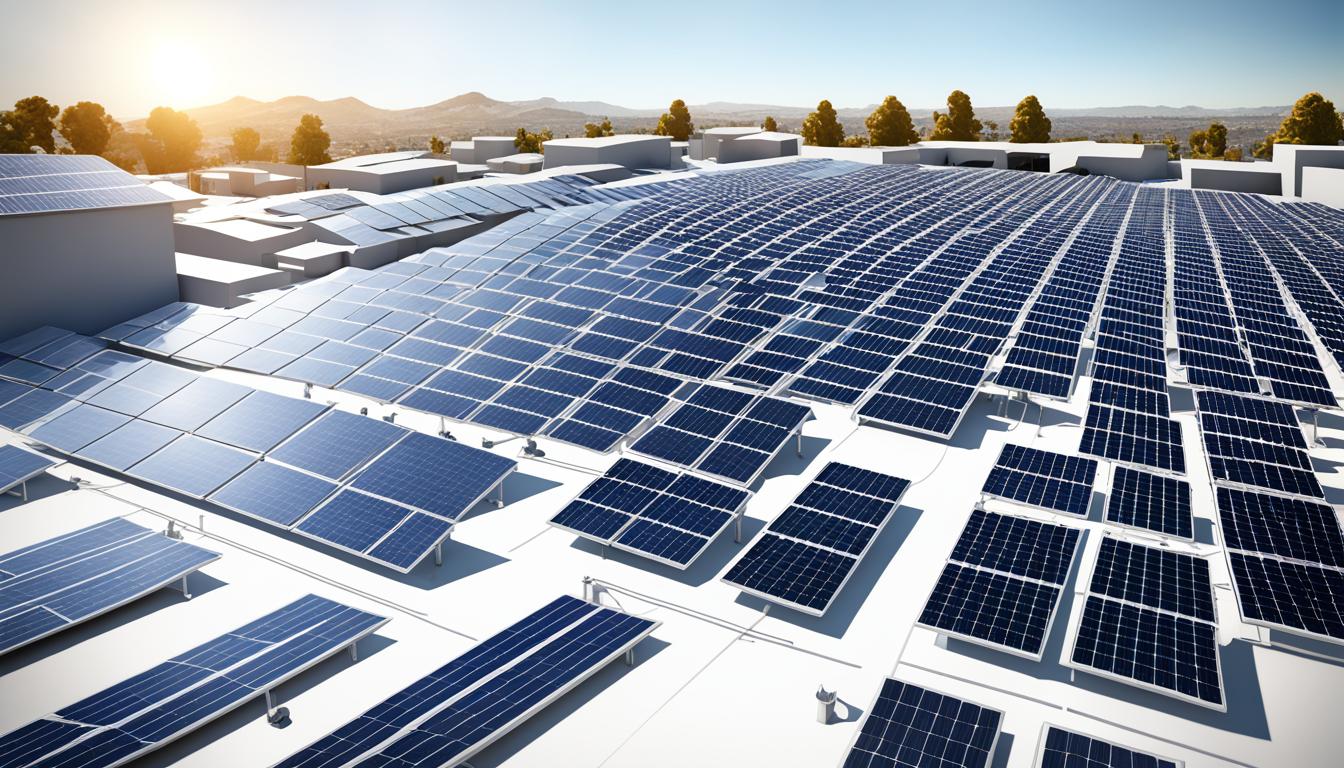
The count of solar panels necessary for a 10 kW system in South Africa varies. It depends on your daily energy needs, your home’s size, and area climate. Let’s unpack the question: How many solar panels required for a 10 kW system?
In South Africa, the typical home uses about 900 kWh monthly. For many households, a 10 kW system is a great fit. It could take between 16 to 25 solar panels, based on their size and efficiency.
Key takeaways
- Several aspects influence the number of solar panels for a 10 kW system in South Africa.
- It’s critical to know your energy usage for the best solar system choice.
- Given the average, a 10 kW system matches well with South African homes.
- You might need as few as 16 panels or as many as 25, depending on their features.
- Always consult a trusted expert to match your solar system to your specific needs.
Understanding your energy consumption
To understand the requirement for a 10 kW solar panel system, exploring your energy usage is vital. Examine your electricity statements and compute the kWh usage. This enables a well-informed decision-making process.
Scrutinise your power bills to find your kWh monthly consumption. This step offers insight into your regular energy requirements, laying the groundwork for solar panel calculations.
Moreover, tracking appliance energy use with a wattmeter can pinpoint the devices eating up the most power. This information aids in making changes to lower your overall energy usage.
Investing time in comprehending your energy needs is crucial for correctly determining your solar panel needs. With this understanding, you are poised to advance on your solar power journey.
Calculating your energy usage
Follow these steps to calculate your energy usage:
- Check your power bills to tally up each month’s kWh usage.
- Combine several months’ data for an average monthly energy use.
- Factor in seasonal variations in energy use for more precise calculations.
By following these steps, you can accurately ascertain the solar panel quantities for a 10 kW system fitting your needs.
Sizing your solar system
Knowing your monthly energy consumption is key to figuring out your solar system size. A 10 kW system works well for a standard South African household using about 900 kWh monthly. The panel count and efficiency influence the exact number needed. Typically, a 10 kW setup necessitates 16 to 25 solar panels. Read this comprehensive Step-by-Step guide on system sizing.
Determining solar panel size
Choosing the right solar panel size for your 10 kW system requires careful evaluation of your energy needs. The physical dimensions of the panels, in watts, directly impact your system’s total power. Panels with higher wattage are usually more effective, allowing you to produce more power in the space allocated. Working with an experienced solar panel supplier ensures you get the most effective balance for your requirements.
Calculating Solar System Size
The first step in sizing your solar system is to sum up the wattage of the panels. This gives your desired system output. The calculation method is:
- Find the panel wattage.
- Divide your wanted system’s size by the panel’s wattage to find the necessary count.
- Round up to ensure you produce enough power.
Consider this example to see how it works:
| Panel Size (Watts) | System Size (kW) | Number of Panels Needed |
|---|---|---|
| 400 | 10 | 25 |
| 450 | 10 | 23 |
| 500 | 10 | 20 |
For instance, choosing 400-watt panels requires 25 of them for a 10 kW system. Yet, if you prefer 500-watt panels, you’d only need 20 to reach the same size.
Factors affecting solar power production
Solar power production is influenced by various factors, affecting the system’s efficiency and output. By focusing on and refining these elements, one can bolster energy creation and elevate the system’s operational prowess significantly.
Weather conditions
Weather plays a key part in solar energy creation. Cloudy or sunless winter days may lessen the energy output. Although South Africa is blessed with ample sunshine, weather fluctuations can still hamper energy production.
Panel orientation and tilt
The direction and angle of solar panels are pivotal for extracting maximum sunlight. Ideally, they should be oriented to the North. Moreover, a tilt of 30-40 degrees boosts energy yield.
Shade
Shade caused by trees or buildings can severely decrease your system’s efficiency. Even slight shading on a panel can lead to a notable drop in energy production. Ensuring minimal shade on your panels is crucial for optimal function.
The types of solar panels used
The selection of solar panels also impacts energy generation. Panel types vary in efficiency and performance. Opting for top-tier, efficient panels enhances your system’s capabilities to produce energy.
Enhancing these key aspects can significantly improve your solar energy generation. Using high-quality appliances and adding a solar battery further boosts efficiency. This holistic approach aids in getting the most out of your solar system and elevating its overall functionality.

| Factor | Description |
|---|---|
| Weather Conditions | Cloudy days or low sunlight can reduce energy generation |
| Panel Orientation and Tilt | Optimal placement facing North with a tilt angle between 30-40 degrees maximizes energy production |
| Shade | Shading from trees or buildings can impact solar system performance |
| The Types of Solar Panels Used | Different types of solar panels have varying levels of efficiency and performance |
Conclusion
When considering the best number of solar panels for a 10 kW system, many aspects require thought. Factors such as your energy usage, the size and efficiency of the panels, and environmental elements are key. To figure out the needed panels, start by analysing your energy bills and use.
Moreover, the type of panel and your roof space matter a lot. Panels with higher wattage need less for the same output. If you opt for 400-watt panels, a 10 kW system would use 25 of them. In contrast, with 300-watt panels, you’d need about 33. Efficiency is crucial too, allowing more power from less space.
Remember, how much energy your household uses annually will affect your panel count. Those using more energy might need extra panels. For the best advice, talking to a solar expert is wise. Their guidance can fine-tune your system, ensuring the most power.
So, for a 10 kW solar setup, be it in South Africa or elsewhere, careful calculation is key. Look at your energy use, panel specs, and get expert help. This approach will lead you to the optimal solar system size and panel number for your energy needs.
FAQ: How many solar panels required for 10 kW system?
How many solar panels required for 10 kW system?
The number of solar panels for a 10 kW system varies. It depends on your daily energy use, house size, and local climate. Typically, you’d require between 16 to 25 solar panels for this setup.
How can I understand my energy consumption?
To grasp your energy use, check your electricity bills. This shows how many kilowatt-hours (kWh) you consume monthly. You can also monitor appliance usage with a wattmeter.
How do I calculate the size of the solar system needed?
To find the right solar system size, look at how much energy you use monthly. For a home in South Africa using about 900 kWh monthly, a 10 kW system is suitable. The number of panels you’ll need hinges on the panel’s size and efficiency.
What factors can affect solar power production?
Many elements influence solar power making. These include the weather, your panel’s direction, shadowing, and the types of solar panels. Perfect panel positioning, along with minimizing shading, boosts power production. Remember, energy-efficient devices and handling varied weather are crucial too.
How can I maximize my solar power generation and efficiency?
To enhance power generation, place your panels facing North with an angle of 30-40 degrees. Avoid shading from structures or trees. And, prioritize energy-efficient gadgets, along with a solar battery for storing surplus energy.
Source Links
- https://www.solarwow.co.za/blog/how-many-solar-panels/
- https://srssolar.co.za/home-solar/how-much-solar-do-you-need/
- https://www.solarwaysuppliers.co.za/product-category/solar-packages/10kw-solar-packages/