








At the heart of a company’s modern-day social contract is its purpose – a call to action that explains to its stakeholders why the company exists, what it stands for and why the world is better off for its existence.
In the simplest terms, for sustainability to be embedded in the business strategy, the company needs to understand how it creates value for its stakeholders in the short, medium and long term by delivering on its purpose and by consciously prioritising people, planet and profit.
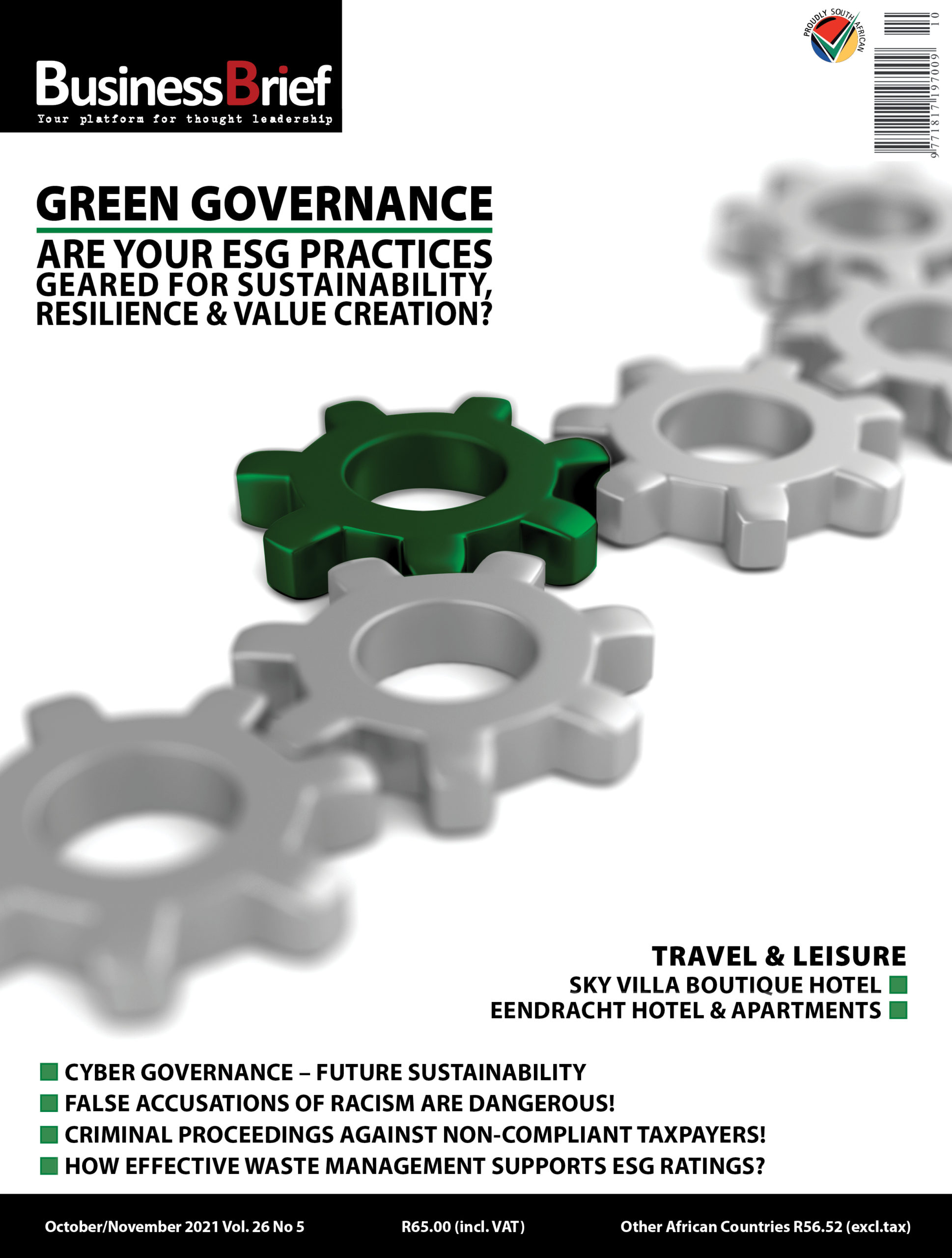
Green governance, then, is about ensuring environmental, sustainability and governance (ESG) practices are integrated into daily business activities. These activities are not only for critical high stakes decisions taken at the board level, but in the countless daily decisions made at the coalface by the employees who choose to uphold, or overlook, people and planet priorities while driving the profit imperative by which they are closely measured.
An organisation’s reputation is ultimately built upon the decisions and actions of its employees. Therefore, integrating ESG into all daily activities supports its legitimacy and reputation as a trusted partner.
The benefits are clear: being a trusted and preferred partner to discerning customers, being a trusted lower-risk investment for banks and funders, being an employer of choice amongst environmentally conscious youth.
Embedding ESG practices into daily business activities should cover:
- Investing in employees
- Cultivating a diverse and inclusive work environment
- Serving clients exceptionally and transparently
- Strengthening the communities in which we live and work
- Upholding human rights in the value chain
- Promoting environmental stewardship
- Taking action to decarbonise operations and the supply chain
The term ‘green governance’ is used here in the context of overseeing environmental sustainability. Still, we should be mindful that the social pillar is equally important and increasingly prominent due to the COVID-19 pandemic. Sound governance of the ESG approach, including the environmental pillar, empowers the board, leadership teams and employees alike to steer and successfully implement ESG strategy and ultimately to safeguard stakeholder trust.
The elements of green governance considered in this article include governance oversight, reporting, assurance and certifications, training, policy advocacy, strategy and investment.
Governance oversight
Governance structures should essentially be tasked with…
The full article is reserved for our subscribers!
Read the full article by Esha Mansingh, Executive Vice President Corporate Affairs & Investor Relations, Imperial Logistics and co-chair World Economic Forum New Champions SA Chapter and Lauren Rota, Vice President Group Environmental, Social & Governance, Imperial Logistics, as well as a host of other topical management articles written by professionals, consultants and academics in the October/November 2021 edition of BusinessBrief.


admin@bbrief.co.za | +27 (0)11 788 0880 |










 practices are integrated into daily business activities)