





Tag: trademarks

Product get-up – when imitation becomes infringement
Standing out in a competitive market and attracting consumers’ attention is not easy. To achieve this, a product’s overall appearance, known as its “get-up”, should be distinctive. A product’s get-up encompasses far more than its name or logo. It includes colours, packaging, shape, layout, graphics, labels and other distinctive visual features that consumers associate with a specific product.

China’s trade mark reforms – raising the stakes for SA brands
Brand owners doing business in China are being put on notice. From 1 January 2027, the State Council can cancel trade marks registered in bad faith. It can also cancel marks that have become generic or have not been used for three consecutive years without legitimate reason.

Counterfeit goods protection – Zambia strengthens border control
Zambia has taken a significant step towards stopping counterfeit goods at the border. It has introduced a new Trade Marks Act. However, the new trade mark enforcement system will only become operational once the Regulations are promulgated.
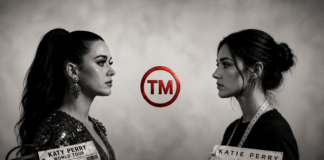
Trademark dispute – Katy Perry vs Katie Perry
Katy is a hugely successful American pop star. Her fame carried her to extraterrestrial heights and even extended briefly into outer space for an unforgettable 10 minutes and 21 seconds. Beyond her music career, she has established a suite of companies to safeguard her various commercial ventures. Killer Queen, LLC serves as the vehicle through which she protects and manages her intellectual property rights.

Digital interface branding – the new brand battleground
Digital business is the new frontier of modern entrepreneurship, and applications (apps) have become the gateway to almost every service imaginable. In a global economy driven by interconnectivity and advancing technology, start-up companies in all digital industries, particularly in FinTech, are quickly becoming the Oil and Rail industry equivalent of the 21st century.

Nice Classification 13th edition adoption – key trademark changes
South Africa has officially adopted the 13th Edition of the Nice Classification (NCL 13-26) with effect from 1 January 2026. The World Intellectual Property Office implemented this edition on the same date. The Companies and Intellectual Property Commission (CIPC) gave notice through Practice Note 3 of 2025, published on 9 December 2025. The notice confirms that the updated classification applies to all trademark specifications from 1 January 2026.

In-house IP portfolio management
The responsibility for the management of an intellectual property (IP) portfolio for any business is a daunting task. For that reason, many entities create a dedicated position within their broader legal team to oversee and safeguard their IP. Having been thrown into this role myself in my career, I have compiled a list of a few tips and tricks which may stand you in good stead on your first day on the job as in-house counsel, tasked with protecting your company’s IP.

Trademark non-use vulnerability – “Big Mac” loses in EU!
A registered trademark is vulnerable to revocation or cancellation for non-use if it has not been used for the goods and/or services for which it is registered for a certain amount of time. In most instances this time period is five years and is calculated from the date of registration, as in South Africa and the European Union.

IP protection is key to SME success in the knowledge economy
In September 2022, the Copyright Amendment Bill was passed by the National Assembly – giving South African artists, creators and entrepreneurs more benefits and rights, including receiving adequate remuneration.

Russia’s war on foreign intellectual property rights
It was the Roman Statesman, Marcus Tullius Cicero who first used the phrase: Silent enim lēgēs inter arma – In times of war, the law falls silent. These words may still ring true today as the world witnesses the horrifying effects of wars in our time, and the appropriation of property that accompanies them.