





Tag: POPIA

AI notetakers – can convenience cost confidentiality?
Every meeting is now recorded and transcribed by an Artificial Intelligence (AI) notetaker, but nobody knows where the files reside or who has copied them. In August 2026, Dark Reading discovered a vulnerability in tl;dv’s backend. It allowed an authenticated user to access meeting information belonging to other customers. The vulnerability put more than 180,000 meeting records across 80,000 or more users at risk.

Privacy for sale? The law and the pay-or-consent dilemma
Many people are familiar with being asked to accept cookies or agree to the collection of their personal information when using online platforms. But what happens when the choice is to either pay for privacy or consent to even more extensive data collection? Should we have to pay money to protect our privacy? Or should we surrender our personal information to use these platforms?

Trust has become the new attack surface
Attackers aren’t breaking in; they’re being invited, and the invitations are being written by the business. The easiest way to install malware on a business network is to persuade someone inside the business to do it. Attackers don’t always need to bypass the firewall or exploit a zero-day vulnerability. Sometimes, all it takes is a convincing email, a moment of misplaced confidence and trust.

NDA residuals clauses – can memory undermine confidentiality?
A Non-Disclosure Agreement (NDA) creates a protected space in which parties can exchange commercially sensitive information. Yet a few apparently innocuous words dealing with information retained in “unaided memory” may materially reduce that protection. In extreme cases, they may undermine the commercial purpose of the NDA itself.

Promotional competitions – is there a free lunch when you win...
A brand runs an on-pack promotion: buy a product, find the code inside, enter it on an app, and you might win a prize. The prize could range from a free lunch to an all-expenses-paid trip to Paris. Thousands of people enter, and a winner is drawn. The marketing team would love to announce the winner with a photograph and a celebratory post on social media. However, the winner would rather not.

SME cybersecurity – turning David’s compliance to a Goliath advantage
The enterprise Goliath is worried about its suppliers. These Small and Medium-sized Enterprises (SMEs) are underprepared. They are also disproportionately targeted. In fact, 43% of cyber-attacks target their digital front door. In addition, the Protection of Personal Information Act (POPIA) holds large organisations legally responsible when a supplier is breached.

Boards are underestimating the AI agent risk
Artificial Intelligence (AI) is rapidly moving from experimentation to execution within South African organisations. Organisations increasingly embed AI agents across business functions, including finance, customer service, IT and operations. However, a significant governance concern is emerging.
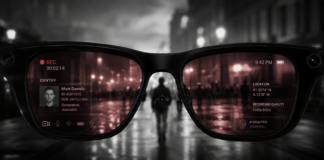
Surveillance, Privacy and Consent – smart glasses raise the risks
EssilorLuxottica and Meta sold more than seven million Ray-Ban and Oakley-branded smart glasses in 2025. Sales of these intelligent wearables increased almost threefold compared with 2023. As a result, the category moved into the mainstream.

Data resilience governance – the AI trust backbone
South African organisations are moving quickly from Artificial Intelligence (AI) experimentation to deployment. The latest South African Generative AI Roadmap 2025 highlights this shift. It found that 67% of respondents reported current GenAI adoption. This figure is up from 45% in 2024. Therefore, organisations are moving from planning to active use.

Using AI to protect data from cybercriminals is crucial
The cybersecurity landscape is rapidly changing, with hackers increasingly utilising Artificial Intelligence (AI) to carry out sophisticated attacks on their targets. To defend against these AI-driven threats, organisations must adopt data protection solutions that harness AI, essentially “fighting fire with fire”. This is the foundation of using AI to protect data from cybercriminals.