





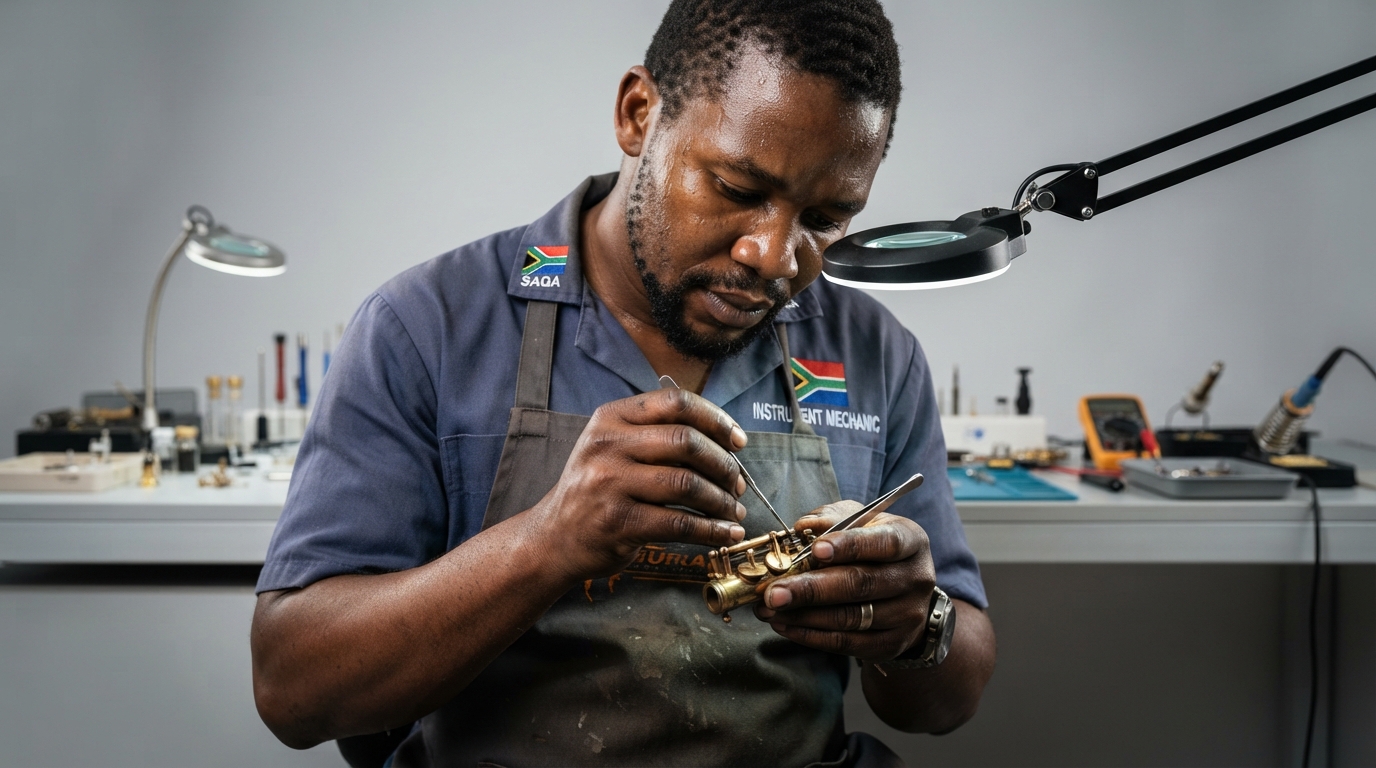
An Instrument Mechanic salary in South Africa usually ranges from about R15,000 to R45,000 per month, depending on experience, trade status, employer, industry, location and whether the role is in mining, manufacturing, petrochemicals, power generation, water treatment, food production, pharmaceuticals, process plants or heavy industry. Senior Instrument Mechanics, Instrument Technicians and E&I specialists can earn more.
Instrument Mechanics install, maintain, calibrate and repair industrial instruments and control systems. Their work helps keep plants, factories and mining operations running safely and accurately.
Key takeaways
- Entry-level Instrument Mechanics may earn around R15,000 to R22,000 per month.
- Experienced Instrument Mechanics often earn between R22,000 and R35,000 per month.
- Senior Instrument Mechanics or Instrument Technicians may earn R35,000 to R45,000+ per month.
- Mining, petrochemical, energy and process plant roles can pay more.
- Trade test, PLC knowledge, calibration, control loops, fault-finding and process instrumentation experience can improve earning potential.
Instrument Mechanic salary range in South Africa
| Experience level / role type | Estimated monthly salary |
|---|---|
| Entry-level Instrument Mechanic | R15,000 – R22,000 |
| Experienced Instrument Mechanic | R22,000 – R35,000 |
| Senior Instrument Mechanic | R35,000 – R45,000+ |
| Instrument Technician / E&I Technician | R35,000 – R55,000+ |
| Wider market range | R26,621 – R43,109+ average benchmarks |
Salary sources vary because roles may be listed as Instrument Mechanic, Instrumentation Mechanic, Instrument Technician, Control and Instrumentation Technician, E&I Technician, Process Instrumentation Technician, Calibration Technician or Industrial Instrumentation Technician.
Indeed reports an average Instrument Technician salary of about R26,621 per month in South Africa, based on salary data updated in July 2026. Indeed also reports an average Senior Instrument Technician salary of about R35,549 per month, although this is based on a small sample. Employer-specific data can be higher, with Sasol Instrument Technician salary data on Indeed showing about R43,109 per month. Instrumentation Engineer benchmarks are higher again, with Indeed reporting an average of about R48,359 per month.
What does an Instrument Mechanic do?
An Instrument Mechanic works on the instruments and control devices used in industrial processes.
Typical duties include:
- Installing process instruments
- Calibrating instruments and sensors
- Repairing faulty instrumentation
- Testing control loops
- Maintaining pressure, flow, level and temperature instruments
- Working on transmitters, valves and controllers
- Reading technical drawings and loop diagrams
- Fault-finding on plant equipment
- Supporting PLC and control-system teams
- Performing preventative maintenance
- Recording calibration and maintenance work
- Following safety and lockout procedures
- Supporting plant shutdowns and breakdown repairs
- Working with electricians, fitters, engineers and operators
In process plants, accurate instrumentation is essential because it helps operators monitor and control production, safety, quality and efficiency.
What affects an Instrument Mechanic salary?
Industry
Instrument Mechanics in mining, petrochemicals, oil and gas, energy, water treatment, pulp and paper, food production, pharmaceuticals and heavy manufacturing may earn different salaries. Petrochemical and mining roles often pay more because of risk, complexity and continuous operations.
Trade test and qualifications
A recognised instrumentation trade test, NQF qualification, apprenticeship or artisan background can improve salary prospects. Employers may also value electrical, mechatronics or process control training.
Process plant experience
Experience in real plant environments is valuable. Employers often want candidates who understand shutdowns, breakdowns, permits, safety procedures, calibration records and production pressure.
Technical systems
Experience with PLCs, SCADA, DCS systems, control valves, transmitters, flow meters, pressure sensors, temperature instruments and loop checking can improve earning potential.
Shift work and overtime
Instrument Mechanics may work shifts, standby, callouts, shutdowns and overtime. These can affect monthly earnings, especially in mines and continuous production environments.
Entry-level Instrument Mechanic salary
An entry-level Instrument Mechanic may earn around R15,000 to R22,000 per month.
At this level, the person may work as an apprentice, junior artisan, assistant technician or newly qualified Instrument Mechanic. Duties may include basic calibration, routine maintenance, equipment checks and supervised fault-finding.
Experienced Instrument Mechanic salary
An experienced Instrument Mechanic may earn between R22,000 and R35,000 per month.
This level usually applies to someone who can work independently on instrumentation faults, calibration, control loops, plant maintenance and breakdown support.
Senior Instrument Mechanic salary
A Senior Instrument Mechanic may earn R35,000 to R45,000+ per month.
Higher salaries are more likely where the role includes complex process plants, shutdown leadership, advanced fault-finding, control-system support, supervisory duties, mining or petrochemical environments.
Instrument Mechanic vs Instrument Technician salary
An Instrument Mechanic is often an artisan trade role focused on installing, maintaining, calibrating and repairing instrumentation.
An Instrument Technician may have a broader technical role that includes troubleshooting, calibration, control systems, PLC/SCADA support, reporting and process optimisation. In many South African job adverts, the titles overlap. Instrument Technician benchmarks are useful because many employers use that title for similar instrumentation work.
Instrument Mechanic vs Electrician salary
An Electrician focuses mainly on electrical systems, wiring, motors, distribution boards, power supply and electrical fault-finding.
An Instrument Mechanic focuses more on measurement and control devices such as sensors, transmitters, valves, loops and process instruments. In industrial environments, electrical and instrumentation work often overlaps, especially in E&I technician roles.
How to earn more as an Instrument Mechanic
To increase earning potential, build strong process plant, fault-finding and control-system skills.
Useful areas include:
- Instrumentation trade test
- Calibration
- Control loops
- PLC basics
- SCADA and DCS awareness
- Control valves
- Pressure, flow, level and temperature instruments
- Loop diagrams and P&IDs
- Preventative maintenance
- Shutdown experience
- Mining or petrochemical experience
- Electrical fault-finding
- Safety permits and lockout procedures
- Supervisory experience
The strongest Instrument Mechanics are accurate, safety-focused and able to solve faults quickly in high-pressure production environments.
FAQ: Instrument Mechanic salary
What is the average Instrument Mechanic salary in South Africa?
Instrument Mechanic-specific data is limited, but related Instrument Technician benchmarks suggest a practical range of about R15,000 to R45,000 per month, with the national Instrument Technician average at about R26,621 per month.
Is Instrument Mechanic a good career?
Yes. Instrumentation is a strong technical trade because mines, factories, plants and utilities need accurate measurement and control systems. Skilled Instrument Mechanics can move into technician, supervisory or control-system roles.
What qualifications do Instrument Mechanics need?
Employers may look for an instrumentation trade test, apprenticeship, NQF instrumentation qualification, electrical or mechatronics background, and practical plant experience.
Where do Instrument Mechanics work?
Instrument Mechanics work in mines, factories, process plants, petrochemical plants, power stations, water treatment works, food plants, pharmaceutical plants and manufacturing facilities.
What jobs can an Instrument Mechanic move into?
An Instrument Mechanic can move into roles such as Senior Instrument Mechanic, Instrument Technician, E&I Technician, Control and Instrumentation Technician, Calibration Technician, Instrumentation Supervisor, Process Control Technician or Instrumentation Engineer pathway.
Sources
Indeed Instrument Technician salary data
https://za.indeed.com/career/instrument-technician/salaries
Indeed Gauteng Instrument Technician salary data
https://za.indeed.com/career/instrument-technician/salaries/Gauteng
Indeed Mpumalanga Instrument Technician salary data
https://za.indeed.com/career/instrument-technician/salaries/Mpumalanga
Indeed Senior Instrument Technician salary data
https://za.indeed.com/career/senior-instrument-technician/salaries
Indeed Sasol Instrument Technician salary data
https://za.indeed.com/cmp/Sasol/salaries/Instrument-Technician
Indeed Instrumentation Engineer salary data
https://za.indeed.com/career/instrumentation-engineer/salaries
Indeed Instrument Technician job listings
https://za.indeed.com/q-instrument-technician-jobs.html