




Termites can harm plants, trees, and wood in homes by eating cellulose-based materials. The three main types of termites that invade homes are dampwood, drywood, and subterranean. Each type is drawn to homes for different reasons.
Dampwood and drywood termites live in the wood they eat. On the other hand, subterranean termites mostly live underground and come up to eat wood. Subterranean termites often live in large groups.
Termites are attracted to wood, moisture, and wood near house foundations. They also like cracks in building exteriors. Warm weather and consistent humidity make some areas more termite-prone.
To prevent termites, reduce moisture, treat and cover exposed wood, and seal cracks and gaps. These steps help keep termites away from your home.
Key takeaways
- Termites can cause significant damage to homes by feeding on cellulose-based materials.
- The three main types of home-invading termites are dampwood, drywood, and subterranean.
- Subterranean termites are most likely to live in large groups and are drawn to wood in contact with moist soil.
- Termites are attracted to wood, moisture, and cracks or gaps in a home’s exterior.
- Effective prevention strategies include reducing moisture, treating exposed wood, and sealing entry points.
Types of Termites That Invade Homes
Homeowners need to know about three main types of termites: dampwood, drywood, and subterranean. Each type has its own habits and likes. Knowing these helps prevent and control termite damage.
Dampwood Termites
Dampwood termites live in Pacific coastal states, the desert Southwest, and southern Florida. They like moist, damaged wood and eat it from the inside out. They are big, from ½ to 1 inch long, and love very damp places.
Drywood Termites
Drywood termites prefer dry wood and eat it from the inside. They are common in North Carolina, California, and coastal southern states. Some, like desert drywood termites, are yellow to light brown and live in dry places like Arizona and Southeastern California.
Subterranean Termites
Subterranean termites live in the soil and use mud tubes to get to wood above. They often live in huge colonies, up to 2 million members. They can do the most damage and are found all over the U.S.
| Termite Type | Habitat and Preferences | Distinguishing Features |
|---|---|---|
| Dampwood Termites | Prefer moist, water-damaged wood; found in Pacific coastal states, desert Southwest, and southern Florida | Larger in size, ranging from ½ to 1 inch in length; attracted to extremely damp conditions |
| Drywood Termites | Seek out dry wood; often found in North Carolina, California, and other coastal southern states | Some species, like desert drywood termites, are yellow to light brown in color and thrive in dry climates |
| Subterranean Termites | Mostly live in the soil and build mud tubes to access wood above ground; found across the United States | More likely to live in large colonies, with some reaching up to 2 million members; can cause the most damage out of any termite species |
Knowing about these termite species is key for homeowners. It helps them prevent and control these pests that harm wood.
What Attracts Termites to Your Home?
Termites are attracted to homes for many reasons. Knowing what draws them is key to stopping them. Moisture, wood, and other factors can make your home a target for these pests.
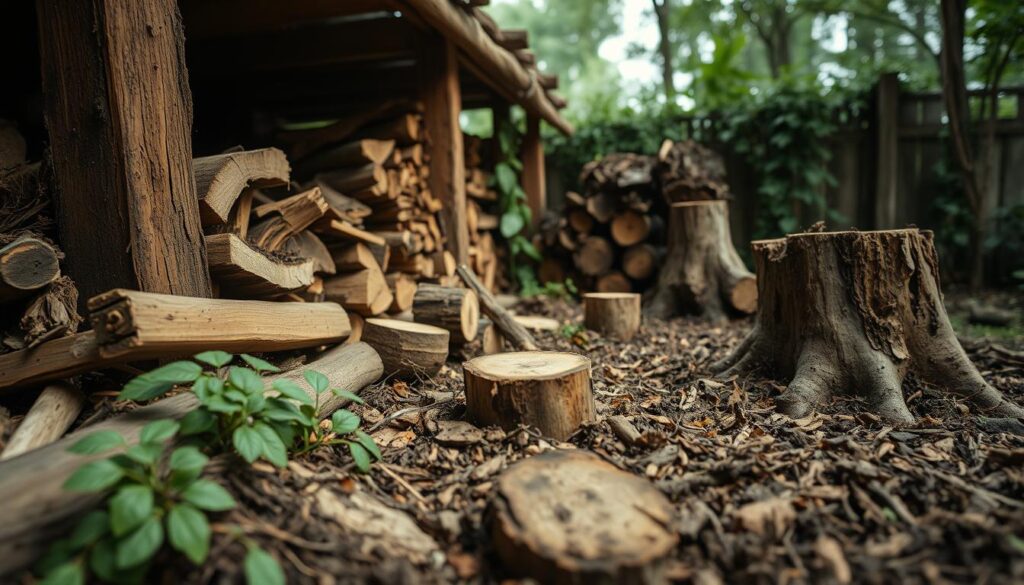
Wood is a big draw for termites. They love cellulose, found in wood and paper. Soft, rotting, or damp wood is especially appealing. This includes firewood, dead trees, and stumps in your yard.
Moisture is also a big attractant. Subterranean termites need water to live. Leaky pipes, poor drainage, and clogged gutters can make your home more appealing to them.
- Firewood stored less than 20 feet from the home can attract termites.
- Dead trees and stumps in the yard provide nesting sites for termites before they move to the house.
- Mulch and landscaping timbers placed too close to the home’s foundation can retain moisture and draw termites in.
Gaps and cracks in your home’s exterior are easy entry points for termites. Sealing these and fixing moisture issues can help keep termites away.
Getting regular professional inspections is a good idea. They can spot termite activity early and help prevent it. Taking steps to avoid attractants can protect your home from termites.
Why Do Termites Come?
Termites are a common pest that can damage homes a lot. They cost homeowners thousands of dollars in repairs each year. Knowing why termites are attracted to certain homes is key to stopping them.
Termites need food, and they love eating cellulose-based materials like wood and paper. Different types of termites prefer different foods. For example, dampwood termites like moist wood, while drywood termites prefer dry wood. Subterranean termites go for wood that touches the soil.
Termites also need moisture to live. They are drawn to homes with leaks or poor drainage. They use cracks and gaps to get into homes and find their food.
| Termite Type | Preferred Food Source | Moisture Requirement |
|---|---|---|
| Dampwood Termites | Moist, water-damaged wood | High |
| Drywood Termites | Dry wood | Low |
| Subterranean Termites | Wood in contact with soil | Moderate to High |
Knowing why termites are attracted to homes is important. By fixing the things that attract them, like food and moisture, homeowners can protect their homes. This way, they can keep termites away and save their homes from damage.
Signs of Termite Infestation

Spotting the early signs of termites is key for homeowners. These pests can hide for a long time, but there are clear signs of their presence. Let’s look at the common signs of termite activity and the harm they can do.
Headbanging Noises
One early sign of termites is headbanging noises. Worker termites tap their heads on wood to talk to each other. This sound is a clear sign of termites at work.
Hollow-Sounding Wood
Termites eat wood from the inside, leaving a thin outer layer. This makes the wood sound hollow or papery when tapped. If your wooden structures sound hollow, it might mean termites are there.
Stiff Doors and Windows
Termites can make wood moist and distorted, making doors and windows stiff. If your doors and windows are harder to open, termites might be the cause.
Termite Frass
Termites leave behind a fine, powdery waste called frass. Finding this termite droppings is a clear sign of termites. Look for sand-like material as a sign of termites in your home.
By watching for these signs, homeowners can act fast to stop termites before they cause more damage.
Conducive Conditions for Termite Infestations
Termites are attracted to certain conditions that make homes more likely to get infested. Too much moisture from leaks or water damage is a big draw. Wood sources, like furniture and mulch, also attract them.
Cracks and gaps in a home’s exterior can let termites in. Warm, humid places are especially prone to termites. It’s important to prevent these conditions to avoid termite problems.
- Subterranean termite colonies usually enter homes at ground level or below. But, they can also make mud tubes to reach higher spots.
- Termites can squeeze through very small openings, like the width of a business card. This shows why sealing gaps is so crucial.
- Drywood termites start infestations when swarmers find a crevice in wood. They seal themselves in and start a colony.
| Conducive Condition | Impact on Termite Infestation |
|---|---|
| Water and Moisture | Leaks, broken pipes, and other water issues invite termites into homes. |
| Ground Soil – Wood Contact | Wood touching the ground, like fences, attracts termites. |
| Presence of Cellulose Rubbish | Termites like decaying wood and construction materials. |
| Vegetation Proximity | Plants near the house keep moisture, which termites like. |
| Faulty Water Drainage Slopes | Drainage problems around structures attract termites. |
| Insufficient Ventilation | Not enough air in crawl spaces leads to moisture, which termites prefer. |
Fixing these conditions can greatly lower the chance of termites and the damage they cause.
“Termites can breed in high numbers and establish themselves in conducive conditions, with water and damp areas being top attractants for these pests.”
Conclusion
Termites are a big problem for homes in the United States. They can cause a lot of damage by eating wood and other cellulose-based materials. It’s important to know how to spot them and prevent them from getting into your home.
To keep termites away, you can reduce moisture, treat wood, and seal cracks. While DIY methods can help a bit, professional termite control is usually the best choice. It offers lasting protection against these pests.
By being proactive and acting fast when you see termite signs, you can protect your home. This helps avoid the costly termite damage and financial loss from an infestation. Early termite treatment and regular checks are key to keeping your home safe and its value high.
FAQ: Why Do Termites Come
What are the three common types of home-invading termites?
The three common types of home-invading termites are dampwood, drywood, and subterranean termites.
How do the different termite species differ in their living habits?
Dampwood and drywood termites live inside the wood they consume. Subterranean termites mostly live in the ground and build mud tubes to access wood above ground. Subterranean termites are also more likely to live in large colonies compared to the other species.
What factors attract termites to homes?
Termites are attracted to homes for various reasons. They like wood, moisture, and pathways for access. Dampwood and subterranean termites thrive in humid environments and are attracted to water-damaged wood, leaky pipes, and poor drainage. Drywood termites seek out dry wood and can infest structural timber, furniture, and other wood sources. Termites may also enter homes through cracks, gaps, and other imperfections in the building’s exterior.
Why are termites drawn to homes?
Termites are attracted to homes primarily for their food sources – the cellulose-based materials they consume, such as wood, paper, and other plant-based materials. Different termite species have specific preferences. Dampwood termites seek out moist, water-damaged wood, drywood termites target dry wood, and subterranean termites access wood that is in contact with the soil. Termites also require moisture to survive, so they are drawn to homes with leaks, poor drainage, and other sources of excess humidity.
What are some signs of a termite infestation?
Homeowners can look for several signs that may indicate a termite infestation. These include headbanging noises, hollow-sounding wood, stiff doors and windows, and the presence of frass or termite droppings.
What conditions can make a home more susceptible to termite infestations?
Termites are attracted to various conditions that can make homes susceptible to infestations. These include excess moisture, the presence of wood sources, and cracks or gaps in the home’s exterior. Geographic location also plays a role, with warm, humid regions being more prone to termite activity.
Why is professional termite control services often the best option?
While homeowners can attempt DIY methods to address termite infestations, professional pest control services are often the most effective and efficient way to treat and prevent these pests. Termite control experts have the specialized knowledge, tools, and treatments necessary to effectively eliminate existing infestations and implement long-term prevention strategies.
Source Links
- https://www.orkin.com/pests/termites/what-causes-termites
- https://www.stomppestcontrol.com/what-causes-termites/
- https://www.pestworld.org/news-hub/pest-articles/termites-101-a-guide-to-different-termite-species/
- https://eliminateem.com/blog/termites/types-of-termites/
- https://www.callnorthwest.com/2020/04/5-things-that-could-be-attracting-termites-to-your-home/
- https://safeguardpestcontrol.com.au/blog/7-things-that-will-attract-termites-to-your-home/
- https://www.aaipest.com/pest-control-blog/where-do-termites-come-from/
- https://www.trianglepest.com/blog/termite-swarming-everything-you-need-know-about-swarming-season
- https://content.ces.ncsu.edu/termite-swarmers-what-do-they-mean-for-you
- https://www.orkin.com/pests/termites/how-to-identify-termite-activity
- https://americanpest.net/blog/8-early-warning-signs-of-termites-infestation/
- http://extension.msstate.edu/content/signs-termite-infestation
- https://www.orkin.com/pests/termites/how-termites-get-in-your-home
- https://www.inspectmyhome.com.au/blog/is-your-home-conducive-to-termites/
- https://pestnett.com.au/what-are-conducive-termite-conditions/
- https://www.flapest.com/termites/treatment/
- https://www.wittpm.com/blog/post/why-professional-termite-control-is-worth-it
- https://www.lajaunies.com/blog/what-to-expect-from-professional-termite-treatment/
- https://hicare.in/blog/main-reasons-why-termites-come-out-at-night-them/
- https://www.mccallservice.com/blog/what-do-swarming-termites-mean-for-you/