





Termite fumigation, or termite tenting, is a deep pest control method. It involves covering a structure with a tent and filling it with gas to kill termites. This process usually takes a few days. More time is needed for the air to clear, making the home safe again.
Knowing how long termite fumigation takes and what to expect helps you get ready. It’s a crucial step to keep your home safe from termites.
Key takeaways
- Termite fumigation is typically a 3-4 day process, with 2 nights typically required to vacate the home.
- The size of the home, severity of the termite infestation, and type of termites can impact the overall duration of the tenting process.
- Proper preparation, including clearing the home of certain items, is crucial to avoid additional charges.
- Roof and perimeter damage may occur during fumigation, requiring repairs.
- Professionals with proper certification and training are essential for a safe and effective termite tenting treatment.
Understanding the Termite Fumigation Process
The termite fumigation process is a detailed way to get rid of termites. It involves several important steps before, during, and after the treatment. Knowing the timeline and what’s needed is key for homeowners fighting termites.
Before the Fumigation
Before the fumigation, homeowners must prepare. They need to remove people, pets, plants, and some food and medicine from the house. They also have to clear the area around the house and get permission from neighbors if needed.
Homeowners must make sure the gas meter is easy for the gas company to access. This is to shut off the gas service.
During Fumigation
The fumigation itself takes 24 to 72 hours. A tent or tarp is put over the house and sealed. Then, a gas is pumped in to kill termites hiding in walls or floors.
The house must be empty during this time for safety.
After Fumigation
After the treatment, the tent is taken down. The house is then aired out to get rid of the gas. The pest control company checks the air to make sure it’s safe, usually 24 to 72 hours later.
Once it’s safe, homeowners can go back inside. They can then live normally, knowing the termites are gone.
“Termite fumigation is a highly efficient solution for pest infestations, offering deep penetration into hard-to-reach areas, colony eradication, and a comprehensive one-time treatment.”
Factors Influencing Termite Fumigation Duration
Termite fumigation time can change a lot based on several important factors. Knowing these can help homeowners get ready for and manage their pest control treatment better.
Size of the Structure
The size of the home or building being fumigated matters a lot. Bigger places need more time for the gas to spread everywhere. Smaller homes get treated faster.
Homeowners with larger homes face a longer fumigation timeline. Those with smaller homes see a shorter fumigation duration.
Severity of Infestation
The termite problem’s severity is key too. Homes with big, established termite colonies need longer gas exposure. This is because they have more termites to kill.
Less severe or newer infestations need less time. The level of termite infestation greatly affects the necessary fumigation duration.
Type of Termites
The type of termites also plays a role. Drywood termites live in the wood and need more gas time. Subterranean termites nest in the soil and might react differently.
“Larger homes and buildings will generally require more time for the fumigant gas to fully penetrate and circulate throughout the entire structure, compared to smaller, more compact homes.”
How Long Does Termite Tenting Take
The time it takes for termite tenting varies. Generally, it can take 24 to 72 hours, or 3 to 4 days. This depends on the structure’s size, the termite problem’s severity, and the type of termites.
In South Florida, where termites are common, termite tenting is a well-known solution. Hulett Environmental Services, with over 50 years of experience, is a leading pest control company. They are experts in handling these complex fumigation procedures.
The time needed for termite tenting can be influenced by the preparatory work. This includes removing plants, opening doors and cabinets, sealing food, and trimming landscaping. These steps ensure the tent can be installed and sealed properly.
- For a 1,200 square foot home, the average termite tenting cost ranges from $1,200 to $4,800.
- For a 1,800 square foot home, the average termite tenting cost ranges from $1,800 to $7,200.
- For a 2,500 square foot home, the average termite tenting cost ranges from $2,500 to $10,000.
Homeowners should work closely with their pest control professional. This is to understand the estimated duration and cost for their property. These can vary based on several factors. Proper preparation and following professional guidance can ensure a smooth and effective termite tenting process.
“Termite tenting is a specialized process that should only be handled by professional pest control experts due to the complexity and expertise required.”
Effectiveness of Termite Fumigation
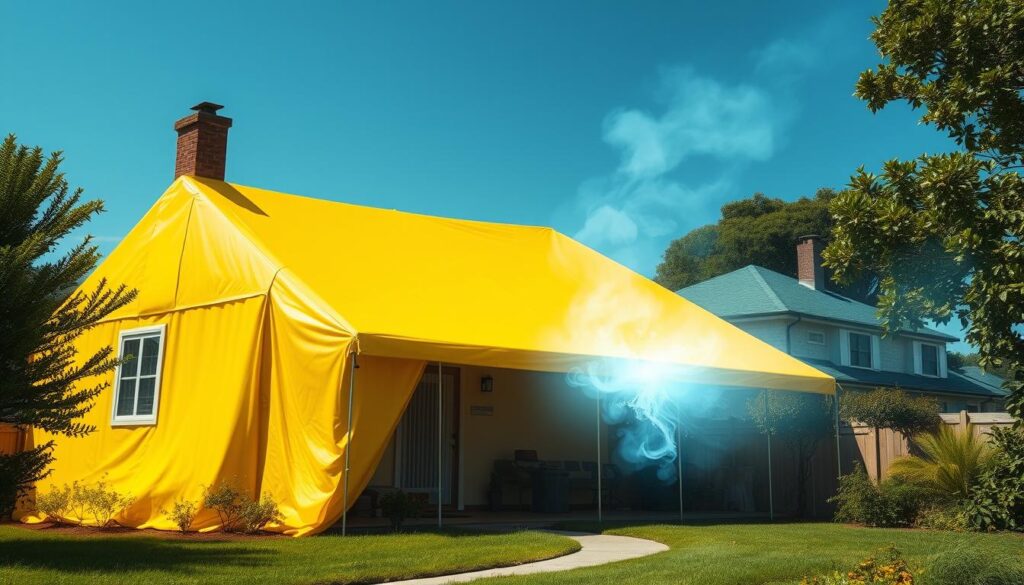
Termite fumigation is known for its deep penetration into structures. It can access areas that other methods can’t. The gas can get into hidden spots where termites live, killing the whole colony.
Deep Penetration
Termite fumigation is different from other treatments. It aims to kill the whole colony, including the queen. By filling the space with gas, it offers a complete solution in one go.
Colony Eradication
Termite fumigation is a long-lasting solution. It’s more effective than other methods that need repeated treatments. A single treatment can control the infestation for a long time.
One-Time Comprehensive Treatment
This method targets all life stages of termites. It kills the eggs, workers, and the queen. This ensures no termites are left to cause more problems.
| Termite Fumigation Effectiveness | Details |
|---|---|
| Penetration Ability | Fumigant gas can reach hidden crevices and cavities, ensuring comprehensive coverage. |
| Colony Eradication | Eliminates the entire termite colony, including the queen and all life stages. |
| One-Time Treatment | A single round of tenting can provide long-lasting, comprehensive control. |
“Termite fumigation is one of the most effective methods for eliminating a severe termite infestation, as it can reach and eradicate the entire colony in a single treatment.”
Post-Fumigation Considerations
After termite fumigation is done and your home is safe, there are important steps to take. These steps help protect your home for a long time. You need to do regular checks, take preventive actions, and clean well.
First, make sure to get regular checks from a pest control expert. This is to watch for any signs of termites coming back. Termites might still be seen in your home for a few days after treatment. Also, if you see termite droppings, it might not mean termites are still there. The droppings can stay in the tunnels termites made.
To stop termites from coming back, take steps to prevent them. Treat the ground around your home and any trees that were affected. This helps fight both underground termites and those in trees. You might also see more ants and bugs because of the dead termites. This means you need to control all pests.
Clean your home well to get rid of any smells or leftover fumigant. Fix any damage from termites and paint your home again. These actions help keep your home termite-free for a long time.
“Homeowners in the United States spend over $2 billion annually to protect their homes from termites.”
While fumigation works well for Drywood Termites, you must fix any problems that led to the infestation. Work with a trusted pest control expert to make a plan. This plan will help keep your home safe from termites for a long time.
Safety Measures and Precautions
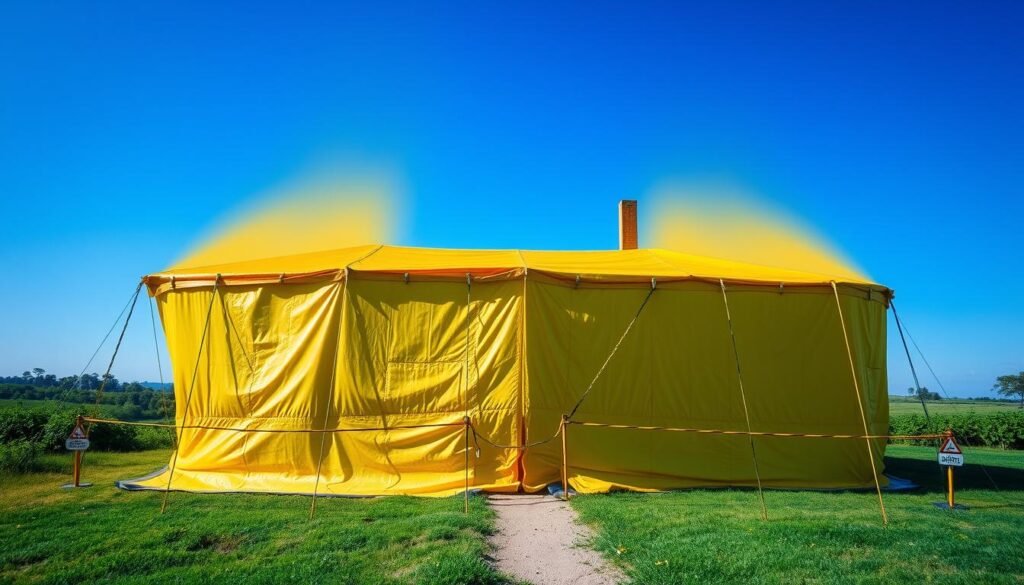
Termite fumigation is a detailed process that needs strict safety rules. It protects homeowners and pest control workers. Clear talks between everyone involved are key.
Communication Protocol
Pest control experts will talk to homeowners about the termite fumigation plan. They will post warning signs, seal the tent or tarp, and check if it’s safe to go back inside after the gas is gone.
Secure Sealing and Ventilation
Sealing the tent or tarp over the home is crucial to keep the gas inside. Pest control pros will check for any gaps and seal them. After the fumigation, the home will be aired out to remove all gas before it’s safe to go back in.
| Safety Procedure | Description |
|---|---|
| Termite Tent Sealing | Pest control experts will thoroughly inspect and seal any gaps or openings in the tent or tarp covering the home to contain the fumigant gas. |
| Aeration Process | After fumigation, the home will undergo a comprehensive aeration process to ensure the complete dissipation of all traces of the gas, making the structure safe for reoccupation. |
| Communication with Homeowners | Pest control professionals will work closely with homeowners throughout the entire termite tenting and fumigation process, providing clear timelines, preparation requirements, and safety confirmations. |
Following these safety steps and talking clearly with homeowners makes the termite fumigation safe and effective. It protects both the homeowners and the home itself.
The Role of Professional Pest Control Companies
Homeowners facing termite problems should turn to certified pest control experts. Termite fumigation is a complex task that needs the right training and equipment. It’s also regulated to ensure safety and effectiveness.
Pest control companies are qualified to manage the termite tenting process. They handle everything from the first inspection to when it’s safe to go back inside. This means homeowners can trust that their termite issue will be solved and safety will be a top priority.
| Benefits of Hiring Certified Termite Fumigation Experts | Why Choose Experienced Pest Management Services |
|---|---|
|
|
Using professional termite control services is crucial. DIY attempts can lead to incomplete treatment, chemical exposure, and costly damage. Working with a trusted pest management company ensures termite problems are handled correctly and safely.
“Termite fumigation is a complex process that requires specialized expertise. Trying to handle it yourself can be dangerous and ineffective.”
Conclusion
Termite fumigation, or tenting, is a thorough pest control method. It usually takes 24 to 72 hours to finish. After that, more time is needed for aeration and for people to safely return inside. The summary of termite tenting duration shows why knowing the timeline is key to protect your property.
The time it takes can change based on several factors. These include the size of the building, how bad the termite problem is, and the type of termites. Also, termite treatments, like fumigation, usually last about 5 years. Regular checks by professionals are needed to keep the treatment working well.
Knowing the termite tent timeline helps homeowners get ready for this treatment. It also helps them take steps to keep their homes and families safe. Understanding the termite tent timeline is crucial. It helps protect your property from termites for a long time.
FAQ: How Long Does Termite Tenting Take?
How long does the termite fumigation process take?
Termite fumigation, or tenting, usually takes 24 to 72 hours, or 3 to 4 days. This includes setting up the tent, fumigating, and airing out the home to make it safe again.
What steps are involved in the termite fumigation process?
First, people, pets, plants, and some food/medicine are removed from the home. The area around the home must be clear, and the gas meter must be accessible.
During the fumigation, the home is sealed and the gas is circulated for 24-72 hours. After, the home is aired out before it’s safe to go back inside.
What factors can influence the duration of the termite fumigation process?
The size of the home, how bad the termite problem is, and the type of termites can affect how long it takes. Bigger homes and worse infestations might need more time to get rid of all termites.
What are the key advantages of termite fumigation?
Fumigation is very good at getting into the home’s deep areas where termites hide. It kills the whole colony, including the queen, offering a complete solution in one go.
What safety precautions are taken during the termite fumigation process?
Safety is a top priority. This includes talking to homeowners, sealing the tent well, and airing out the home to make it safe again. Only licensed pest control companies should do this.
Source Links
- https://www.hi-techtermitecontrol.com/termite-control-services/termite-fumigation-process.html
- https://www.reynoldspest.com/blog/post/termite-fumigation-tenting-how-it-works-and-how-to-prepare-your-home
- https://www.nativepestmanagement.com/blog/2024/february/how-long-does-termite-fumigation-last-/
- https://www.webmd.com/a-to-z-guides/what-to-know-about-termite-fumigation
- https://www.architecturaldigest.com/reviews/pest-control/how-long-does-termite-treatment-last
- https://www.imperialpestprevent.com/post/your-questions-about-tent-fumigation-answered
- https://www.bugs.com/blog/7-things-you-need-to-know-about-tenting-a-house/
- https://homeguide.com/costs/termite-tenting-cost
- https://brock360.com/how-long-does-termite-tenting-take/
- https://www.mcdonaldpestcontrol.com/tenting-a-house-for-termites/
- https://holderpest.com/blog/what-to-expect-after-a-home-fumigation/
- https://jdsmithpest.com/the-ins-and-outs-of-termite-tenting/
- https://www.fixr.com/costs/termite-tenting
- https://www.orkin.com/pests/termites/fumigating-and-tenting
- https://joshuaspestcontrol.com/blog/prepare-for-fumigation/
- https://commandpestcontrol.com/drywood-termite-treatment-11-steps-to-take-for-termite-tenting/
- https://drivebyeexterminators.com/what-to-expect-when-termite-tenting/
- https://www.pest-ex.com.au/blog/how-long-does-pest-control-usually-take/
- https://www.thisoldhouse.com/pest-control/reviews/how-long-does-termite-treatment-last
- https://forterrapestcontrol.com/blog/how-does-termite-fumigation-work-in-your-texas-home
- https://absolutepestco.com/what-to-expect-during-a-termite-treatment/