




Gavin Kelly | CEO | Road Freight Association | mail me |
We note that the government has dropped the planned additional R20 billion from individual taxpayers. We welcome that decision. However, this outcome stems from the commodities boom that has saved our necks. What will happen in 2027 if that commodities boom disappears?
The question remains whether that boon will continue to flow into the deep, dark pit of government spending. Both personal income tax brackets and capital gains tax thresholds have increased in line with inflation. This is a very good sign. It also provides further relief for the average citizen under the 2026 budget.
SME support
More importantly, the 2026 budget exempts asset disposals for small businesses up to a maximum of R15 million. SMMEs make up 80% of our association. Therefore, this exemption is vital for their sustainability and growth.
Similarly, the 2026 budget raises VAT and turnover tax thresholds for micro businesses to reflect inflationary pressures. This is a significant win for another portion of our membership. As a result, these businesses now have a fighting chance to grow. We have debated and discussed this issue with various government departments for at least a decade.
It is important to understand that cash injections, that is, initial funding, do not guarantee business stability and growth.
The real key to sustainability lies in building bulkheads. These are strong protections that ensure assets appreciate and businesses develop securely. This latest step puts us on the right path. It allows cash-starved but capital-rich businesses to grow with some protection before they become exposed to fuller and further-reaching taxation.
Levies and other taxes
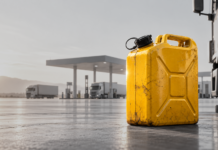
The largest levy facing the road freight sector is the “general fuel levy”. However, vehicle sales also attract a range of so-called stealth taxes, such as carbon taxes. Operators also face visible tolls, licence fees, permits, special tariffs for special operations, municipal compliance fees, registration tariffs for dangerous goods, both transported and warehoused, and parking and special use area charges within local authorities.
The problem lies in the word “general”. The levy funds broader government expenditure rather than the infrastructure used by fuel purchasers. Should this not function as a user levy?
In the main, authorities have not allocated funding from the general fuel levy to road infrastructure. Instead, they have directed it to other urgent priorities such as education, water, electricity and health. These priorities may not be incorrect in themselves. However, road networks outside the domain of the South African National Roads Agency Limited (SANRAL) have deteriorated noticeably.
The association notes that the wording of the levy matters. The government labels it a “general fuel levy” rather than a “road fund” or “road levy”. Perhaps that is where the problem began. Thus, we now face another increase in the general fuel levy. Authorities have raised it again by R0.21 cents per litre for diesel.
The impact may not be felt immediately because the international crude oil price has continued to drop. However, we now import finished products because our refineries have gone offline. Therefore, this relief may prove temporary. The government has cited the Road Accident Fund (RAF) as one reason for the increase. The RAF has an extraordinary capacity to absorb vast quantities of taxpayers’ money. Yet it offers very little in return.
State-run logistics
In his Budget Speech of 25 February 2026, the Minister of Finance stated:
In logistics, we are dismantling bottlenecks in rail and ports that have throttled exports and raised the cost of doing business. We intend to bolster public-private investment in rail operations while retaining state ownership of rail infrastructure. The objective is to move goods faster, cheaper and more reliably.
This approach raises several hurdles. First, will rail freight cost less than road freight? In most cases, freight will still require road legs before and after rail links.
In addition, Transnet still owns the rail infrastructure. It also operates trainsets on the same routes. How will the private sector receive a fair opportunity when it becomes clear that private operators outperform Transnet? Transnet cannot act as both referee and competitor at the same time.
If we repeat the phrase Operation Vulindlela often enough, will that ensure efficient implementation? Consider the unbundling of Eskom. The Association has argued for two decades that authorities should privatise Transnet or introduce route concessions similar to toll roads. Only then will real change occur.
Recently, media reports have questioned the profitability and real cost savings of rail transport. The decisive factor remains consistent volumes across a reliable rail system. This requires continuous volumes, dependable scheduling, sustainable train capacities and secure cargo throughout the rail offering.
Public-private partnerships
The 2026 budget makes it clear that the government is shifting more responsibility for traditionally tax-funded infrastructure projects to private business. It intends to do so through Public-Private Partnerships (PPPs).
However, some proposed projects raise concerns. These include high-speed passenger rail links between Gauteng and Limpopo, between Gauteng and KwaZulu-Natal, and within the Gauteng mega-metropolis concept. Does the country need these projects right now? Are they vanity projects or opportunities for further feeding troughs for loyal cadres?
Meanwhile, the criminal prosecution system is close to collapse. One need only examine the current commissions of enquiry, service levels at local police stations, prosecution rates through the courts and the rampant operations of various mafias in specific sectors and industries. Cases must first reach the courts.
The sugar industry stands on the verge of collapse. Media reports suggest that more than 50,000 jobs are at risk. Should this not take priority over building a high-speed rail link? The logistics network requires direct investment. The government must understand, welcome and protect the role of private players from state misuse. Is that possible?
Partnerships should leverage compliance, fairness and sustainability. The road freight sector suffers because some operators ignore the Labour Relations Act (LRA), the National Road Traffic Act (NRTA) and other key legislation. This creates fertile ground for illegal operations.
The symptoms are clear. They include poorly maintained vehicles, undocumented foreign drivers, bad driving habits and widespread corruption. PPPs must ensure that all stakeholders have fair access to well-maintained infrastructure. They must also require all operators to follow the rules and contribute fairly to state and business development.
In conclusion
We note that the country’s general financial standing is improving. We should not dismiss this progress. However, the government must acknowledge that it does not operate in the logistics business. It should leave this function to private sector experts, as experience has repeatedly proven.
The state must ensure compliance with the rules. It must allow all participants to compete fairly and freely in the sector.
Now is the time to repair dilapidated roads through the fuel levy. The government should not merely refer to infrastructure projects at local and regional levels or note that the South African National Roads Agency Limited will maintain a defined set of roads. SANRAL cannot take responsibility for all roads.
At the same time, authorities should concession key rail links, as they do with toll routes. They must also ensure that route endpoints, whether ports or land borders, can move volumes efficiently and effectively, with room for growth. We are already losing volumes through Beitbridge and the Port of Durban to other ports in the African sub-continent. Poor asset operation continues to drive this decline.