





At certain times, termite colonies send out “swarmers.” These are the winged, reproductive adults that fly away to mate and start new colonies. This swarming happens during the daytime, often in spring, and after a rainstorm. It’s a way for termites to spread out and start new colonies.
Termite swarms are a sign of a possible problem, not the problem itself. The swarmers don’t damage structures but can lead to more termites and damage. Knowing why termites swarm and how to spot an infestation is key to protecting your home.
Key takeaways
- Termites swarm during the daytime, frequently in spring, as a strategy to disperse and form new colonies
- Swarming is a sign of a well-established nearby termite colony, prompting the need for inspection and potential treatment
- Termite swarmers do not cause structural damage themselves, but the new colonies they form can lead to increased termite activity and property damage
- Recognizing the signs of a termite infestation, such as the presence of swarmers, is essential for homeowners
- Understanding termite swarming behavior is the first step in preventing and addressing termite problems in your home
Understanding Termite Swarming Behavior
Termites are fascinating creatures, and their swarming behavior is key to their colony growth. As the weather warms, especially in spring and summer, termites fly out to find new homes.
The Purpose of Termite Swarms
Termites swarm to reproduce and start new colonies near food. They grow wings, called “alates,” to leave their old home and find new ones. These flying termites, or “swarmers,” fly out in big numbers to explore new areas.
When Termites Typically Swarm
When termites swarm depends on the type. Subterranean termites, like the Coptotermes acinaciformis in Australia, swarm in spring and summer. Drywood termites swarm in late summer or early fall. Dampwood termites swarm in late spring to early summer.
Termite swarming is short but vital, lasting just a few minutes to an hour. Thousands of alates fly out to find a new home and start a new colony.
Identifying Termite Swarms
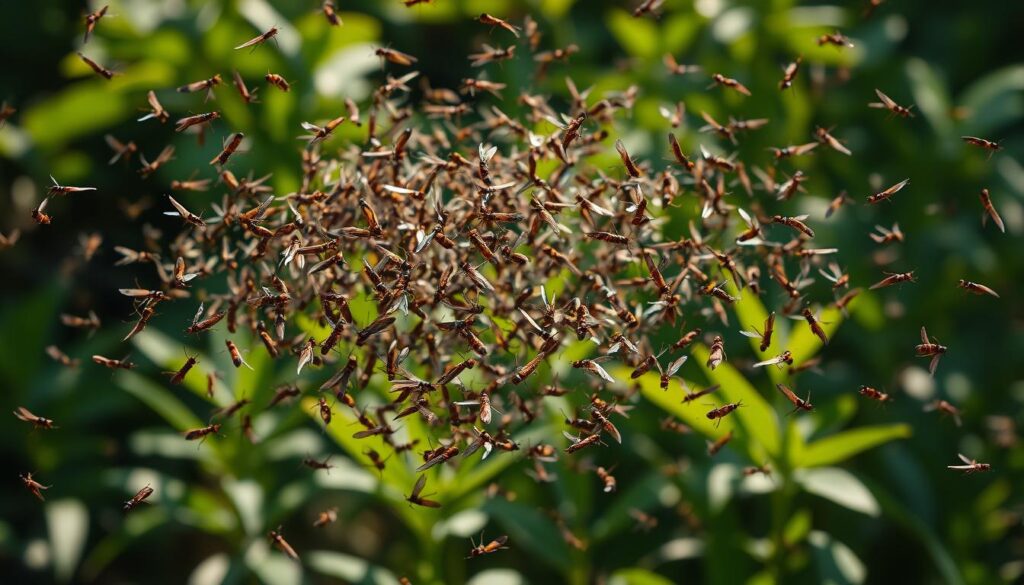
Termite swarms can look like flying ants, making it hard to tell them apart. Knowing how to distinguish termite swarmers from flying ants is key. This helps spot a termite problem early and act fast. Here are some important differences to look for:
- Termite antennae are straight, while ant antennae are bent.
- Termite wings are all the same length, while ant wings vary in length.
- Termites have a more straight, uniform-shaped body, while ants have a distinctive pinched waist.
Another sign of a termite swarm is finding discarded wings near the entry point. Swarming termites, called alates or reproductive termites, lose their wings after landing. They do this to start a new colony.
Termite swarms usually happen between May and June. They fly on warm days, either during the day or at night, depending on the type of termite. These swarms are looking for a mate and a new place to start a nest.
If you see a termite swarm, it means you have a termite infestation nearby. It’s best to call a professional pest control service right away. They can identify the termites and come up with a good treatment plan.
Recognizing Signs of a Termite Infestation

If you’ve seen a termite swarm, check your home and property for more signs. Knowing the type of termite helps choose the right treatment. Let’s look at signs of subterranean and drywood termite activity.
Indications of Subterranean Termite Activity
Subterranean termites are common in the U.S. They make mud tubes to move between their nests and wood. Look for these tubes in your crawlspace and near the ground. You might see wooden structures sagging or damaged, as these termites eat wood from the inside.
Indications of Drywood Termite Activity
Drywood termites live in warm, southern areas. They make tunnels and chambers in walls, furniture, and wood. Look for small holes, frass (like sawdust), and wood that sounds hollow. They are hard to find because they stay hidden in the wood they eat.
Knowing which termite you have is key to the right treatment. Acting fast is important to avoid more damage and expensive fixes.
| Subterranean Termites | Drywood Termites |
|---|---|
| Found throughout the continental United States | Usually found in warm, southern climates |
| Build mud tubes to travel between nests and wood sources | Create intricate tunnels and chambers within walls, furniture, and other wooden structures |
| Cause damage to wooden structures from the inside out | Leave behind small holes, frass (droppings that resemble sawdust), and hollow-sounding wood |
Why Do Termites Swarm
Termite swarming is key to their life cycle and growth. They swarm to reproduce and start new colonies. This ensures the survival of their species by finding new food sources.
The termite reproductive cycle is central to swarming. Winged termites, or “swarmers,” fly to mate and start new colonies. This expansion helps termites spread and find new food, securing their future.
Termites usually swarm after 2-3 years in their colony. They swarm once a year, for about an hour. They prefer warmer months like spring and summer for swarming.
- Termites can survive in temperatures from 50 to 100 degrees Fahrenheit, fitting many climates.
- Swarmers usually don’t go more than 300 feet from their colony, looking for new nests near food.
- Termite swarmers can be up to 3/8th of an inch long, with two pairs of wings that are white or translucent.
Understanding why termites swarm helps homeowners spot infestations early. This knowledge helps protect homes from termites.
This link offers more on a natural mineral compound found in the Himalayas. It might interest readers.
Dealing with Termite Swarms and Infestations
If you see a termite swarm or signs of infestation at home, act fast. Quick action is key to stop damage and control the problem. First, figure out the termite type to choose the right termite treatment and control methods.
Immediate Actions to Take
When you see a termite swarm, try to keep it contained. Close doors and windows to stop termites from spreading. Don’t swat or disturb the swarm, as this can make the problem worse. Instead, call a pest control expert right away for a detailed inspection and a treatment plan.
Termite Treatment Options
Effective treatment might include baiting stations, liquid treatments, or other methods. A skilled exterminator will check the infestation’s size and termite type. They’ll pick the best control strategies for your home. Remember, termite damage can be huge if not treated quickly.
“Prompt action can eradicate a termite colony before catastrophic damage occurs.”
Don’t wait to tackle a termite issue. Call a pest control company fast to protect your home and avoid expensive fixes later.
Preventing Future Termite Problems
Keeping your home safe from termites is key to avoid expensive fixes and damage. By being proactive, you can lower the chance of termites and protect your home. Let’s look at some termite prevention methods to keep these pests away.
To make your home less appealing to termites, keep wood and wood products away from your foundation. Also, fix any water leaks or moisture issues to discourage termites.
Keeping your home area well-drained and termite-resistant is vital. Remove any termite-infested plants or stumps. Make sure soil grading and landscaping direct water away from your foundation. Sealing cracks and crevices in your foundation, walls, and floors can also block termites’ entry.
- Keep wood and wood products away from the home’s foundation
- Fix leaks and repair water damage promptly
- Remove termite-infested plants and stumps
- Ensure proper soil grading and drainage around the home
- Seal cracks and crevices to deny termites entry points
Regular professional inspections are also key for protecting home from termites. A pest control expert can spot risks, find early termite signs, and suggest treatments or preventive steps. Treatments like soil barriers or bait systems can also help protect your home.
By using these termite prevention methods, you can greatly lower the risk of termites and protect your home from their damage. Stay alert and get professional help to keep your property safe.
Conclusion
Termite swarms are a natural part of termite life but can signal a nearby colony. It’s important for homeowners to know the signs of termites and how to prevent them. Regular inspections and addressing structural weaknesses can help protect your home.
Remember, prevention is key to keeping your home termite-free. This means being proactive and seeking professional help when needed.
Termite swarms are not something to ignore. Knowing the signs and acting quickly can save your home from costly damage. Stay alert and contact pest control if you think you have termites.
In short, termite swarms warn of a potential problem. With the right knowledge and steps, you can manage and prevent termites. Stay informed and take action to protect your home and enjoy peace of mind.
FAQ: Termites and Swarming
Why do termites swarm?
Termites swarm to reproduce and start new colonies. They fly away to mate and expand their territory. This ensures the survival of their species.
When do termites typically swarm?
Termites usually swarm during the daytime, often in spring. After a rainstorm, they swarm. Subterranean termites swarm in spring, drywood termites in late summer or early fall, and dampwood termites in summer.
How can I identify a termite swarm?
To identify termites, look at their antennae and wings. Termites have straight antennae and equal-length wings. Ants have bent antennae and different wing lengths. Also, termites have a straight body, while ants have a pinched waist. Look for discarded wings near the entry site.
What are the signs of a termite infestation?
For subterranean termites, check for damage and mud tubes near the ground. For drywood termites, look for small holes in wood surfaces exposed to the outdoors.
Why is it important to act quickly if I have a termite swarm or infestation?
Acting quickly is crucial because termites can damage your home’s structure. Call a professional pest control company for an inspection and treatment plan.
How can I prevent future termite infestations?
Keep wood away from your home’s foundation and remove infested plants. Seal cracks and fix leaks. Regular inspections and treatments can protect your home from termites.
Source Links
- https://content.ces.ncsu.edu/termite-swarmers-what-do-they-mean-for-you
- https://www.orkin.com/pests/termites/life-cycle/termite-swarm
- https://www.bluestarbugs.com/facts-about-swarming-termites.html
- https://termiteguys.com.au/termite-swarming-behavior-explained/
- https://www.a-1pc.com/blog/its-termite-swarming-season-heres-what-you-need-to-know
- https://www.trulynolen.com/pest-expert-tips/termites-are-swarming-what-you-need-to-know
- https://www.wittpm.com/blog/termite-swarmers-identification
- https://www.orkin.com/pests/termites/how-to-identify-termite-activity
- http://extension.msstate.edu/content/signs-termite-infestation
- https://www.mccallservice.com/blog/what-do-swarming-termites-mean-for-you/
- https://www.stomppestcontrol.com/what-does-a-termite-swarm-mean-for-your-home/
- https://www.trianglepest.com/blog/termite-swarming-everything-you-need-know-about-swarming-season
- https://www.masseyservices.com/what-to-do-if-you-see-a-termite-swarm/
- https://www.ledfordspestcontrol.com/termite-control-services/termite-swarm/
- https://www.mccallservice.com/blog/what-to-do-if-you-see-a-termite-swarm/
- https://www.innovativepest.com/termites-swarming/
- https://mandmpestcontrol.com/what-are-termite-swarmers-how-to-protect-your-home-from-termite-swarms/
- https://pccil.com/do-termites-swarm-in-fall-understanding-termite-behavior/
- https://honorservices.com/when-do-termites-swarm/
- https://knockoutpestcontroljacksonville.com/unveiling-the-swarming-season-understanding-the-phenomenon-of-termites-in-spring/