



Leslie Adams | Sales Director | Reach Africa | mail me |
The data on Connected TV (CTV)’s Return On Investment (ROI) is difficult to ignore. However, the slower pace of adoption is much harder to explain.
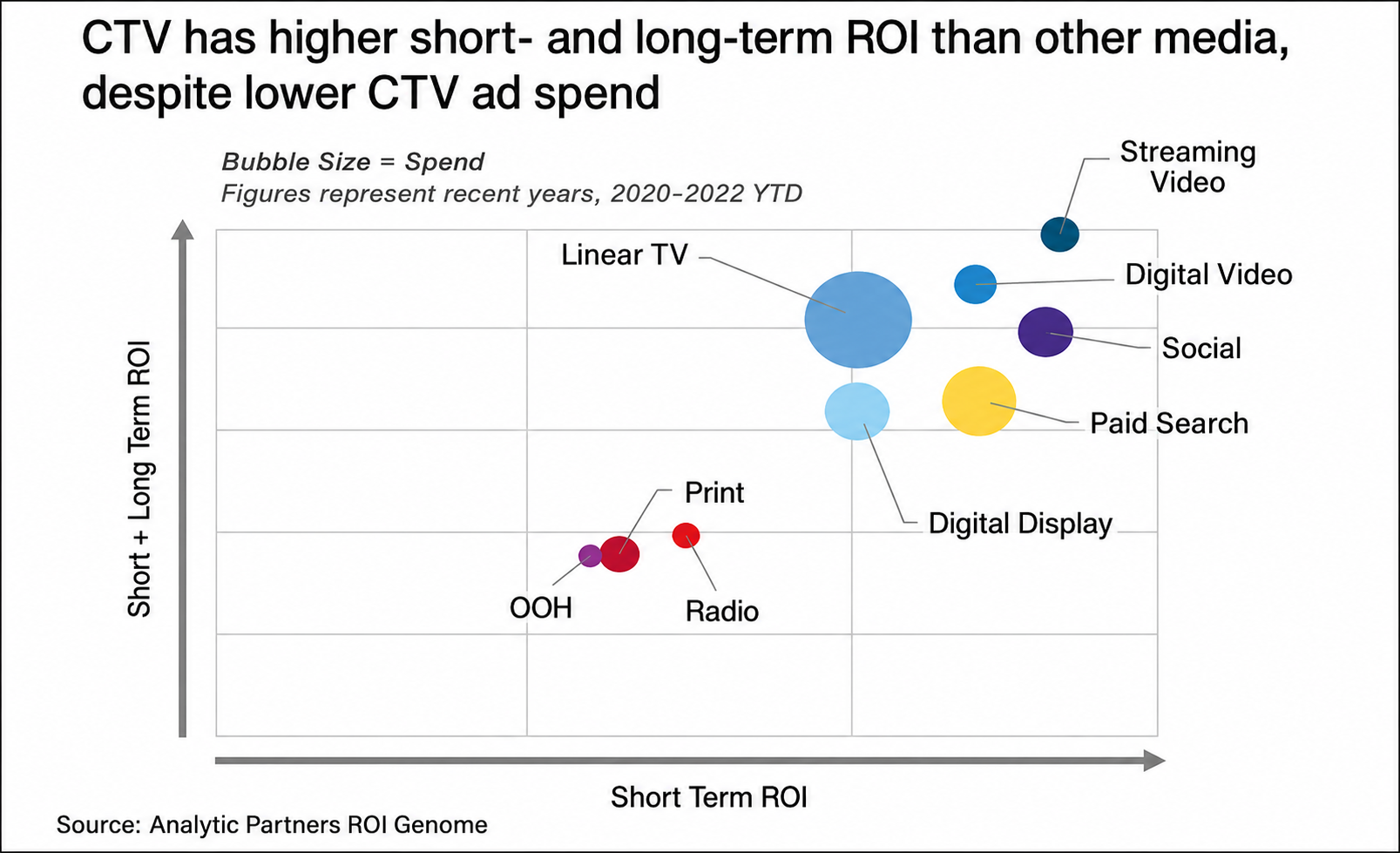
Imagine a marketing channel that consistently delivers 30% higher ROI than almost every other medium in your media mix. Most marketers would naturally prioritise it. Yet CTV receives only 7% of total media budgets despite delivering exceptional CTV investment returns.
According to analytics firm Analytic Partners, this is exactly where CTV stands today. Consequently, this blind spot continues to cost brands.

Why brands continue to underinvest
The more important question is why. CTV is no longer a new platform, and the evidence supporting it is compelling. Audiences have already made the shift. Viewers across income groups are moving away from pay television and embracing streaming services. They also switch between streaming apps just as easily as they once changed television channels.
Yet brand budgets have not followed the same trend. Understanding why requires an honest assessment of where the industry continues to get things wrong.
Part of the answer is that many brands simply do not know where CTV belongs. Within the South African media landscape, it has never found a clearly defined home. Instead, it sits awkwardly between digital and broadcast media. Many marketers still treat it as an extension of one or the other instead of recognising it as a channel that deserves its own strategic importance.
Digital teams often see CTV as expensive online video. Television buyers frequently regard it as a niche add-on. Consequently, media planners consistently underweight a channel that should occupy a far more central position. This misunderstanding continues to limit CTV investment returns.
In reality, advertisers now have two ways to buy television audiences. The first is “mass TV”, which linear broadcasting continues to dominate. The second is “targeted TV,” the space that CTV has created. However, most planning frameworks have not yet adapted to this shift.
The industry is caught in a loop of its own making
The deeper problem is one the industry has largely created itself. Brands increasingly optimise campaigns for short-term clicks and conversions because those metrics are immediate and easy to justify to chief financial officers. As a result, budgets continue shifting towards performance-focused formats. Advertising effectiveness eventually plateaus. Consequently, it becomes even harder to justify investment in long-term brand building.
A recent study by global media network Dentsu illustrates this challenge. Researchers found that digital video’s influence on purchasing decisions can last for up to three years. By contrast, the effects of short-term performance campaigns often disappear within three months.
Brands that focus exclusively on clicks, therefore, leave years of value unrealised. In other words, the industry systematically overinvests in what is easiest to measure rather than what delivers the strongest long-term outcomes.
CTV sits at the centre of this challenge. At the same time, it also offers one of the strongest solutions. It combines television’s scale and attention with digital’s targeting capabilities and measurable performance. Nevertheless, many marketers continue evaluating it through an outdated framework. Some view it as a premium “nice-to-have”. Others reduce it to a programmatic afterthought that they can automate and ignore. Neither approach fully unlocks the potential of CTV investment returns.
This disconnect between audience behaviour and media investment now carries significant commercial consequences. Streaming is no longer a niche activity reserved for affluent consumers. Instead, it has become a mainstream viewing habit across increasingly broad and valuable audiences. However, media budgets continue to favour channels optimised for reach rather than attention.
Don’t just blindly buy CTV – plan for it
There is another important issue in the way marketers buy CTV. Programmatic buying has undoubtedly made the channel more accessible. However, accessibility alone does not guarantee strategic effectiveness.
Simply throwing advertisements into the market and hoping something works does not constitute a media strategy. When marketers reduce CTV to a purely programmatic execution, they overlook contextual placement, premium inventory and the strategic role CTV plays within the wider media mix. As a result, brands appear within CTV environments without fully capitalising on their opportunities.
That represents a significant missed opportunity. CTV delivers exactly what marketers consistently say they want. It builds awareness and consideration. It strengthens brand recall. It also improves downstream performance across search activity and conversions.
The traditional belief that television builds brands while digital drives clicks no longer accurately reflects reality. Today, CTV achieves both objectives. It captures audience attention in ways that most digital environments cannot. At the same time, it continues influencing lower-funnel outcomes in measurable ways.
Most brands still invest only a fraction of what the available evidence suggests they should. Until media planning structures evolve to reflect where audiences actually spend their time, brands will continue missing opportunities. Consequently, the gap between spending and CTV investment returns will continue costing them.