


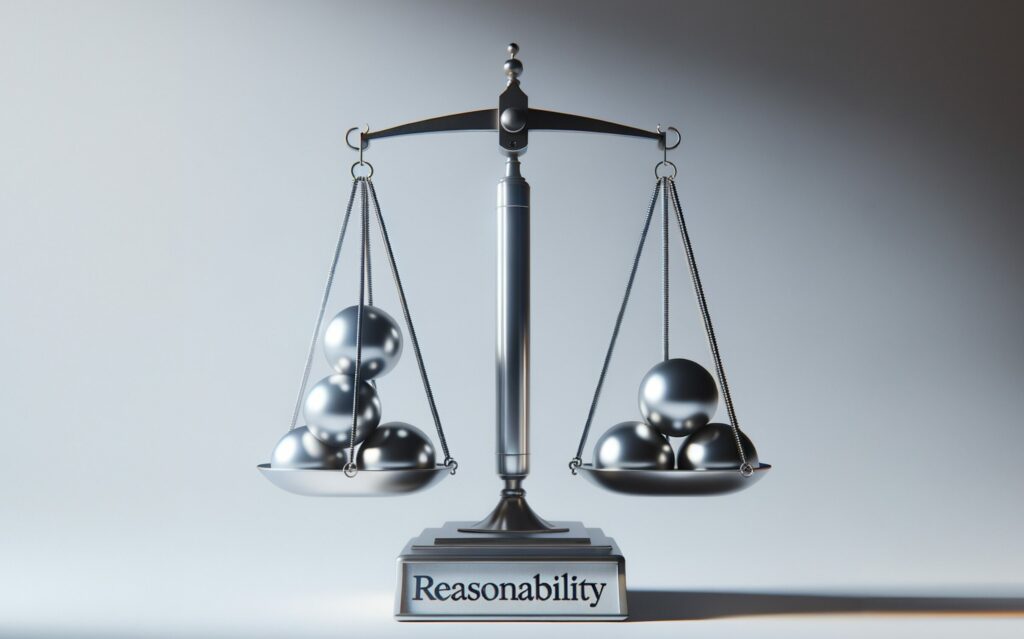
The concept of reasonableness has a strong subjective element. For instance, a salary increase of 50 % might seem reasonable to me if I have been earning a lot less than my colleagues. However, if my employer is reluctant to establish a precedent of granting such large increases, then demanding such a significant raise may not be considered reasonable from their perspective.
The term ‘reasonable’ is used in many areas of labour law including cases where the following questions are asked:
- Can the employer prove that the employee, accused of insubordination, refused to obey a ‘reasonable’ instruction’?
- Was the trade union’s decision to embark on an unprocedural strike reasonable?
- Can the Labour Court, in considering the review application of a CCMA arbitration award, decide whether the arbitrator reasonably applied his/her mind to the facts of the case? Was the arbitrator’s decision to disallow certain evidence a reasonable one?
- Was the employer’s decision to dismiss an alcoholic employee fair and reasonable under the circumstances or would a ‘reasonable’ employer have sent the employee for treatment?
- Was it reasonable for the employee involved in retrenchment consultations to refuse the employer’s offer of a transfer to another branch?
Another place in labour law where the elusive term, ‘reasonable’ appears is in section 186(1)(b) of the Labour Relations Act (LRA) which says that the meaning of dismissal includes the situation where, “an employee reasonably expected the employer to renew a fixed term contract of employment on the same or similar terms but the employer offered to renew it on less favourable terms, or did not renew it.”
What is most important however, is how the courts interpret the term “reasonable”, a very important term in labour law.
The challenge for the employer is, before taking any action relating to employees, to consider very carefully whether the courts will adjudge as reasonable the employer’s action and the employee’s potential reaction. What the courts and CCMA find to be fair and reasonable has changed over the years and is still changing constantly. Keeping up with 

Therefore, the employer needs to get advice on:
- Whether the employer’s action will be deemed reasonable
- Anticipating the employee’s potential reaction
- Whether the Courts would see the employee’s reaction as reasonable.
Ivan Israelstam | Chief Executive | Labour Law Management Consulting | mail me |