


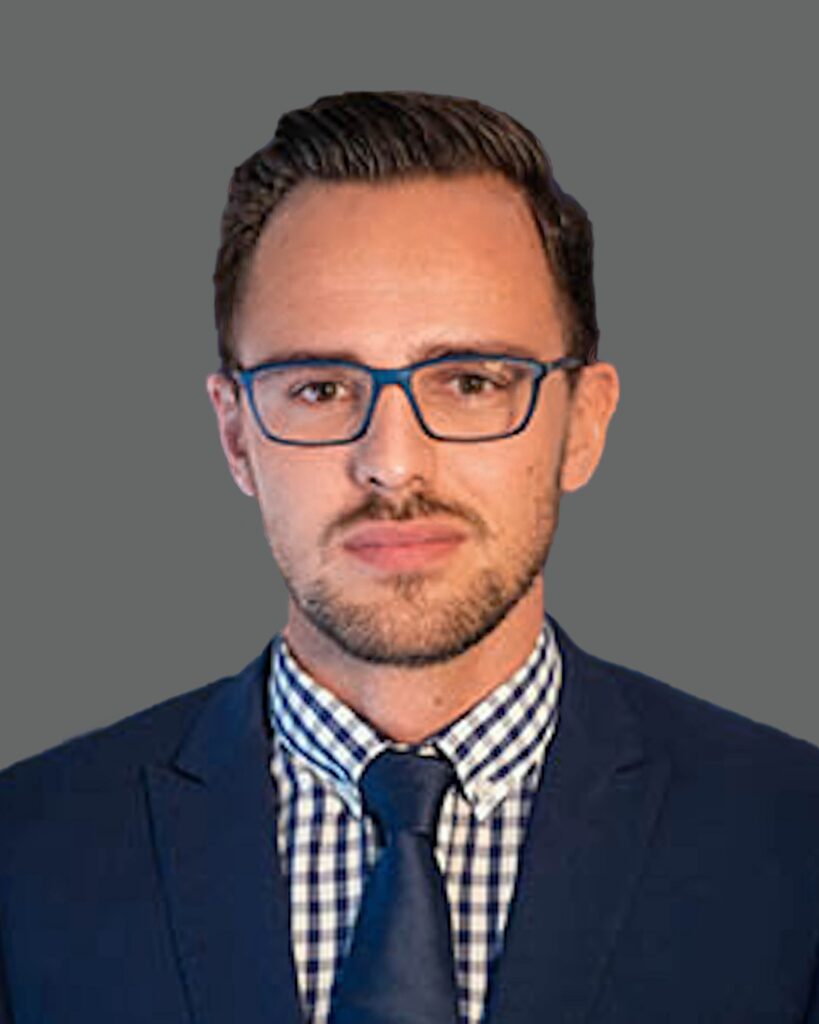
Petri Basson CA(SA) | Member | South African Institute of Chartered Accountants (SAICA) | mail me |
I quickly realised during my accounting articles that technology would have a massive impact on the profession and that I would have to continuously upskill to keep up. Even today, things are changing so fast, one can never just sit back and rely on existing knowledge – I now cultivate a habit of continuous learning.
Besides my CA(SA) qualification, I boast six Information Technology certificates through Rhodes University, as well as Certified Information System Auditor and Certified Bitcoin Professional qualifications.
I have just recently completed my Crypto Currency Security Standard (CCSS) certification, which will be going public in the next few months. I am also the chairman of the Blockchain Association of the Cayman Islands and Crypto Currency Security Standard steering committee.
I currently have various companies and titles, all focused on the digital asset industry. I am the co-founder and owner of Hash Data − a digital asset data collection and normalisation tool focused on making it easy for firms to adopt digital assets and account for them.
Keeping track of multiple sources where clients are transacting
The tool can currently pull data from 14 centralised exchanges, four blockchains and multiple decentralised finance (DeFi) protocols to make it easy for accountants to keep track of multiple sources where clients are transacting.
Hash Consulting is a digital asset consulting company helping firms reach the next level in maturity. We work with decentralised autonomous organisations (DAOs), hedge funds and operating companies to develop their custody solutions and policies and procedures. We also consult on accounting treatments, treasury functions and several other services.
Provenance is a compliance firm with a focus on digital assets that helps clients navigate and comply with the complex ‘Know Your Customer/Anti Money Laundering’ environment in the digital asset industry. The firm fulfills outsourced compliance roles and help with client onboarding and AML policies/procedures.
In my current role, my involvement is geared towards working on building companies that service the growing digital assets industry.
We are a 100% remote company with people across the world. This brings our own challenges, but it’s great to work on ways to re-imagine the way companies can operate remotely and work with our clients to develop the future of finance. Through our tools and consulting services, we help our clients to ensure they are implementing industry leading practices and taking all the risk in the industry into consideration.
The sweet spot for any CA(SA)
Many people are intimidated by the pace at which things are changing, but I see massive opportunity in that. This can apply to the entire financial industry, but also applies to something as easy as how we reconcile accounts and pass journal entries in the accounting practice.
I think for any CA(SA) the sweet spot in their career is where their CA knowledge and their passion intersects. If your passion is fashion, sport, crypto or whatever it may be, apply your skills in that industry and bring your unique perspective to it. Always keep on learning new skills and finding new ways to iterate and improve.
The work with DAOs is some of the most interesting engagements I currently have as it empowers me to take lessons learned from a traditional corporate background and implement them in these new decentralised organisations.
The combination of my CA(SA) designation and IT skills has enabled him to be an interpreter between the technology and financial industries.
I could understand both fields and bridge the gap between what the accounts were saying and what the developers could practically do, and how the code worked. It is becoming even more prominent now that South Africa consults on accounting for digital assets and DeFi.
Often, the real issues arise when the accounting team does not understand how something works. If one can explain something to them in terms these teams will understand, the correct adjustments will be made.
Centralised exchanges
When I was still in audit, the issues faced were of how to confirm assets that were held on a decentralised blockchain or with custodians and exchanges who were not familiar with traditional finance and the confirmation process.
In order to combat this, I was involved on the development block explorers and signature tools which could be used to confirm the ownership of assets and pull balances and transactional data independently from public sources for blockchain.
For centralised exchanges the team developed application programme interfaces (APIs) which could be used to pull data for a specific client, similar to a confirmation from a bank.
Currently, I am also working on the CCSS with the CryptoCurrency Certification Consortium (C4). This will become a standard for auditing digital asset custody services.
The current frameworks do not provide for the cryptographic specific requirements around private key generation, storage, usage, etc. This standard will, for the first time ever, provide a framework against which custody can be tested, peer reviewed and a certification issue for any organisation which custodies digital assets.
In conclusion
An essential skill that I think every CA(SA) should possess is continuous learning. Fifty years ago, a CA(SA) had acquired unique knowledge after a seven-year qualification process that was not easy for anyone else to access.
These days information is freely available on the Internet, and anyone can research those points. As a CA(SA) it’s your job to stay up to date and find new, unique ways to apply your knowledge in whichever industry you are working.