


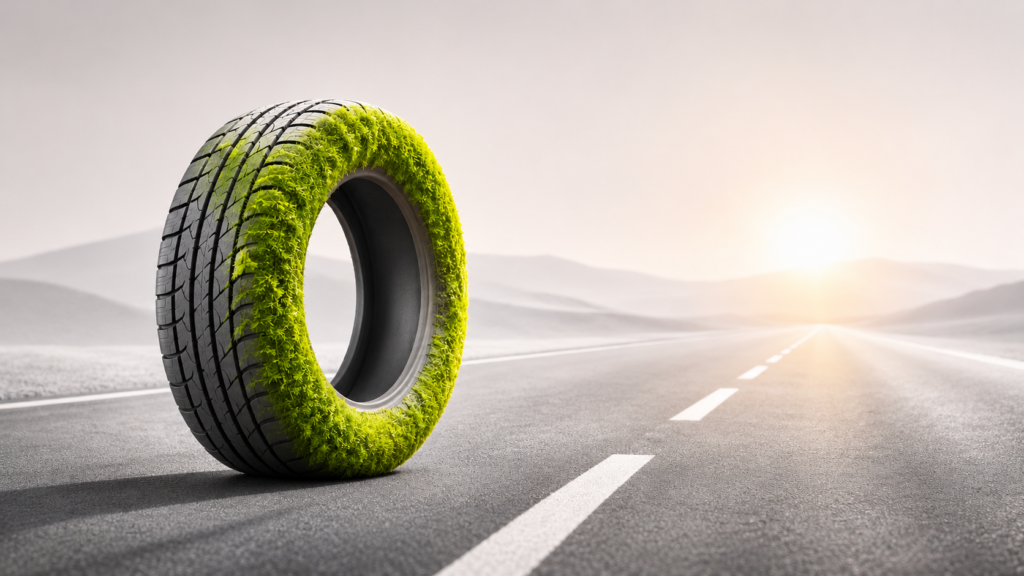
Across the mobility and mining sectors, tyres play an essential role in enabling economic activity. Yet, at the end of their life, they present one of the industry’s most persistent environmental challenges.
For decades, the question has remained largely unresolved: how do we responsibly manage the growing volume of end-of-life tyres? The solution must be both scalable and sustainable.
Today, that question demands a new kind of answer. It requires a shift beyond disposal and towards transformation. Ultimately, this means rethinking end-of-life tyres as an opportunity to recover resources and create lasting value.
Moving beyond the limits of traditional recycling
Historically, end-of-life tyre management has relied on mechanical recycling or energy recovery. While these approaches have value, they often fail to unlock the full potential of tyres as engineered composite materials. In many cases, they simply delay the problem or extract only a fraction of the available value.
What is becoming increasingly clear is that we should not see tyres as waste. Instead, we should recognise them as resources. With the right technologies and systems, industries can reintegrate these materials into the economy in meaningful ways.
Designing a system, not just a solution
A more effective approach begins by rethinking the entire lifecycle of a tyre. This means considering how manufacturers design and produce it, how it performs in demanding environments, and ultimately how they recover and repurpose it.
Performance and sustainability can no longer operate as separate objectives. Manufacturers must engineer tyres to deliver durability and efficiency during operation. They must also ensure that these products retain value beyond their first life.
This requires designing systems, not isolated solutions. One of the most promising developments in this space involves reverse logistics models. Companies can use existing delivery networks to collect used tyres. This creates opportunities for more efficient, traceable and lower-impact systems.
For example, the same trucks that deliver new tyres can return with end-of-life tyres. This approach reduces unnecessary transport emissions while improving accountability across the value chain.
It represents a practical shift, but also a philosophical one. Industries must design waste out of the system from the start.
Unlocking value through advanced recovery technologies
Innovation in material recovery sits at the heart of this transformation. Technologies such as pyrolysis are enabling a significant change in how industries process end-of-life tyres.
Unlike conventional methods, pyrolysis uses a thermochemical process. It breaks tyres down at a molecular level in the absence of oxygen. Rather than melting, tyres transition directly from solid to gas. The process then cools and refines this gas into usable outputs.
The result is the recovery of valuable materials. These include energy-rich oils, reusable steel and recovered carbon black. All these materials can re-enter industrial value chains.
Importantly, this is not theoretical. Industries can already use and trade these outputs, and demand exists for them. They provide viable alternatives to conventional raw materials and energy sources. Consequently, they reduce dependence on virgin inputs while improving resource efficiency.
Even the recovery process itself incorporates circularity. It generates non-condensable gases that operators can reuse to power the system. This creates a more self-sustaining and efficient operation.
This goes beyond recycling in the traditional sense. It represents transformation that unlocks the full material value of tyres. More importantly, it aligns environmental and economic priorities. This is the central principle behind rethinking end-of-life tyres and their role in a circular economy.
From compliance to competitive advantage
As industries face increasing regulatory and stakeholder pressure, end-of-life tyre management is becoming a defining element of Environmental, Social, and Governance (ESG) performance.
However, compliance alone should not be the goal. When companies approach it strategically, tyre recovery becomes an opportunity. It can strengthen operational resilience, enhance environmental credibility and create new value streams.
Responsible implementation remains critical. Advanced recovery processes must operate within strict environmental frameworks. These include emissions control, continuous monitoring and adherence to regulatory standards. When companies implement these measures correctly, they ensure that innovation supports environmental integrity rather than compromises it.
For sectors such as mining, this represents a meaningful shift. Companies no longer need to view end-of-life tyres solely as liabilities to manage. Instead, they can treat them as resources that contribute to broader sustainability objectives.
Building a circular economy in practice
Industries often discuss the transition to a circular economy in broad terms. However, its success depends on tangible, local implementation.
When companies collect, process and repurpose end-of-life tyres within the same region, the impact extends beyond environmental gains. This approach creates opportunities to stimulate local industries, generate skilled employment and strengthen supply chain resilience.
Instead of contributing to landfill or environmental harm, these materials become valuable inputs for new production cycles.
This is where real progress happens. It does not come from isolated initiatives, but from connected ecosystems. Such ecosystems must align environmental responsibility with economic viability.
A shared responsibility for the future
No single organisation can solve the challenge of end-of-life tyre management alone. The industry needs collaboration across the entire value chain. This includes manufacturers, logistics providers, industrial partners and end users.
It also requires a willingness to invest in new models, adopt emerging technologies and challenge long-standing assumptions about waste.
For us, the ambition is clear. The company aims to use 100% renewable and recycled materials by 2050. It also seeks to contribute to systems that reduce the environmental footprint of tyres at every stage of their lifecycle.
From challenge to opportunity
Industries often view end-of-life tyres as liabilities. However, with the right approach, these tyres represent something far more significant. 

This model must bring lifecycle thinking, innovation and circular design together to create lasting impact. Ultimately, rethinking end-of-life tyres means looking beyond how products perform during their first life. It means recognising the value they can deliver when that first life ends. Because the true measure of progress is not only how products perform, but also what they become when their first life ends.
Amaury Vadon | Vice President Sales (Africa, India & Middle East) | Managing Director | (Sub-Saharan Africa) | Michelin | mail me |