


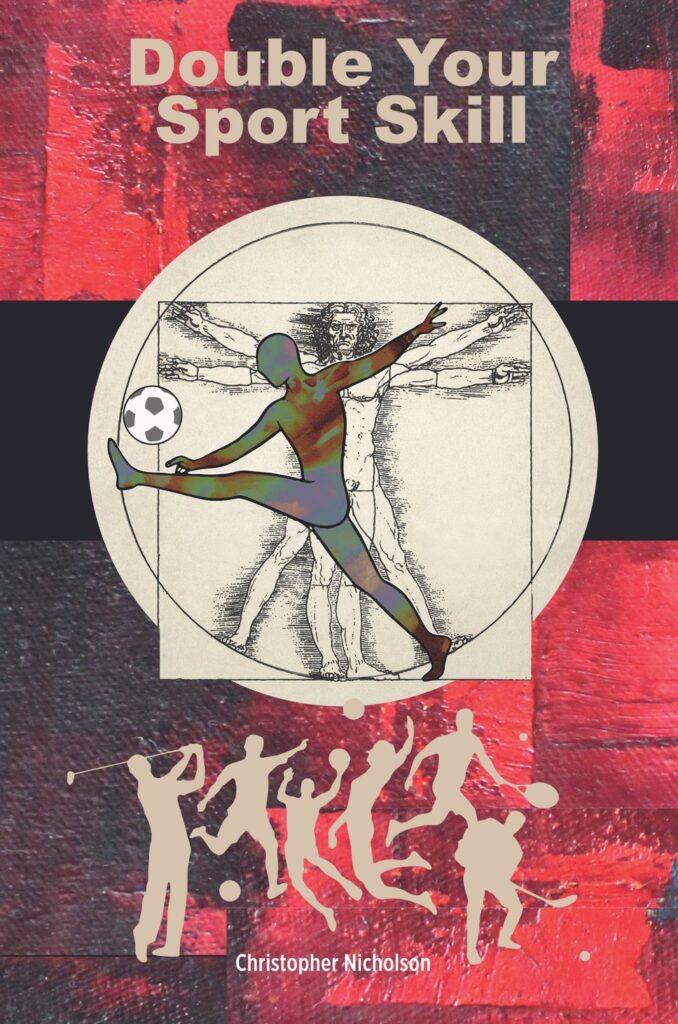
By Chris Nicholson
What do tennis great Rafa Nadal, ice hockey star Gordie Howe, soccer god Pelé, Patrick Mahomes II, NFL quarterback for the Kansas City Chiefs, basketball hero Kobe Bryant, rugby star Jonny Wilkinson, and cricket legend Kane Williamson have in common?
They are all ambidextrous or can kick with either foot. Add to this list Major League Baseball pitcher Pat Venditte of the Miami Marlins, who regularly pitches with both hands.
Greek philosopher Plato advocated ambidexterity. One incredibly advanced culture that existed some two thousand years ago, the Scythians, also practised cultivating equal skill with their limbs on a national scale. Leonardo da Vinci and Michelangelo produced works of incomparable beauty during the Renaissance. They did not play much sport. However, what is interesting is that they could use either hand with equal facility.
The science and potential of ambidexterity
Double Your Sport Skill explores the fascinating possibilities that emerge when people develop greater control and coordination with both sides of the body.
The concept extends beyond simply training the non-dominant hand. It also raises questions about coordination, creativity, physical development and how the brain adapts to new demands. For athletes, these possibilities could open additional avenues for improving performance and developing skills that provide a competitive advantage.
British author Charles Reade wrote in 1878 that ‘every child is ambidextrous until some grown fool interferes’. There are fascinating cultural reasons for the predominant use of the right hand. These reasons arise from prehistoric hunting practices among our distant ancestors.
This development led to greater specialisation in the left hemisphere of the brain. The left hemisphere concentrates on linear thinking. It can be juxtaposed with the right brain, which embraces artistry and holistic, conceptual thinking. Therefore, the advantages of ambidexterity lie not only in acquiring two skilful hands. They may also include increased creativity.
Prejudice against developing ambidexterity
The discussion becomes particularly relevant in sport, where athletes constantly seek ways to improve coordination, adaptability and reaction. Training both sides of the body could potentially help players respond more effectively in unpredictable situations.
A cricketer, for example, could benefit from greater bilateral coordination when batting, throwing or fielding. Likewise, athletes in other sports could explore whether developing their non-dominant side enhances movement and overall performance. In this respect, Double Your Sport Skill presents an intriguing concept for anyone interested in unlocking abilities that conventional training might overlook.
Prejudice against developing ambidexterity was comprehensively debunked by a fascinating study conducted in 1943 by an academic in South Africa. She conducted an interesting experiment with young children. During the study, she trained them to use their non-dominant hands. To her surprise, not only did their skill, power and posture improve, but their academic results also rose by up to seven percent.
The theory is a must for coaches, parents of young sports enthusiasts, and sports fans. It encourages readers to reconsider assumptions about dominant-hand training and explore the potential benefits of developing both sides of the body. For coaches in particular, the ideas presented in Double Your Sport Skill could provide an interesting foundation for experimenting with different approaches to coordination and skill development.
As legendary cricket coach Bob Woolmer says:
[I]t is possible that parents and coaches will in future begin to train both hands for co-ordination and strength, with potentially revolutionary results: a generation of ambidextrous cricketers.
About the author
Christopher Nicholson was born on a farm near Richmond, Natal, South Africa. He was educated at Michaelhouse and later studied law at the University of Natal. He is a cousin of Peter and Graeme Pollock, both former South African Test cricketers, and of the writer Alan Paton.
Before the majority rule in 1994, Nicholson practised as a human rights lawyer and assisted victims of apartheid-era abuses. His work earned him two awards. In 1995, authorities appointed him as a High Court judge. He retired in July 2010 to focus on his writing career.
Since then, he has published six books including Who Really Killed Chris Hani?. His first two books received nominations for the Alan Paton Prize for Non-Fiction. Through his writing, Nicholson continues to explore ideas that connect sport, human potential, education, and broader aspects of human development.