


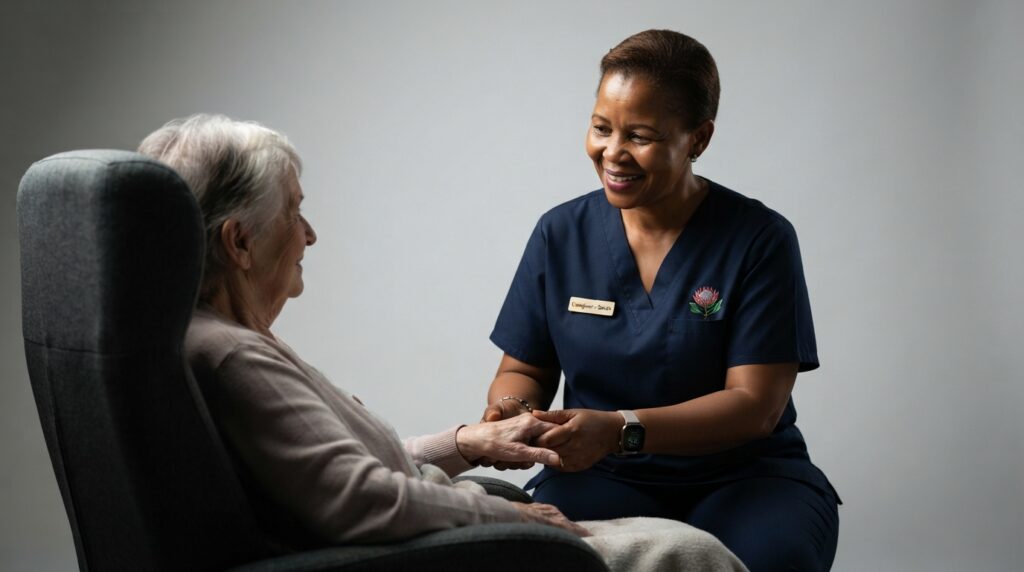
A Private Caregiver salary in South Africa usually ranges from about R7,500 to R22,000+ per month, depending on experience, location, working hours, live-in or live-out arrangement, patient needs, night duties, qualifications and whether the role involves elderly care, disability care, frail care, dementia care, palliative care, post-surgery support or companionship. Highly experienced private caregivers and specialist live-in carers can earn more.
Private Caregivers provide care in a person’s home, usually for an elderly person, disabled person, recovering patient or someone who needs daily assistance. In private households, the role may overlap with elderly care, home-based care, companionship, personal care and domestic support, but the main responsibility is usually care and wellbeing.
Key takeaways
- Entry-level Private Caregivers may earn around R7,500 to R10,000 per month.
- Experienced Private Caregivers often earn between R10,000 and R15,000 per month.
- Live-in Private Caregivers may earn R10,000 to R18,000+ per month, sometimes with board and lodging included.
- Specialist caregivers for dementia, frail care, disability care or night care may earn R12,000 to R22,000+ per month.
- Indeed reports average Caregiver pay of about R8,891 per month in South Africa.
- Indeed reports average In-home Caregiver pay of about R11,987 per month, although based on a very small sample.
- WageIndicator places Home-based Personal Care Workers in a 2026 range of about R7,897 to R27,828 per month.
- From 1 March 2026, South Africa’s national minimum wage is R30.23 per ordinary hour, including for domestic workers.
- Training, references, night-care availability, first aid, dementia care and safe mobility support can improve earning potential.
Private Caregiver salary range in South Africa
| Experience level / role type | Estimated monthly salary |
|---|---|
| Entry-level Private Caregiver | R7,500 – R10,000 |
| Private Caregiver / Home Carer | R9,000 – R13,000 |
| Experienced Private Caregiver | R10,000 – R15,000 |
| Live-in Private Caregiver | R10,000 – R18,000+ |
| Night Caregiver | R12,000 – R20,000+ |
| Dementia / frail-care caregiver | R12,000 – R22,000+ |
| Senior Private Caregiver | R16,000 – R28,000+ |
Salary sources vary because private caregiver roles may be listed as Private Caregiver, Caregiver, Home Carer, In-home Caregiver, Home-based Carer, Live-in Caregiver, Elderly Caregiver, Frail Care Assistant, Personal Care Worker, Companion, Disability Support Worker or Night Caregiver.
Indeed reports an average Caregiver salary of about R8,891 per month in South Africa, based on salary data updated in August 2026. Indeed’s Gauteng caregiver benchmark is about R9,638 per month, while Western Cape is about R6,335 per month, although regional samples can be small. Indeed also reports In-home Caregiver pay of about R11,987 per month, based on only a few salaries. WageIndicator places Home-based Personal Care Workers in South Africa in a 2026 salary range of about R7,897 to R27,828 per month.
What does a Private Caregiver do?
A Private Caregiver supports someone in their own home with daily living, personal care and safety.
Typical duties include:
- Helping with bathing and grooming
- Assisting with dressing
- Supporting toileting and hygiene
- Preparing light meals
- Helping with feeding where needed
- Providing companionship
- Supporting mobility and walking
- Helping with transfers from bed to chair
- Reminding the person about medication
- Monitoring changes in condition or mood
- Assisting with appointments
- Supporting light exercise or movement
- Keeping the care area clean and safe
- Reporting concerns to family members
- Supporting dementia, disability or frail-care routines
Private Caregivers are not the same as registered nurses unless they hold the required nursing qualification and registration. Their work is usually focused on personal care, daily assistance and wellbeing support.
What affects a Private Caregiver salary?
Level of care required
Companionship and light assistance usually pay less than intensive personal care. Higher pay is more likely where the client needs help with bathing, toileting, feeding, transfers, dementia care, palliative support, disability support or overnight monitoring.
Live-in vs live-out arrangement
A live-in caregiver may receive accommodation and meals, but the working hours, rest time and night duties should still be clearly agreed. Live-in care should not mean unpaid 24-hour availability.
Working hours
Private caregiving may be part-time, full-time, shift-based, sleep-in, awake-night or rotational. Night shifts, weekends, public holidays and long hours can increase total pay.
Location
Rates can vary between major metros and smaller towns. Gauteng, Cape Town and other urban areas may offer more private-care opportunities, while rural areas may have fewer formal roles.
Qualifications and references
Home-based care training, first aid, dementia-care experience, frail-care experience, police clearance and strong references can improve earning potential.
Entry-level Private Caregiver salary
An entry-level Private Caregiver may earn around R7,500 to R10,000 per month.
At this level, the caregiver may provide companionship, basic hygiene support, meal help, reminders, light mobility assistance and general care under family guidance.
Experienced Private Caregiver salary
An experienced Private Caregiver may earn between R10,000 and R15,000 per month.
This level usually applies to someone who can work independently, follow a care routine, communicate with families, notice changes in condition and provide safe personal care.
Live-in Private Caregiver salary
A Live-in Private Caregiver may earn around R10,000 to R18,000+ per month, depending on duties, rest time and whether meals and accommodation are included.
Live-in agreements should clearly cover:
- Monthly salary
- Working hours
- Rest periods
- Night duties
- Meals and accommodation
- Leave
- Public holidays
- Overtime
- Transport
- Emergency expectations
A live-in caregiver may be present in the home, but they still need proper working hours and rest periods.
Night Private Caregiver salary
A Night Caregiver may earn around R12,000 to R20,000+ per month, depending on whether the shift is sleep-in support or awake-night care.
Awake-night care generally pays more because the caregiver may need to monitor the client, help with bathroom visits, prevent falls, support confusion or respond to medical concerns through the night.
Dementia Private Caregiver salary
A Dementia Caregiver may earn around R12,000 to R22,000+ per month, depending on experience and the level of supervision required.
Dementia care can involve memory support, wandering risk, sundowning, agitation, repetition, safety checks and calm communication. Families may pay more for caregivers who understand dementia routines and behaviour support.
Frail Care Private Caregiver salary
A Frail Care Private Caregiver may earn around R12,000 to R22,000+ per month.
Frail care may include bathing, feeding, incontinence care, turning, transfer support, fall prevention, pressure-care awareness and close monitoring of comfort and wellbeing.
Private Caregiver vs Home Based Care salary
Private Caregiver and Home Based Care roles overlap strongly.
A Private Caregiver usually works for a family or individual in a private home. A Home Based Care worker may work through an agency, NGO, community programme or healthcare service. Private care may pay more where the family requires live-in care, night care or specialist support.
Private Caregiver vs Domestic Worker salary
A Domestic Worker focuses mainly on cleaning, laundry, cooking and household chores.
A Private Caregiver focuses mainly on care, companionship, hygiene, mobility, safety and personal support. Some private roles include light domestic duties, but if the main job is care, the salary should reflect caregiving responsibility, not only domestic work.
Private Caregiver vs Nurse salary
A Private Caregiver provides daily support and personal care.
A Nurse provides clinical care and must be registered with the South African Nursing Council. Nurses usually earn more because they have formal clinical training and may administer medication, perform procedures and take professional responsibility within their scope of practice.
Minimum wage for Private Caregivers in South Africa
From 1 March 2026, South Africa’s national minimum wage is R30.23 per ordinary hour, including for domestic workers. Private household employers should use this as the legal floor, not as a recommended market rate for complex care.
A full-time monthly equivalent depends on actual ordinary hours worked. For example, 45 ordinary hours per week at R30.23 per hour works out to roughly R5,895 per month before overtime, calculated over 4.333 weeks. Many private caregiver roles pay above this because the work involves personal care, responsibility, night support, frailty, dementia or disability support.
How to earn more as a Private Caregiver
To increase earning potential, build practical care, safety and specialist support skills.
Useful areas include:
- Home-based care training
- Elderly care
- Frail care
- Dementia care
- Disability support
- Palliative care basics
- First aid
- Safe lifting and transfers
- Fall prevention
- Hygiene and infection control
- Meal support
- Medication reminders
- Night-care experience
- Communication with families
- Record keeping
- Police clearance
- Contactable references
The strongest Private Caregivers are patient, trustworthy and observant. Families often value reliability, calm communication and proven experience as much as formal training.
FAQ: Private Caregiver salary
What is the average Private Caregiver salary in South Africa?
Indeed reports average Caregiver pay of about R8,891 per month in South Africa, while WageIndicator places Home-based Personal Care Workers in a 2026 range of about R7,897 to R27,828 per month. A practical Private Caregiver salary range is about R7,500 to R22,000+ per month, depending on duties and experience.
How much should a private caregiver be paid per month?
For basic full-time private care, a common range is around R7,500 to R12,000 per month. More complex care, such as dementia, frail care, night care or live-in care, may range from R12,000 to R22,000+ per month.
Do live-in Private Caregivers earn more?
Sometimes. Live-in caregivers may receive accommodation and meals, but total pay depends on working hours, night duties, rest time and complexity of care. Live-in care should not mean unpaid 24-hour availability.
What is the minimum wage for a Private Caregiver?
From 1 March 2026, South Africa’s national minimum wage is R30.23 per ordinary hour. This applies as a legal minimum. Many private caregiving roles pay more because of personal-care responsibility, shift work, night care or specialist needs.
Do Private Caregivers need qualifications?
Many families and agencies prefer caregivers with home-based care training, first aid, elderly-care experience, dementia-care experience and strong references. The South African Government says caregivers for older persons should undergo home-based care training through a SAQA-accredited institution where required.
Is private caregiving a good career?
Yes. Private caregiving can be a meaningful career for someone who is compassionate, reliable and practical. Career growth is stronger for caregivers who build specialist experience in elderly care, dementia, frail care, palliative support, disability support or nursing pathways.
What jobs can a Private Caregiver move into?
A Private Caregiver can move into roles such as Senior Caregiver, Live-in Caregiver, Night Caregiver, Frail Care Assistant, Home Based Care Worker, Care Supervisor, Community Health Worker, Nursing Assistant or Enrolled Nurse pathway.
Sources
- Indeed Caregiver salary data https://za.indeed.com/career/caregiver/salaries
- Indeed Gauteng Caregiver salary data https://za.indeed.com/career/caregiver/salaries/Gauteng
- Indeed Western Cape Caregiver salary data https://za.indeed.com/career/caregiver/salaries/Western-Cape
- Indeed In-home Caregiver salary data https://za.indeed.com/career/in-home-caregiver/salaries
- Indeed Caregiver job listings https://za.indeed.com/q-caregiver-l-south-africa-jobs.html
- Indeed In-home Caregiver job listings https://za.indeed.com/q-in-home-caregiver-l-south-africa-jobs.html
- WageIndicator Home-based Personal Care Workers salary data https://wageindicator.org/en-za/work-in-south-africa/role-and-pay/south-africa-home-based-personal-care-workers
- WageIndicator Health Care Assistants salary data https://wageindicator.org/en-za/work-in-south-africa/role-and-pay/south-africa-health-care-assistants
- South African Government caregiver registration for older persons https://www.gov.za/services/services-residents/retirement-and-old-age/register-caregiver-older-persons
- Department of Employment and Labour 2026 National Minimum Wage announcement https://www.labour.gov.za/Media-Desk/Media-Statements/Pages/Minister-of-Employment-and-Labour%2C-Meth-increases-the-statutory-National-Minimum-Wage-to-R30%2C23-per-hour.aspx
- Government Gazette National Minimum Wage Amendment 2026 https://www.gov.za/sites/default/files/gcis_document/202602/54075rg11941gon7083.pdf